28/09/20260 lượt xem
English below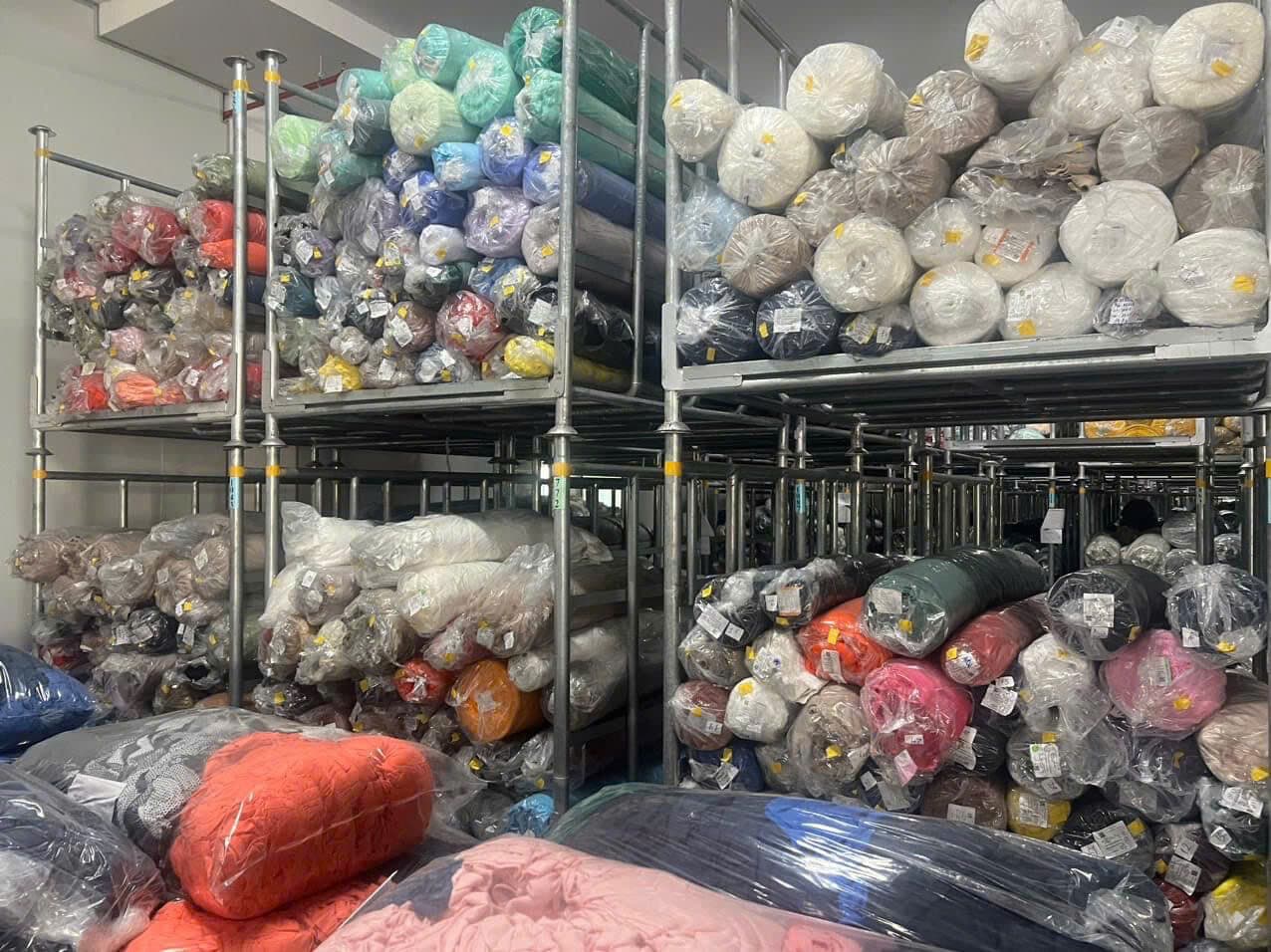
Bảo quản vải tồn kho đúng cách là cách rẻ nhất để giữ giá cho lô hàng mà nhiều xưởng may, shop vải chưa để ý. Cùng một loại vải, cây còn sạch, thơm, màu đều bán được giá cao hơn hẳn cây bị ố mép hay có đốm mốc. Chúng tôi gặp không ít kho mà chỉ vì để sát tường hoặc trên nền ẩm, cả lớp dưới cùng phải xếp vào nhóm vải lỗi. Bài này tổng hợp những việc đơn giản giúp vải của anh chị giữ giá tới lúc bán.
Vải tồn kho hỏng vì đâu: bốn "kẻ thù" chính
Khí hậu nóng ẩm ở TP.HCM và các tỉnh phía Nam là môi trường rất dễ làm vải xuống cấp. Có bốn nguyên nhân chính:
- Độ ẩm. Mùa mưa, độ ẩm không khí thường rất cao. Vải, nhất là vải có sợi tự nhiên như cotton, linen, rayon, hút ẩm từ không khí và từ nền nhà, tạo điều kiện cho nấm mốc phát triển.
- Ánh sáng và nhiệt. Nắng chiếu trực tiếp qua cửa sổ làm bạc màu một bên cây vải, kho mái tôn không cách nhiệt làm vải khô giòn và đẩy nhanh quá trình ngả màu.
- Côn trùng và chuột. Mối ăn sợi cellulose như cotton, linen, rayon; mọt và nhậy gây hại cho vải sợi protein như lụa tơ tằm, len. Chuột cắn thủng cây vải để làm tổ.
- Bụi và khí thải. Kho sát đường lớn, gần khu đặt máy phát điện hoặc cho xe nâng chạy dầu ra vào thường làm vải màu nhạt ngả vàng nhanh hơn.
Ẩm mốc: dấu hiệu nhận biết và cách phòng
Vải tồn kho bị ẩm mốc thường có mùi hăng, ngai ngái khi mở nilon; bề mặt xuất hiện các chấm nhỏ màu xám, đen hoặc xanh, hay gặp ở mép cây và lớp ngoài cùng. Mốc nhẹ còn giặt được, nhưng đốm mốc đã ăn vào sợi thì rất khó tẩy sạch mà không làm hỏng màu, nên vải bị mốc gần như luôn xuống giá đáng kể. Cách xử lý từng mức xem ở bài vải bị mốc đen phải làm sao.
Để phòng, anh chị nên:
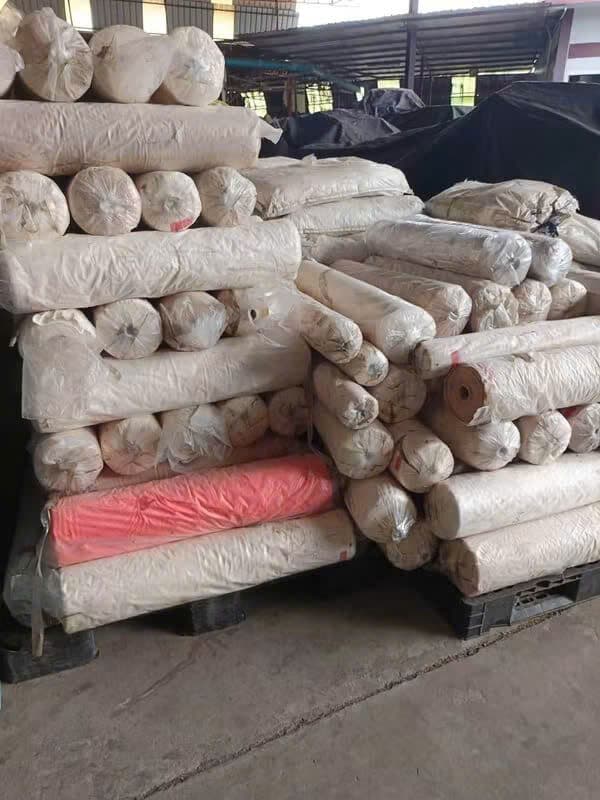
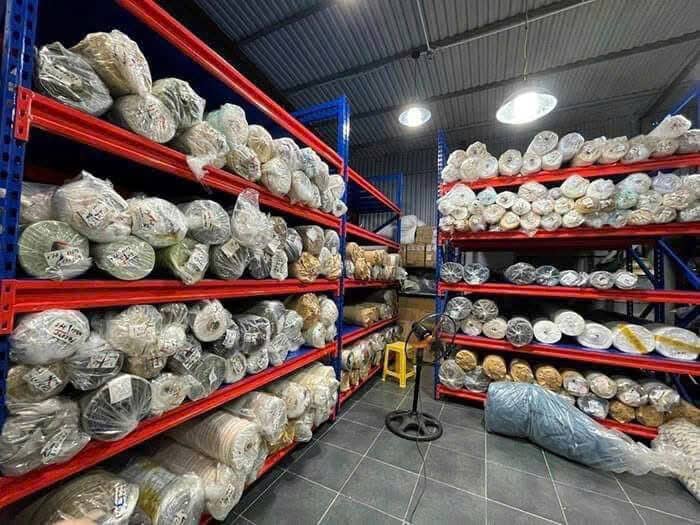
- Không đặt vải trực tiếp trên nền. Kê pallet cao khoảng 10–15 cm để hơi ẩm từ nền xi măng không ngấm lên.
- Để cách tường. Tường, nhất là tường hướng Tây hoặc tường bị thấm, vừa nóng vừa ẩm. Chừa khoảng hở vài chục cm để không khí lưu thông.
- Thông gió. Mở cửa kho vào ngày khô ráo, lắp quạt hút nếu kho kín. Không khí đứng yên là điều kiện lý tưởng cho mốc.
- Hút ẩm. Kho nhỏ có thể dùng túi hút ẩm treo hoặc gói silica gel đặt giữa các lớp vải; kho lớn nên cân nhắc máy hút ẩm công nghiệp trong mùa mưa. Thay túi hút ẩm khi đã đầy nước.
Ố vàng: vì sao vải trắng, vải màu nhạt hay bị
Ố vàng là lỗi làm mất giá nhiều nhất với vải trắng, vải kem, vải màu pastel. Có vài nguyên nhân thường gặp:
- Tiếp xúc lâu với ánh sáng và nhiệt làm sợi và thuốc nhuộm bị oxy hoá, mép cây vải ngả màu trước.
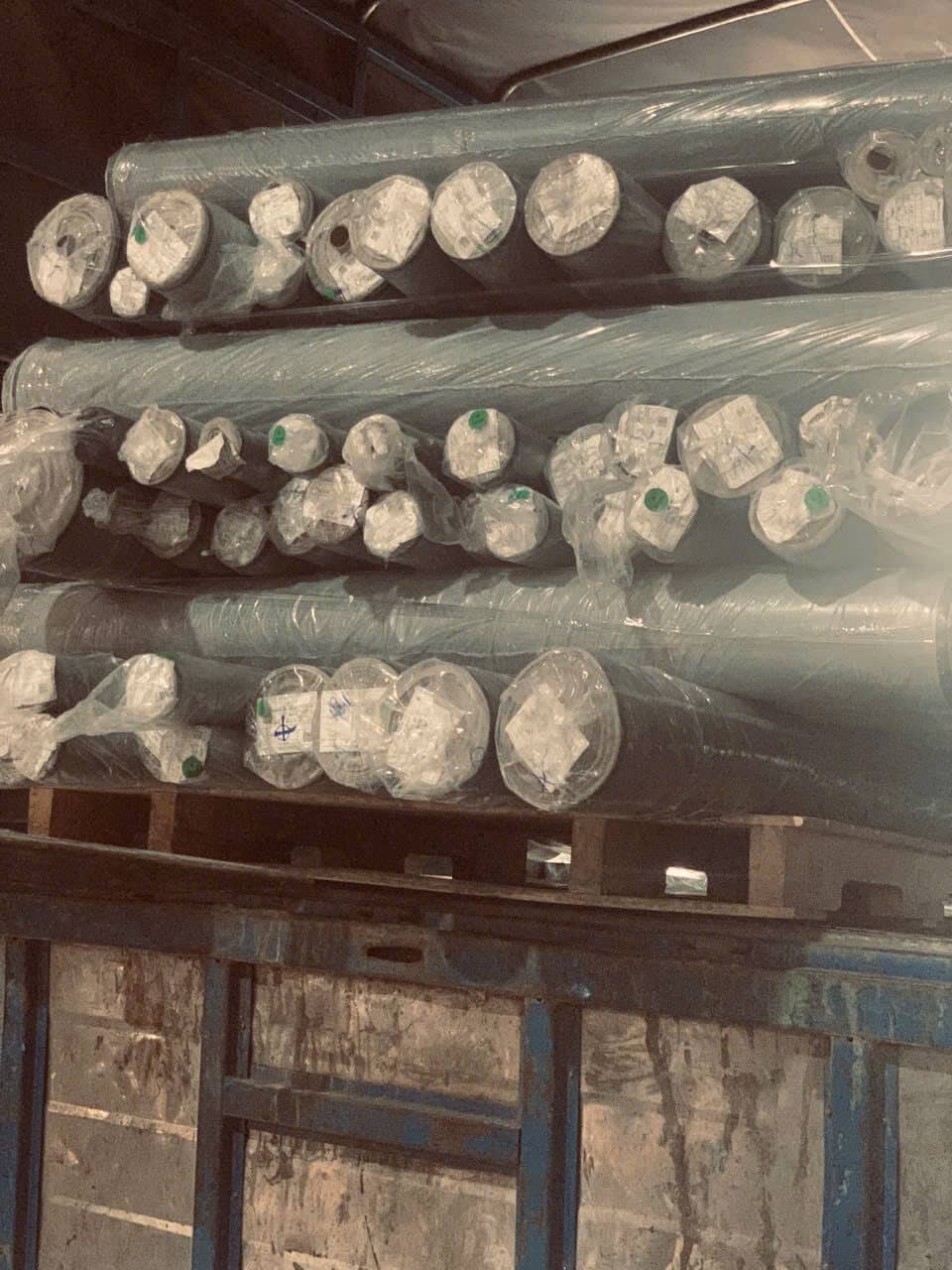
- Vật liệu đóng gói không phù hợp. Giấy carton, giấy báo có tính axit để sát vào vải lâu ngày có thể để lại vết vàng. Một số loại màng nhựa, xốp khi gặp khí thải trong không khí cũng gây ra hiện tượng ngả vàng mà ngành dệt gọi là ố vàng do phenol.
- Vải còn sót hoá chất hoàn tất hoặc bị cất khi chưa khô hẳn.
Cách phòng: giữ vải trong bao bì gốc của nhà dệt nếu còn, tránh bọc bằng giấy báo, tránh xếp vải trắng sát khu vực có khói xe hay máy phát điện, và che cửa sổ để nắng không chiếu thẳng vào kệ. Nếu đã có ố vàng nhẹ ở mép, anh chị đừng cắt bỏ mép vì cây vải sẽ hụt khổ và càng khó bán hơn. Cứ để nguyên, người thu mua sẽ đánh giá mức độ và trừ giá phù hợp.
Mối mọt, chuột: phòng từ cách chọn pallet và vệ sinh kho
Mối là mối lo lớn ở các kho tầng trệt, nhất là kho cũ có tường gạch, sàn đất gần khu cây xanh. Mối đi theo pallet gỗ, khe tường rồi ăn vào lõi giấy và sợi vải; cây bị mối thường có rãnh đất bám bên ngoài, mở ra thủng nhiều lớp liền nhau.
- Ưu tiên pallet nhựa, hoặc pallet gỗ đã qua xử lý, kiểm tra mặt dưới pallet định kỳ.
- Nếu cần diệt mối, thuê đơn vị chuyên xử lý nền và chân tường. Không phun thuốc trực tiếp lên vải vì để lại mùi, vết và làm người mua e ngại.
- Với lụa, len, dùng túi thơm chống nhậy đặt quanh kệ thay vì để long não chạm trực tiếp vào vải.
- Giữ kho sạch, không để thức ăn thừa, bịt các lỗ hở chân tường để hạn chế chuột.
Bọc nilon và xếp kệ thế nào cho đúng
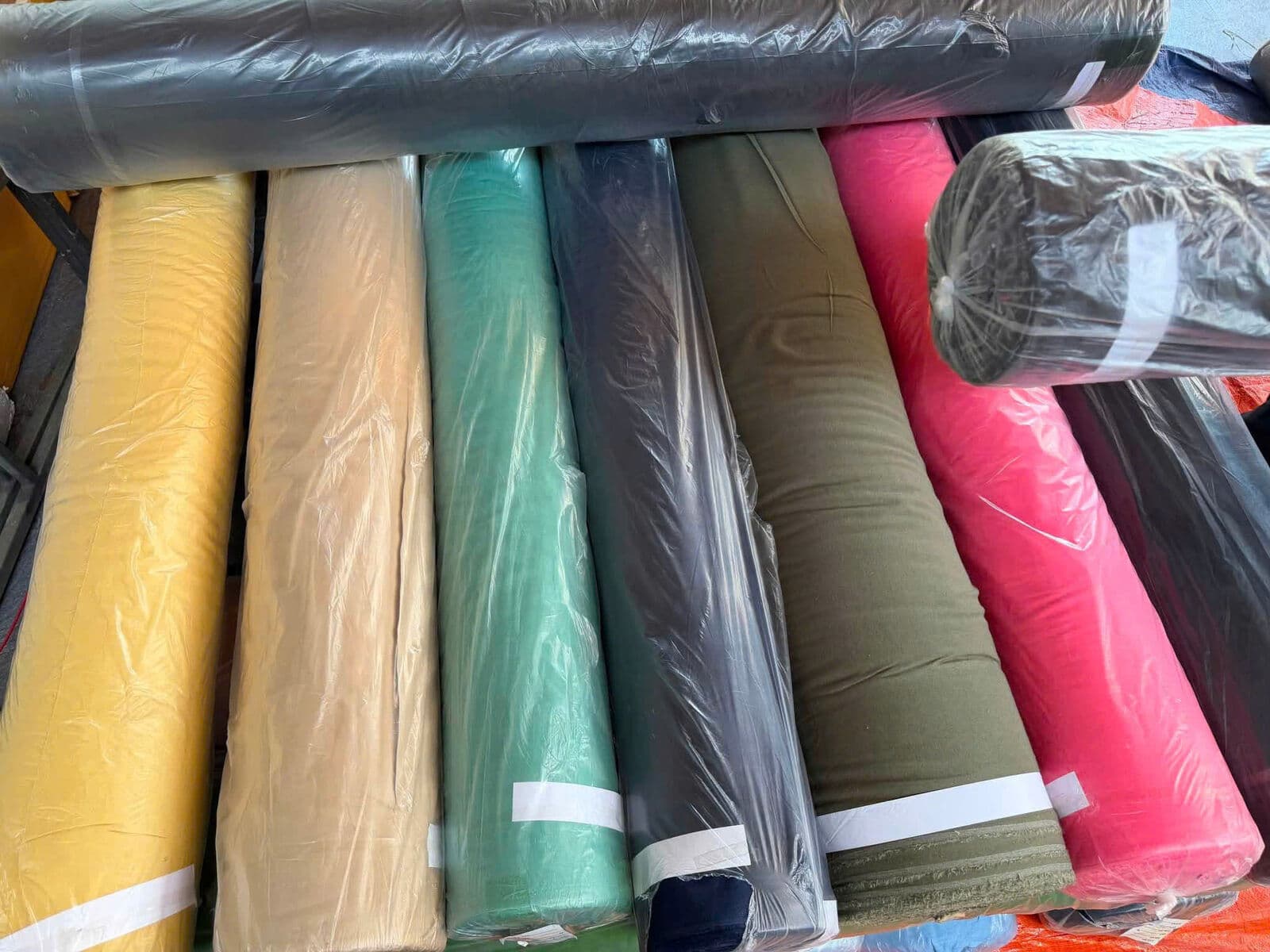
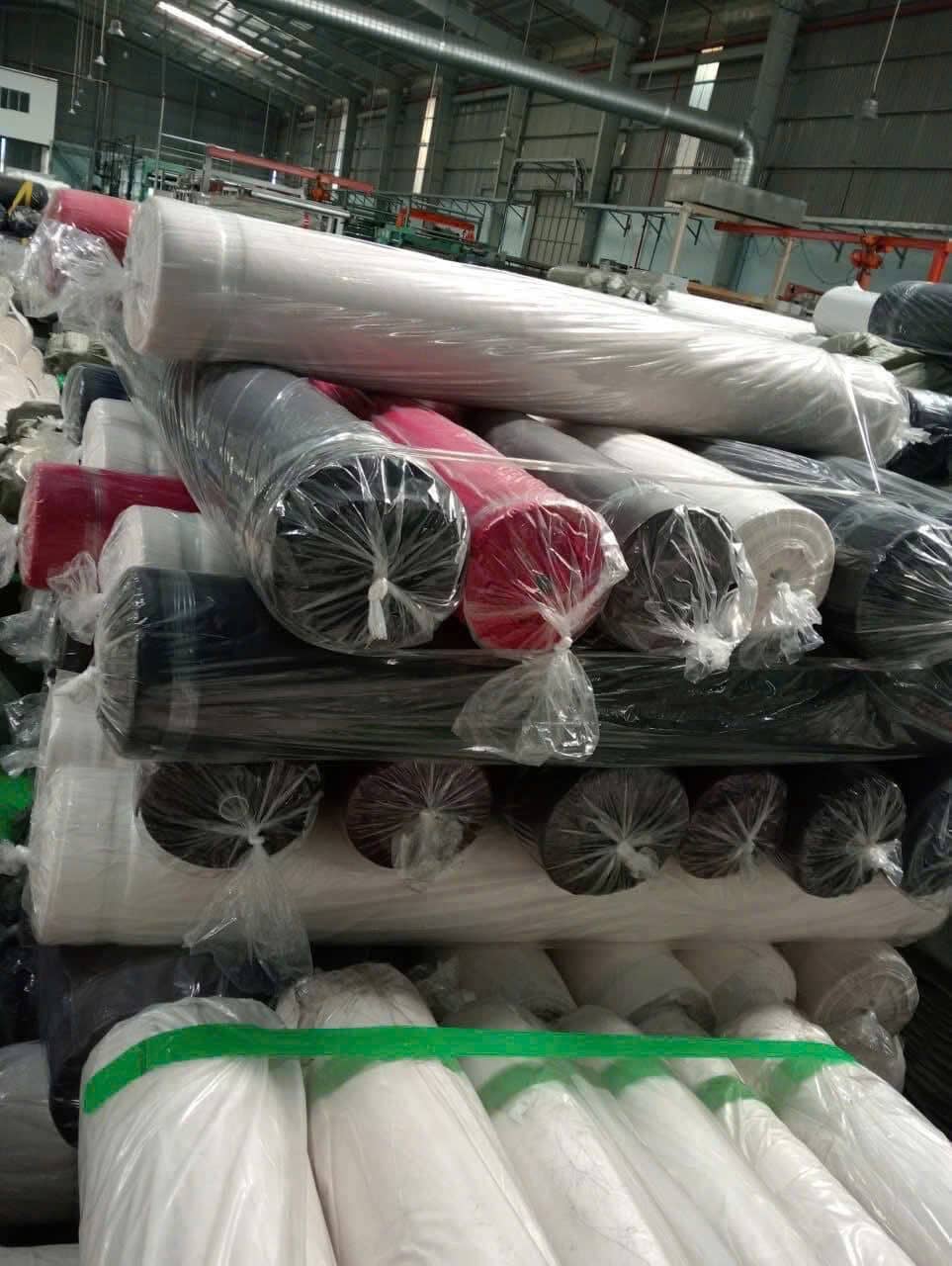
Bọc nilon giúp chống bụi và ẩm từ bên ngoài, nhưng bọc sai lại gây hại. Vải bọc kín khi còn ẩm, hoặc đưa từ ngoài trời mưa vào rồi quấn nilon ngay, sẽ tự "đổ mồ hôi" bên trong và mốc nhanh hơn cả khi để trần. Nguyên tắc là vải phải khô hoàn toàn trước khi bọc, và trong kho có nhiệt độ thay đổi nhiều thì nên chừa hai đầu cây cho thoáng thay vì hàn kín.
Về cách xếp, có vài điều nên nhớ:
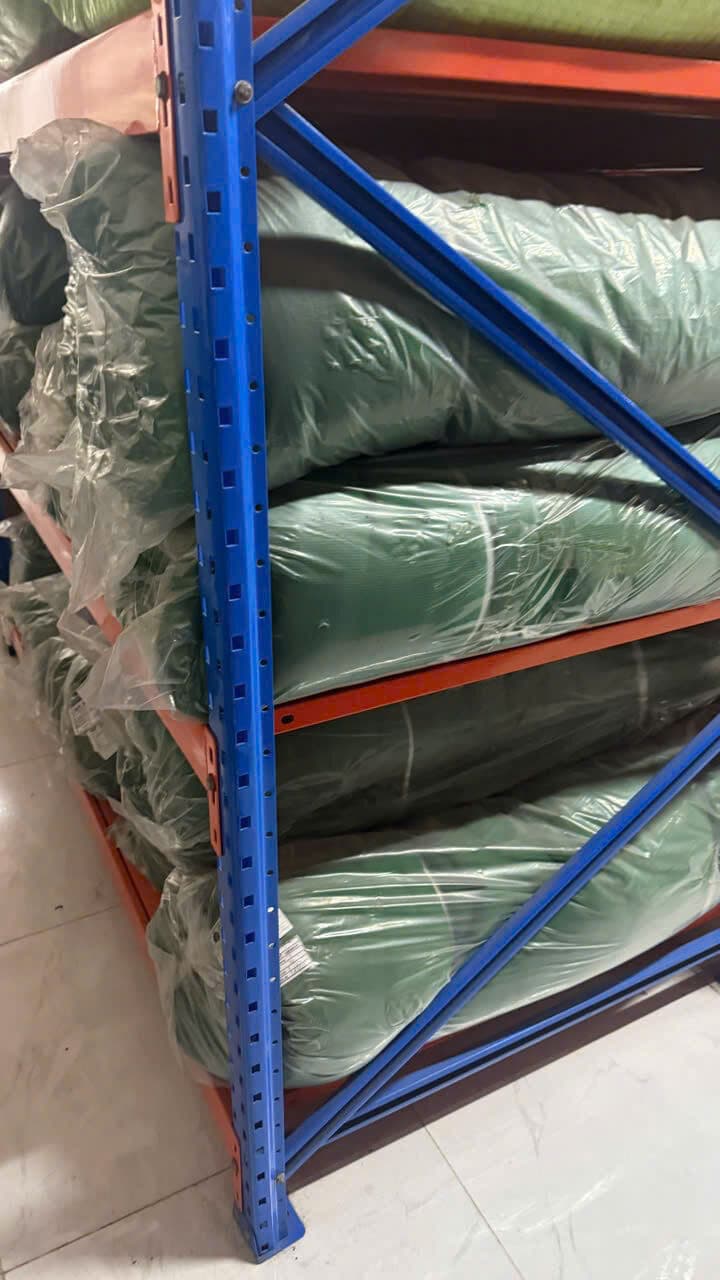
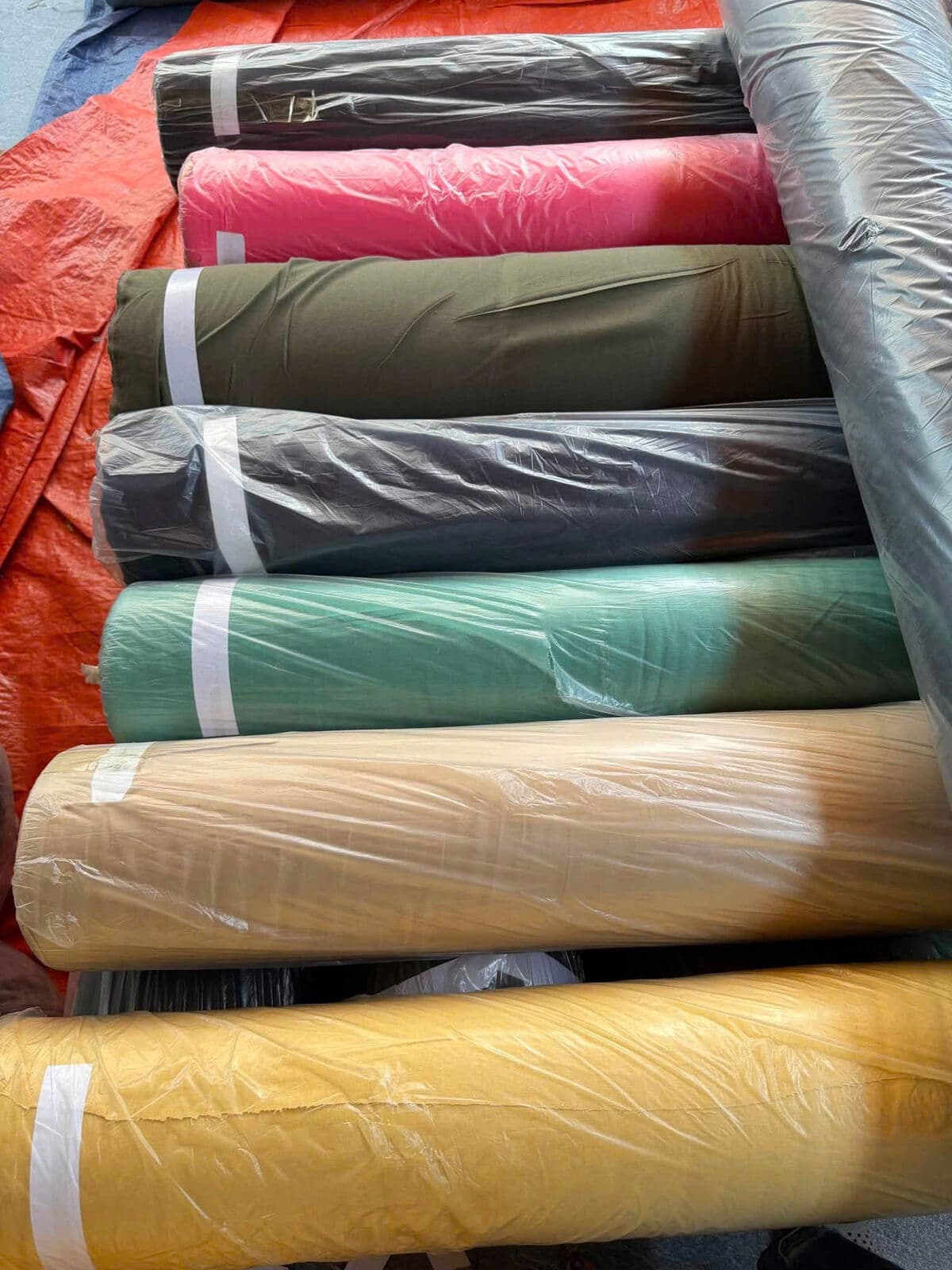
- Xếp nằm ngang trên kệ tốt hơn dựng đứng. Cây vải dựng đứng lâu ngày dễ bị móp một đầu và xô lệch các lớp bên trong.
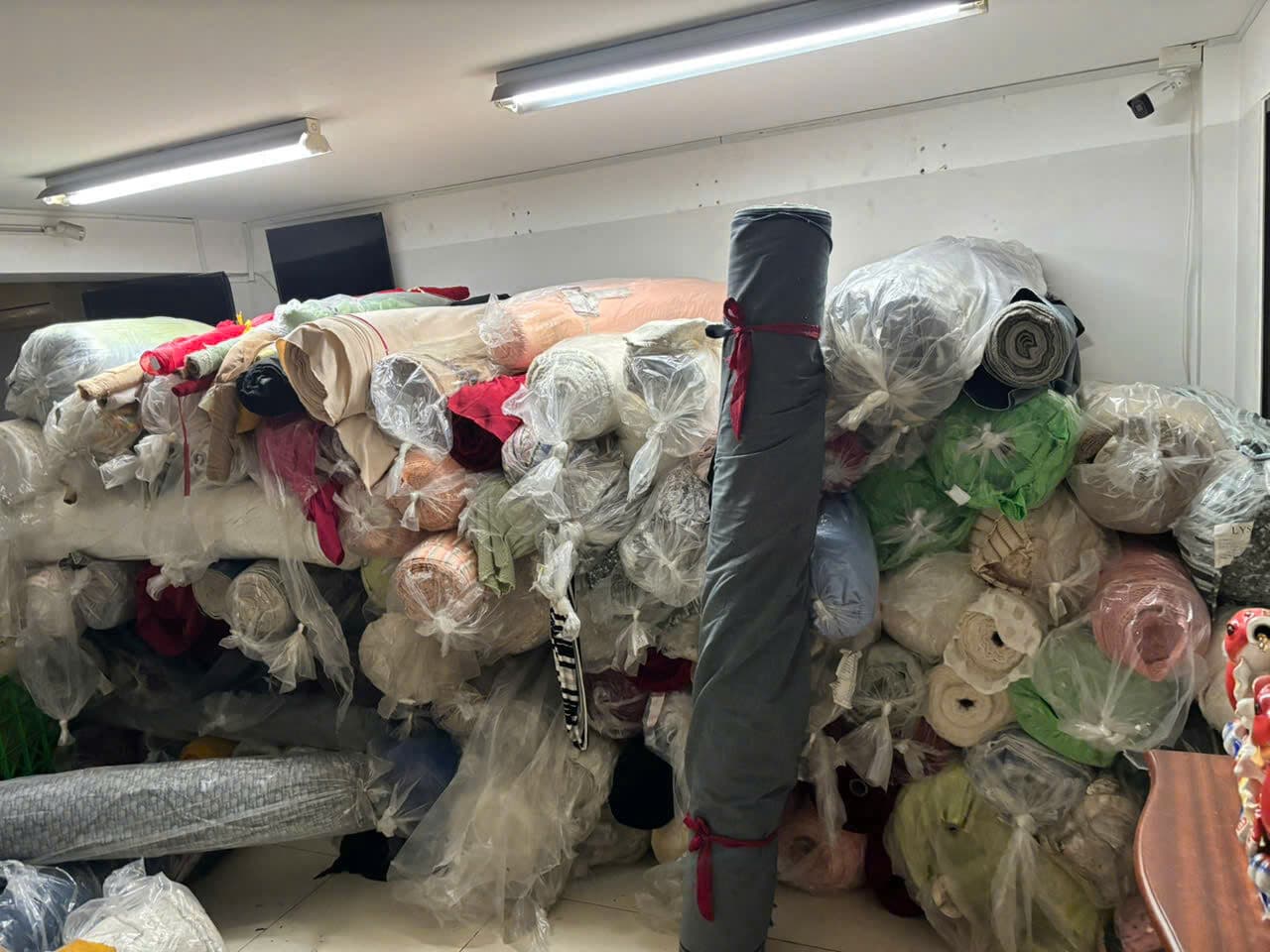
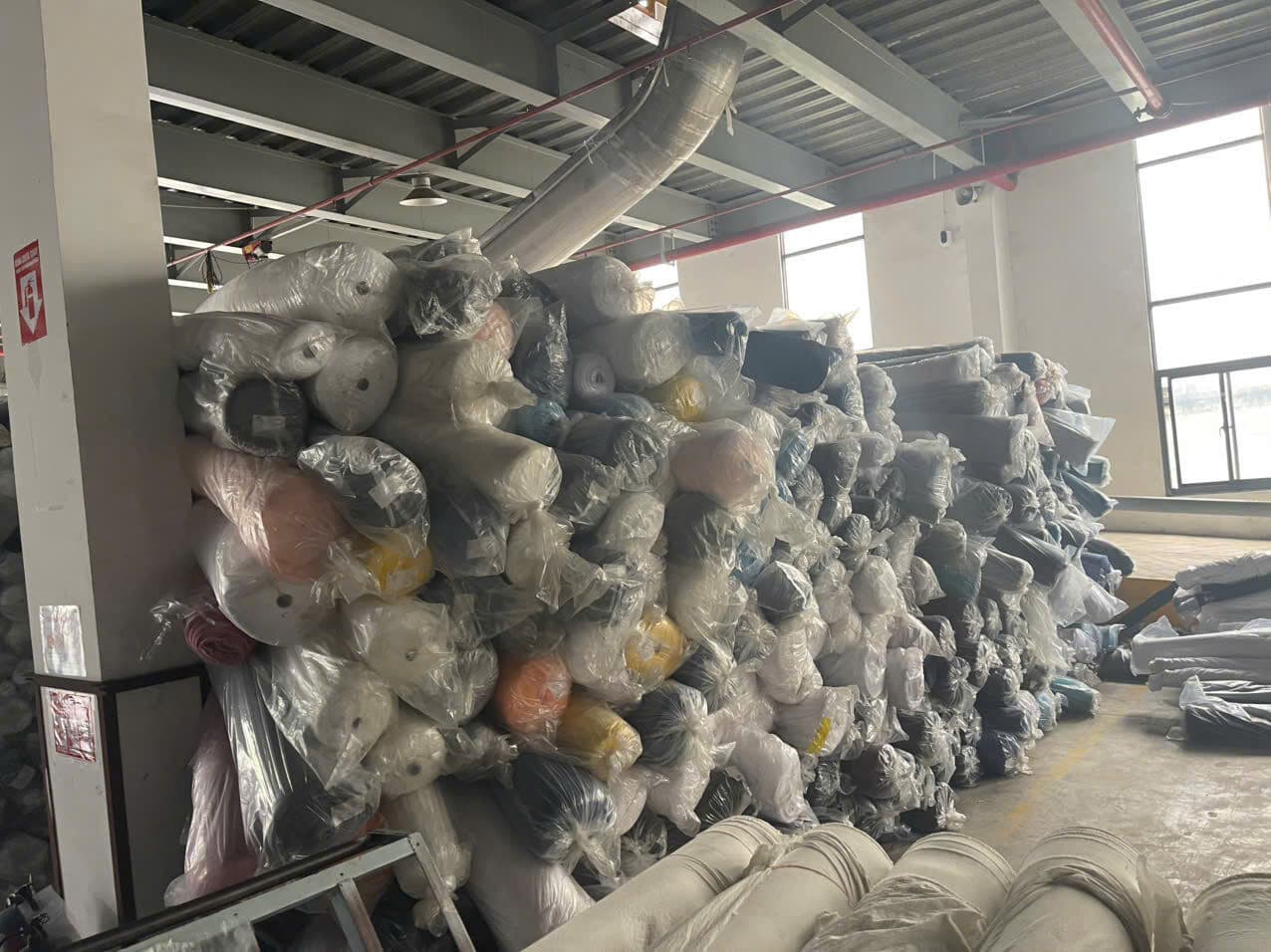
- Không chồng quá cao. Các cây ở đáy bị đè sẽ bẹp, để lại nếp gấp khó ủi phẳng, đặc biệt với vải mỏng, vải lụa, vải có tráng phủ.
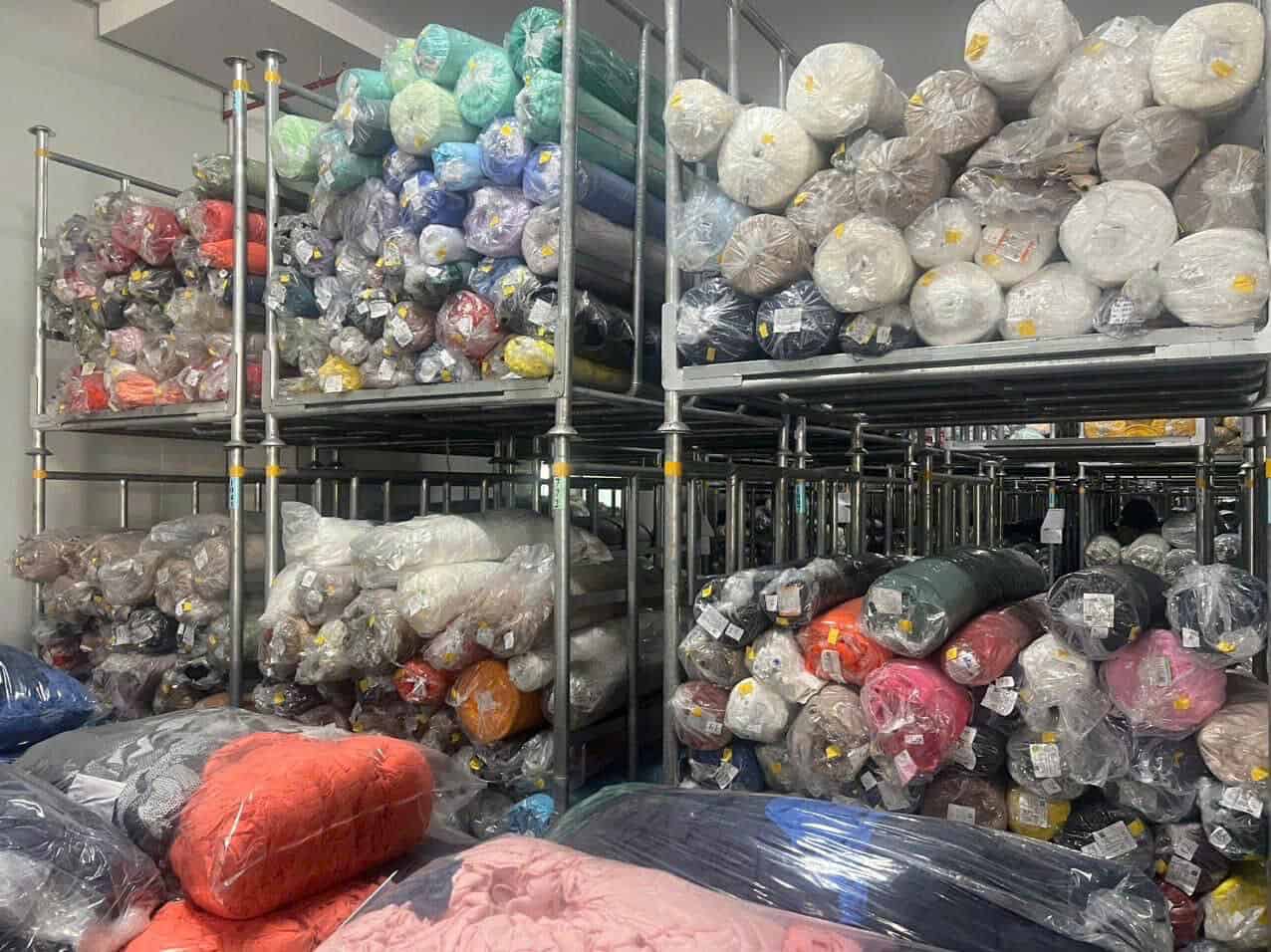
- Giữ nhãn cây vải. Nhãn có mã hàng, khổ, số mét, thành phần. Mất nhãn là mất thông tin giúp định giá.
- Xếp theo nhóm và theo thời gian nhập. Hàng nhập trước để ra ngoài, tránh tình trạng cây cũ nằm mãi dưới đáy.
Vải khúc, vải vụn và phụ liệu cũng cần bảo quản
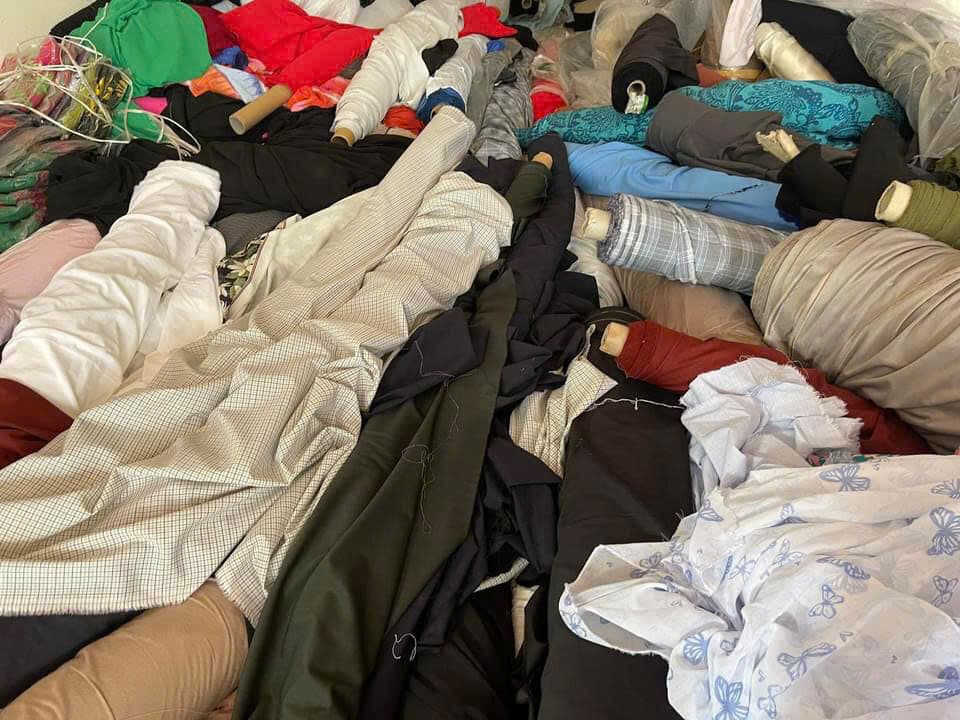
Nhiều xưởng chỉ chăm cây vải nguyên mà để vải khúc, vải vụn đổ đống ở góc kho. Thực tế những loại này vẫn có giá khi bán lại nếu sạch và khô. Anh chị nên cho vào bao, buộc miệng, đặt lên kệ hoặc pallet và tách theo nhóm màu, chất liệu nếu được. Vải vụn bị ướt, dính dầu máy hoặc lẫn rác sẽ khó bán hơn nhiều. Chúng tôi có trang riêng về thu mua vải vụn nếu anh chị muốn biết loại nào được nhận.
Phụ liệu như chỉ, dây kéo, nút kim loại cũng nhạy cảm với độ ẩm: chỉ bị mốc lõi, dây kéo và nút kim loại bị gỉ. Giữ nguyên thùng carton, đặt trên kệ cao và có gói hút ẩm là đủ. Xem thêm về thu mua phụ liệu may mặc.
Lịch kiểm tra kho định kỳ
Một lịch kiểm tra đơn giản giúp phát hiện vấn đề trước khi lan rộng:
- Hàng tuần: nhìn quanh kho xem có dột, thấm, mùi lạ, dấu chuột.
- Hàng tháng: mở ngẫu nhiên vài cây ở lớp dưới cùng và sát tường, kiểm tra mốc và ố; thay túi hút ẩm.
- Trước mùa mưa: kiểm tra mái, máng xối, chân tường; kiểm tra mối ở pallet gỗ.
Khi nào nên bán thay vì tiếp tục cất giữ
Bảo quản chỉ làm chậm quá trình xuống cấp chứ không dừng được nó. Vải nằm càng lâu càng tốn mặt bằng, công kiểm tra, và vẫn có rủi ro một trận mưa dột làm hỏng cả lô. Nếu một loại vải đã qua hai mùa mà không có kế hoạch sử dụng, anh chị nên cân nhắc bán lúc nó còn đẹp. Còn nếu vải đã lỡ bị mốc, ố hay mối ăn, đừng vội bỏ đi: vải lỗi vẫn có người mua lại cho mục đích khác, xem trang thu mua vải lỗi để biết thêm.
Gửi ảnh để Gia Bảo báo giá lô vải của anh chị
Dù vải của anh chị đang được giữ cẩn thận hay đã có chỗ ẩm mốc, cứ chụp ảnh toàn cảnh, ảnh cận mặt vải và nhãn cây vải rồi gửi qua Zalo số 0904 623 046, hoặc gọi hotline 0904 623 046. Chúng tôi báo giá sơ bộ qua ảnh, xuống tận kho xem hàng, cân tại chỗ và thanh toán ngay.
English version
How to Store Surplus Fabric So It Keeps Its Resale Value
Storing surplus fabric properly is the cheapest way to protect the value of your stock, yet many garment factories and fabric shops overlook it. For the same fabric, a clean, fresh-smelling roll with even color sells for much more than a roll with stained edges or spots of mildew. We have seen plenty of warehouses where, simply because fabric was stacked against a wall or on a damp floor, the entire bottom layer had to be classed as defective. This article brings together the simple things that keep your fabric's value intact until you sell.
What damages surplus fabric: the four main enemies
The hot, humid climate of Ho Chi Minh City and southern Vietnam makes it very easy for fabric to deteriorate. There are four main causes:
- Humidity. In the rainy season, air humidity is often very high. Fabric, especially natural fibers such as cotton, linen and rayon, absorbs moisture from the air and from the floor, which lets mildew grow.
- Light and heat. Direct sunlight through a window fades one side of a roll, and an uninsulated tin-roofed warehouse dries fabric out, makes it brittle and speeds up discoloration.
- Insects and rats. Termites eat cellulose fibers such as cotton, linen and rayon; moths and beetles damage protein fibers such as silk and wool. Rats chew holes in rolls to build nests.
- Dust and fumes. Warehouses next to busy roads, near a generator or with diesel forklifts coming and going tend to turn light-colored fabric yellow faster.
Mildew: warning signs and prevention
Surplus fabric with mildew usually has a sharp, musty smell when you open the plastic, and small grey, black or green spots appear on the surface, most often at the edges of the roll and on the outer layer. Light mildew can be washed out, but once the spots have got into the fibers they are very hard to remove without damaging the color, so mildewed fabric almost always loses a significant amount of value.
To prevent it, you should:
- Never put fabric directly on the floor. Raise it on pallets about 10–15 cm high so moisture from the concrete floor cannot soak up into it.
- Keep it away from walls. Walls, especially west-facing or leaking ones, are both hot and damp. Leave a gap of a few dozen centimeters so air can circulate.
- Ventilate. Open the warehouse doors on dry days, and fit an extractor fan if the space is enclosed. Still air is ideal for mildew.
- Dehumidify. Small storerooms can use hanging moisture absorber bags or silica gel packs placed between layers of fabric; large warehouses should consider an industrial dehumidifier during the rainy season. Replace absorber bags once they are full of water.
Yellowing: why white and light-colored fabrics are prone to it
Yellowing is the defect that costs the most value for white, cream and pastel fabrics. There are a few common causes:
- Prolonged exposure to light and heat oxidizes the fibers and dyes, and the edges of the roll discolor first.
- Unsuitable packaging. Acidic cardboard or newspaper left against fabric for a long time can leave yellow marks. Some plastic films and foams, when exposed to fumes in the air, also cause the discoloration the textile industry calls phenolic yellowing.
- Residual finishing chemicals in the fabric, or fabric put away before it was fully dry.
Prevention: keep fabric in the mill's original packaging if you still have it, avoid wrapping it in newspaper, avoid storing white fabric near vehicle exhaust or generators, and cover windows so the sun does not shine directly on the shelves. If there is already light yellowing at the edges, do not cut the edges off, because the roll will lose width and become even harder to sell. Leave it as it is; the buyer will assess the extent and adjust the price accordingly.
Termites, beetles and rats: prevention starts with pallets and cleanliness
Termites are a major worry in ground-floor warehouses, especially older ones with brick walls and earth floors near greenery. Termites travel through wooden pallets and wall cracks, then eat into the cardboard tubes and the fabric; an infested roll usually has trails of soil on the outside, and when you open it, several layers are holed through.
- Use plastic pallets, or treated wooden pallets, and check the underside of pallets regularly.
- If termites need to be dealt with, hire a specialist to treat the floor and wall bases. Do not spray insecticide directly on fabric, as it leaves smells and marks that put buyers off.
- For silk and wool, use moth-repellent sachets around the shelves rather than letting camphor touch the fabric directly.
- Keep the warehouse clean, leave no food scraps, and seal gaps at the base of walls to keep rats out.
How to wrap and shelve fabric correctly
Plastic wrap keeps out dust and outside moisture, but wrapping the wrong way does harm. Fabric sealed while still damp, or brought in from the rain and immediately wrapped, will "sweat" inside and go moldy faster than if it had been left uncovered. The rule is that fabric must be completely dry before wrapping, and in a warehouse where the temperature swings a lot, leave both ends of the roll open to breathe rather than sealing them shut.
When it comes to stacking, a few things are worth remembering:
- Store rolls lying flat on shelves rather than standing upright. Rolls left standing for a long time easily get one end dented and the inner layers shifted.
- Do not stack too high. Rolls at the bottom get crushed and develop creases that are hard to iron out, especially thin fabrics, silks and coated fabrics.
- Keep the roll labels. Labels carry the article number, width, meterage and composition. Lose the label and you lose the information that helps set the price.
- Arrange by group and by date received. Put older stock at the front, so old rolls do not sit at the bottom forever.
Remnants, scraps and accessories need care too
Many factories look after their full rolls but leave remnants and scraps heaped in a corner. In fact, these still have resale value if they are clean and dry. Put them in sacks, tie them shut, place them on shelves or pallets, and separate them by color and material if you can. Scraps that are wet, oily from machines or mixed with rubbish are much harder to sell. We have a dedicated page on fabric scrap buying if you want to know what we accept.
Accessories such as thread, zippers and metal buttons are also sensitive to humidity: thread cores go moldy, and zippers and metal buttons rust. Keeping them in their original cartons on high shelves with a few absorber packs is enough. See more about garment accessories buying.
A regular warehouse inspection schedule
A simple inspection routine helps you catch problems before they spread:
- Weekly: look around the warehouse for leaks, seepage, unusual smells and signs of rats.
- Monthly: open a few random rolls from the bottom layer and against the walls to check for mildew and stains; replace absorber bags.
- Before the rainy season: check the roof, gutters and wall bases; check wooden pallets for termites.
When to sell instead of keeping it in storage
Good storage only slows deterioration; it cannot stop it. The longer fabric sits, the more space and inspection time it costs, and there is always the risk that one leaking roof in a storm ruins the whole lot. If a fabric has gone through two seasons with no plan to use it, consider selling while it still looks good. And if fabric has already been hit by mildew, stains or termites, do not throw it away: defective fabric still has buyers for other uses. See our defective fabric buying page to learn more.
Send photos and let Gia Bao quote for your fabric
Whether your fabric has been carefully stored or already has some damp patches, just take an overview photo, close-ups of the fabric surface and the roll labels, and send them via Zalo to 0904 623 046, or call our hotline 0904 623 046. You can message us on Zalo in English and we will reply. We give a preliminary quote from photos, come to your warehouse to inspect the goods, weigh on site and pay immediately.