Where surplus garment trims come from
Buying garment trims goes hand in hand with buying surplus fabric. When ordering for a style, factories usually buy trims above the consumption allowance: a few percent extra buttons, a few spare cones of thread per colour, extra zippers for each size. Trim suppliers also tend to have minimum order quantities, so even if you need a thousand zippers in a special colour you still have to take more. When the order ends, the excess stays in the boxes.
Unlike fabric, trims are small and compact, so they are easily forgotten. Often it is only when clearing the warehouse that the owner discovers dozens of boxes of thread, buttons and labels from past seasons. That is capital sitting idle, and trims also have a shelf life of their own.
The trims Gia Bao buys
Sewing thread
Polyester thread, cotton thread, overlock thread, embroidery thread and denim thread. We take sealed cartons as well as part-used cones. This is the group people ask about most when they want to sell leftover sewing thread.
Buttons of all kinds
Plastic, metal, wooden and coconut buttons, snap fasteners, jeans buttons and eyelets. Buttons still in their bags, in one colour and one size, fetch more than mixed buttons.
Zippers
Plastic, brass and aluminium zippers, invisible zippers and continuous zipper chain without sliders. Branded zippers still in their original bags are the easiest to price well.
Waistbands, elastic and binding
Trouser waistbands, wide elastic, waist elastic, woven tape, binding, drawcords and bag straps.
Labels and other trims
Woven labels, printed labels, hang tags, size labels, interlining, wadding, hooks, rings and shoulder pads. For labels printed with a specific brand name, we discuss carefully before buying, because brand labels are usually not allowed onto the market.
What determines the price of surplus trims
- Type of trim: metal zippers, metal buttons and good-quality thread usually fetch more than basic types.
- Packaging condition: still in the original carton, box or with the supplier's label is a big plus.
- Consistency: large quantities of one code, one colour and one size resell more easily than many odd codes.
- Colour: black, white, navy and beige thread and zippers suit many more products than special colours.
- Age: elastic stored too long can lose its stretch, thread can rot and metal can tarnish. The newer the stock, the better it holds its value.
How to prepare trims before selling
Trims come in many types, so a little sorting helps us quote faster and more accurately:
- Group by type: one area for thread, one for buttons, one for zippers, one for tapes and cords. No need for a detailed count.
- Keep sealed bags and boxes intact: do not tear open thread bags to check; opening one representative box is enough.
- Keep part-used stock separate: part cones, loose buttons and odd zippers go in their own boxes so they do not mix with full stock.
- Photograph each group: one overview and one close-up showing the supplier label, sent via Zalo to 0904 623 046. You can write to us in English and we will reply.
After seeing the photos, Gia Bao gives an indicative price, arranges to count or weigh on site, pays immediately and then boxes up and hauls the goods away ourselves.
Storing trims while waiting to sell
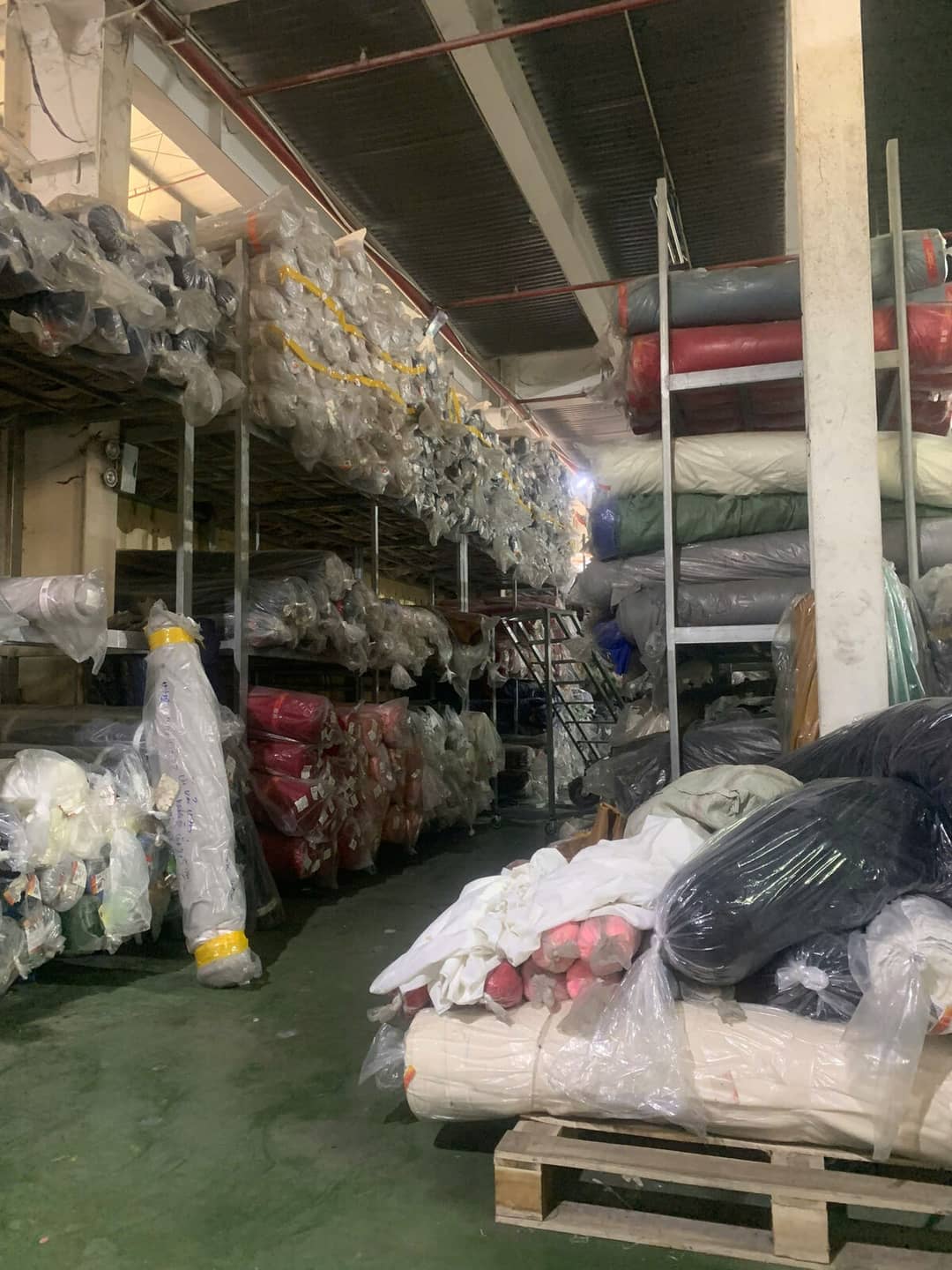
Trims deteriorate more quietly than fabric, so if you are not selling right away, keep a few things in mind. Thread and elastic should be kept in closed boxes out of direct sunlight, because sunlight makes thread brittle and elastic lose its stretch. Metal buttons and zippers need a dry place, away from damp concrete floors, since just a few months of rainy season can tarnish them and rust the sliders. Paper labels and hang tags easily stick together in humidity, so keep the boxes on shelves. Storing trims properly helps you get a good price, and keeps them usable if the factory needs them again later.
Sell trims together with fabric for a better deal
A single box of trims may not justify a long trip on its own. But combined with fabric rolls and remnants from the same warehouse, the whole lot becomes more worthwhile and we can offer a better price for each part. So when you contact us, list everything you have in stock. If fabric makes up most of it, see our garment factory surplus fabric page; if you need the whole warehouse cleared, the fabric stock clearance page is a better fit.
Areas we cover for buying trims
Gia Bao is at 69C Đỗ Đức Dục, Phú Thọ Hòa Ward, Ho Chi Minh City. We buy trims from garment factories, trim shops and retailers in Ho Chi Minh City and industrial zones in Binh Duong, Dong Nai and Long An. Trim shops closing down or clearing their premises are also a case we often handle.
Have surplus trims in your warehouse? Message us on Zalo or leave your details on our contact page, and Gia Bao will buy your surplus garment trims quickly and neatly.