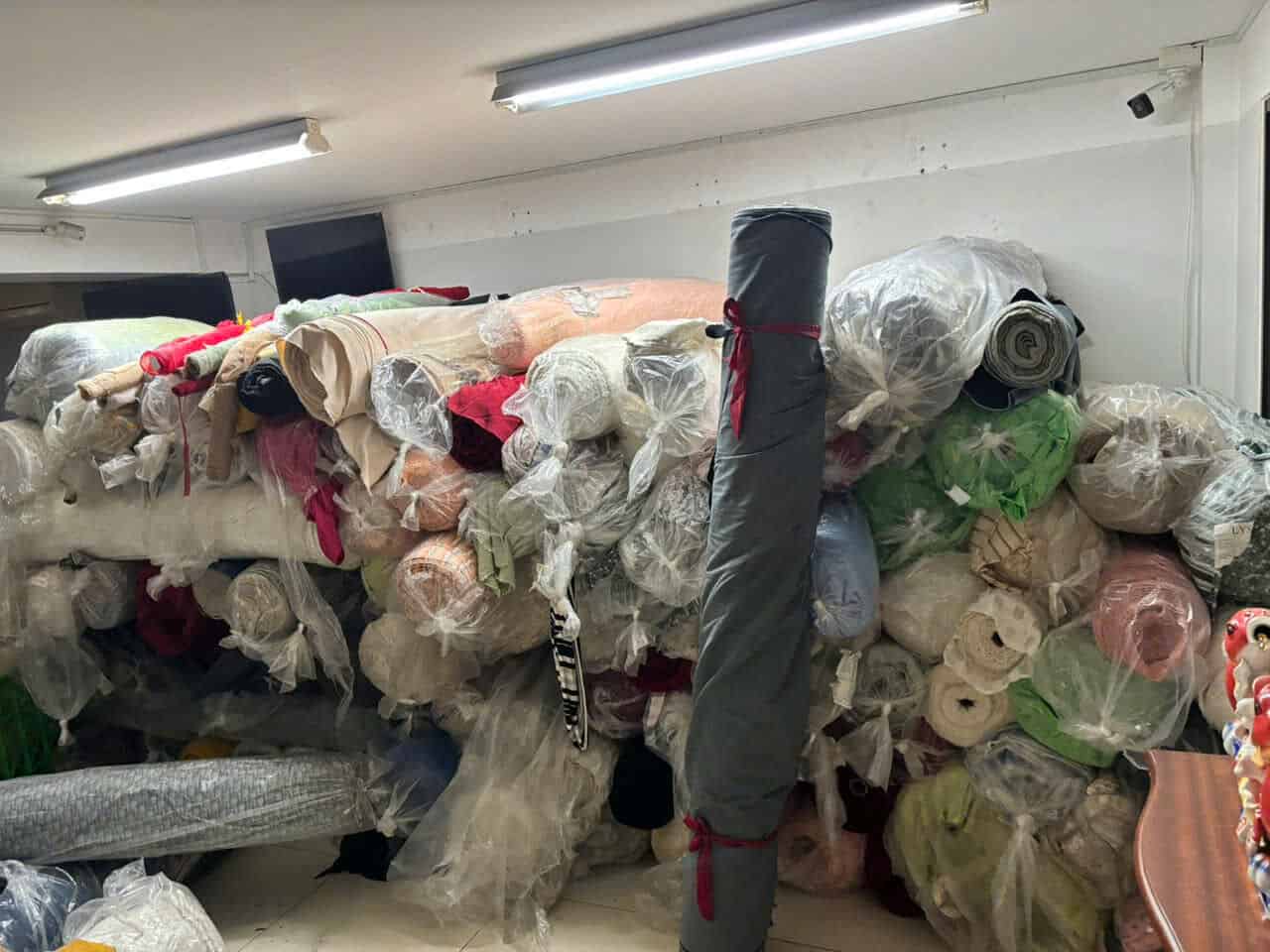
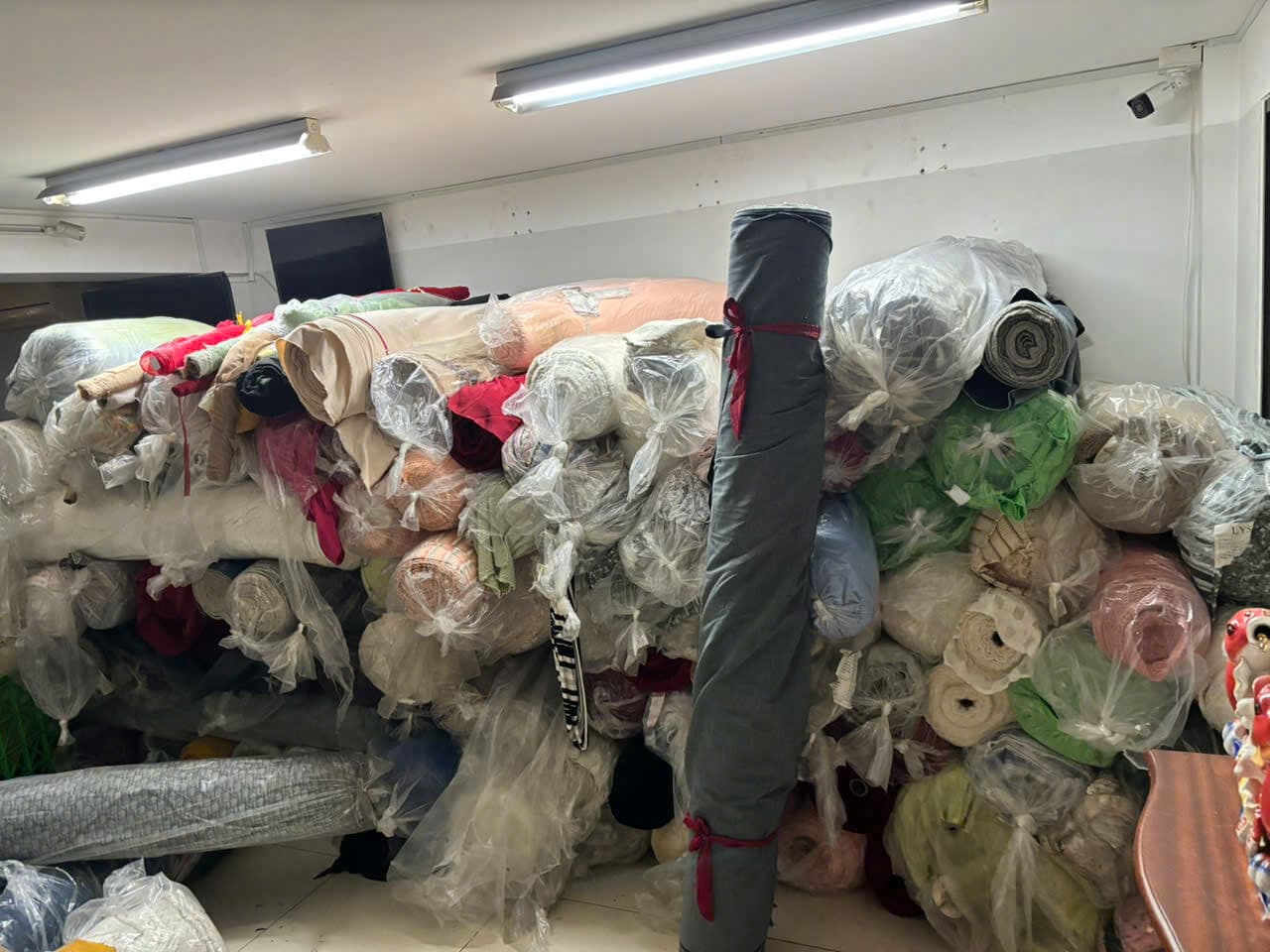
Garment factory scraps: waste, but still money
Buying fabric scraps is a service Gia Bao provides regularly to garment factories large and small. Scraps are the leftover fabric after spreading and cutting panels: selvedge strips, the gaps between pattern pieces, and offcuts from the sample room. A factory cutting a few hundred pieces a day can produce several bags of scraps, and that adds up very quickly.
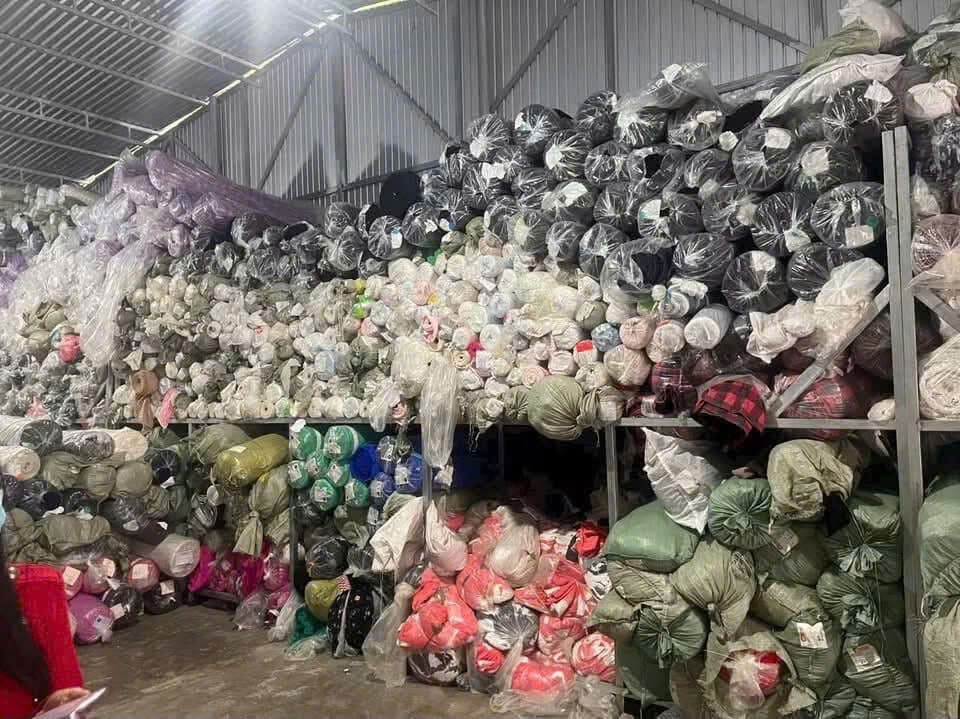
Many factory owners still treat this as rubbish and pay someone to cart it away. In fact fabric scraps have a market: industrial wiping rags, stuffing for pillows, cushions and soft toys, shredding into recycled fibre, or, for bigger pieces, handicrafts and patchwork bags. So instead of paying to get rid of them, you can sell them to a scraps buyer and earn something back, while keeping the factory tidy and safer from fire.
The fabric scraps Gia Bao buys
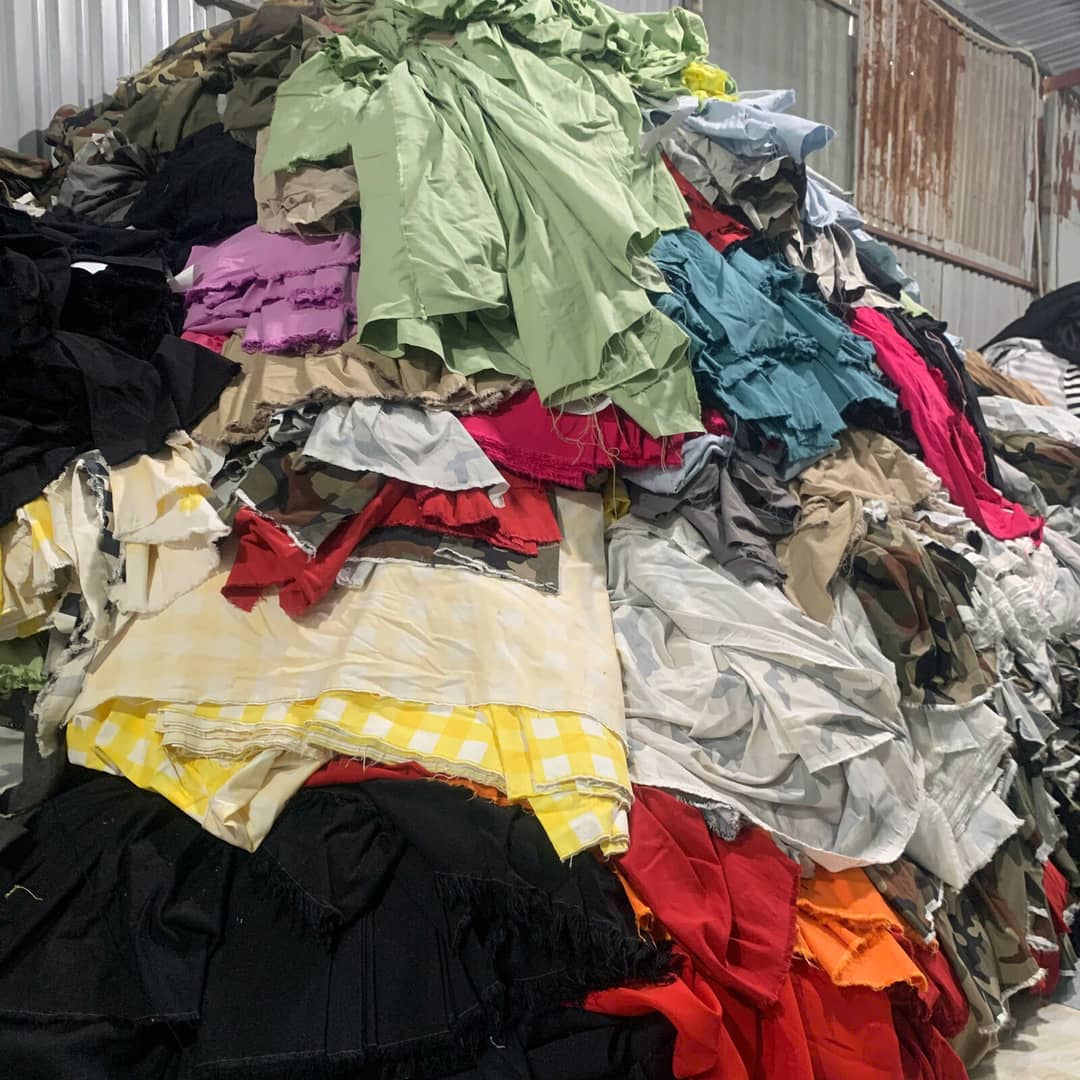
We take almost every kind of scrap produced in the garment trade, as long as the fabric is dry and not mixed with household rubbish:
- Cutting-table offcuts: selvedge strips, fabric edges and the waste around pattern pieces.
- Sample cutting waste: pieces from the sample room used to test fit and colour, usually good fabric in large pieces.
- Knit scraps: cotton jersey, pique and cool-touch knit from T-shirt factories. See our knit fabric buying page if you also have full rolls.
- Woven scraps: kate, khaki, denim, shirting and suiting fabric.
- White and single-colour scraps: the easiest to recycle, so they usually fetch more.
Pieces from about half a metre long are no longer scraps but remnants, which are priced quite differently. Keep them separate and see our fabric remnants buying page.
What determines the price of fabric scraps
Fabric scraps are priced by the kilo, but the price per kilo can vary quite a lot between two factories. The main factors:
Material purity
A bag containing only one kind of fabric, for example all cotton or all knit, is easier to recycle than a bag of everything mixed together. Simply separating knit from woven already changes the price.
Size of the pieces
Large pieces that can be reused for patchwork or crafts always fetch more than small offcuts only fit for shredding or stuffing.
Colour
White, light-coloured and single-colour scraps are preferred over mixed dark colours, because recycling them needs less processing.
Cleanliness and dryness
Fabric with machine oil or glue on it, or mixed with tangled thread, pattern paper or plastic bags, or that has got wet, will have weight deducted or a lower price. The cleaner the bag, the more honest the weight.
Volume and frequency
Factories with a steady output of scraps collected on a fixed schedule let us plan our trucks, so the price is usually better than for occasional small lots.
How to sell fabric scraps to Gia Bao
With scraps, everything is much simpler than with fabric rolls. Here is what to do:
- Take a few photos: one overview of the bags and one of an open bag showing the scraps inside.
- Send them via Zalo 0904 623 046 with your factory address and an estimate of the number of bags or kilos. You can message us in English and we will reply.
- Gia Bao gives an indicative price and books a time. On arrival we open a few bags at random to check and weigh everything in front of you.
- You are paid right after weighing, and the crew loads the bags onto the truck and tidies up the area.
If your factory wants regular scrap collection, we agree the pricing and sorting once, and after that it is simply weigh and pay. The detailed steps are on our buying process page.
Three habits that help fabric scraps sell for more
These are small things the cutting team can do during the shift without extra staff:
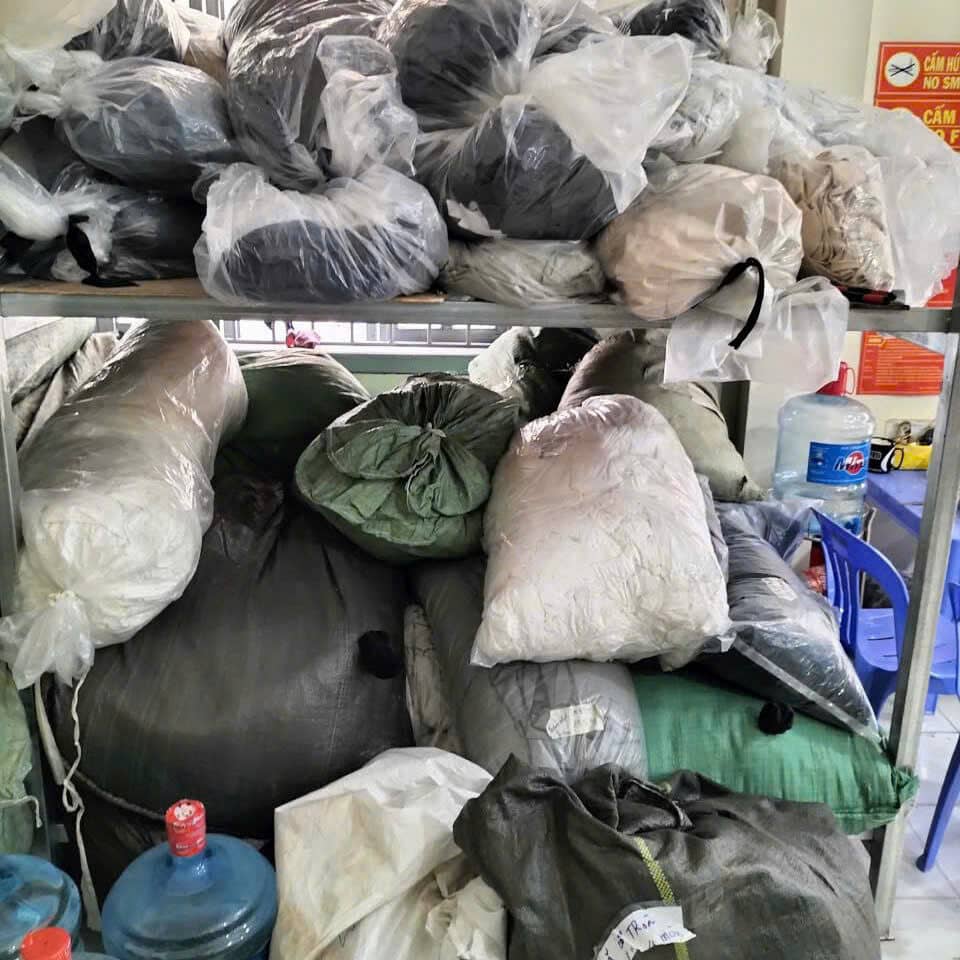
- Keep two or three bags next to the cutting table: one for knit, one for woven, one for white scraps. Separating from the start is far easier than sorting later.
- Keep rubbish out of the scrap bags: pattern paper, tape, plastic cups and bags mixed in downgrade the whole bag.
- Store bags somewhere dry: scraps absorb moisture very quickly; wet bags are falsely heavy and go mouldy, and buyers deduct more than the water weight.
One more safety note: fabric scraps are highly flammable. Piling up too many bags in the factory, near sockets or the ironing area, is a risk you do not need. Selling regularly brings in money and lowers the fire risk.
Areas we cover for fabric scraps
Gia Bao is based at 69C Đỗ Đức Dục, Phú Thọ Hòa Ward, Ho Chi Minh City. We collect scraps in districts with many small garment workshops such as Tan Phu, Tan Binh, Binh Tan, Go Vap and District 12, and in nearby industrial zones. For factories in Binh Duong, Dong Nai or Long An, we prioritise lots of a few hundred kilos or more, or combine them with fabric rolls and remnants to make the trip worthwhile.
Is a corner of your factory piled high with scrap bags? Call or message Mr. Tuan Tai on Zalo, and Gia Bao will buy your fabric scraps and leave your premises clean.