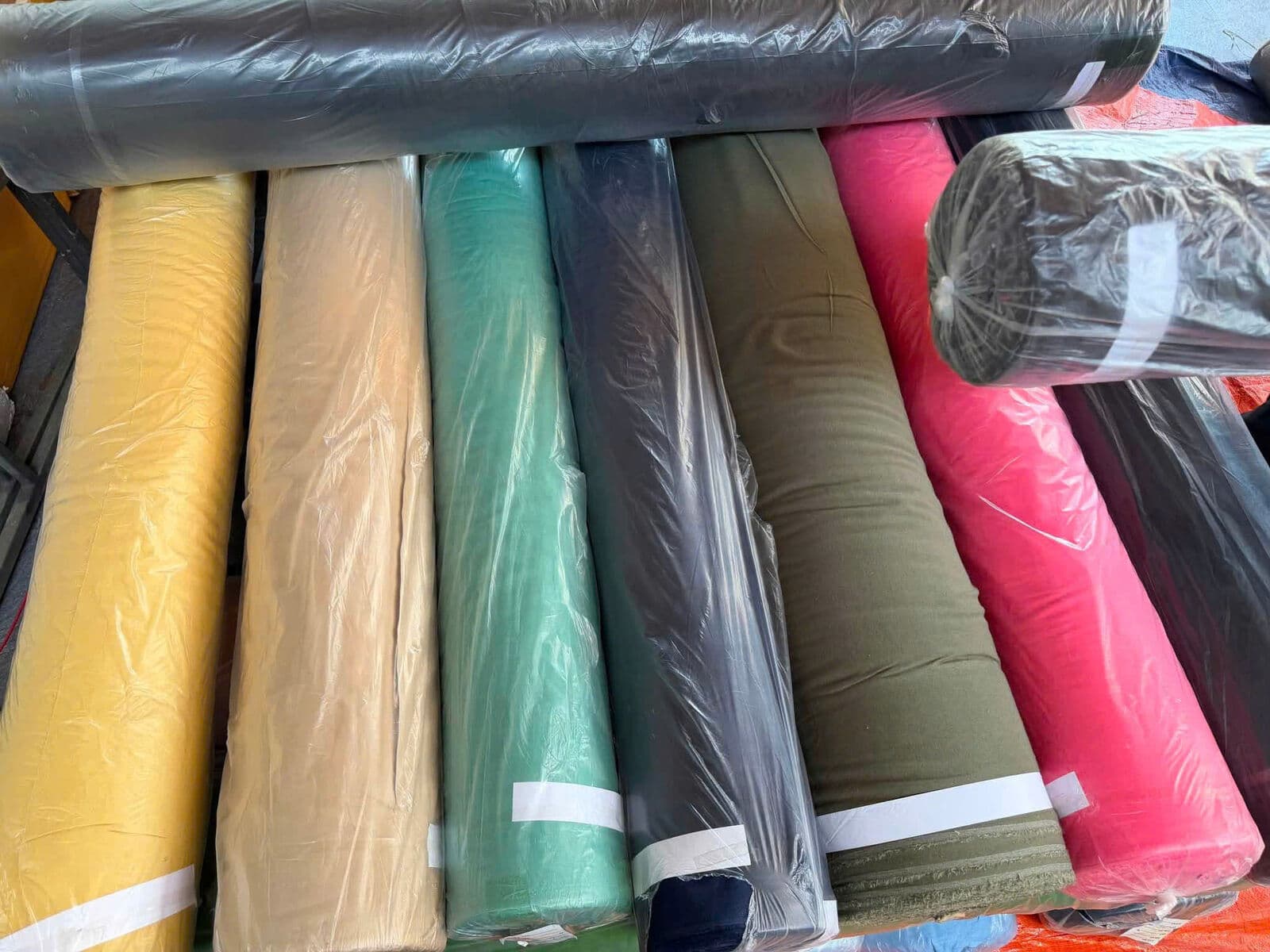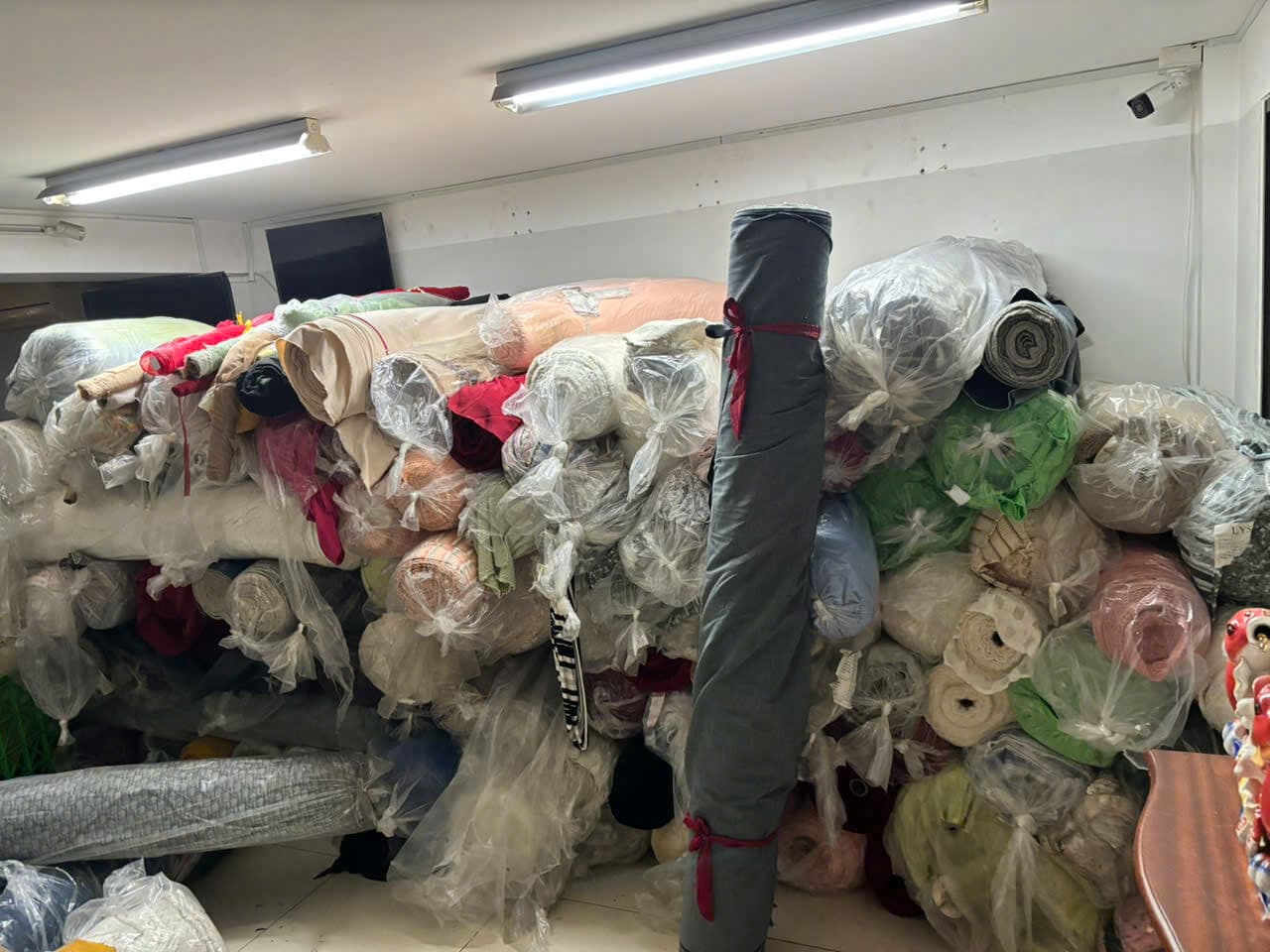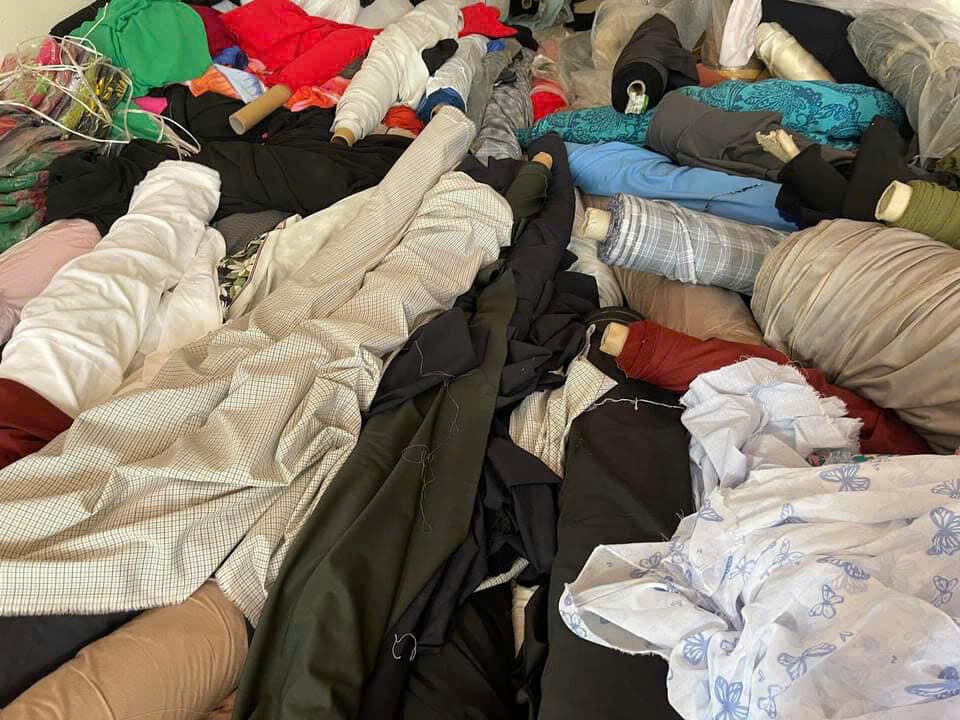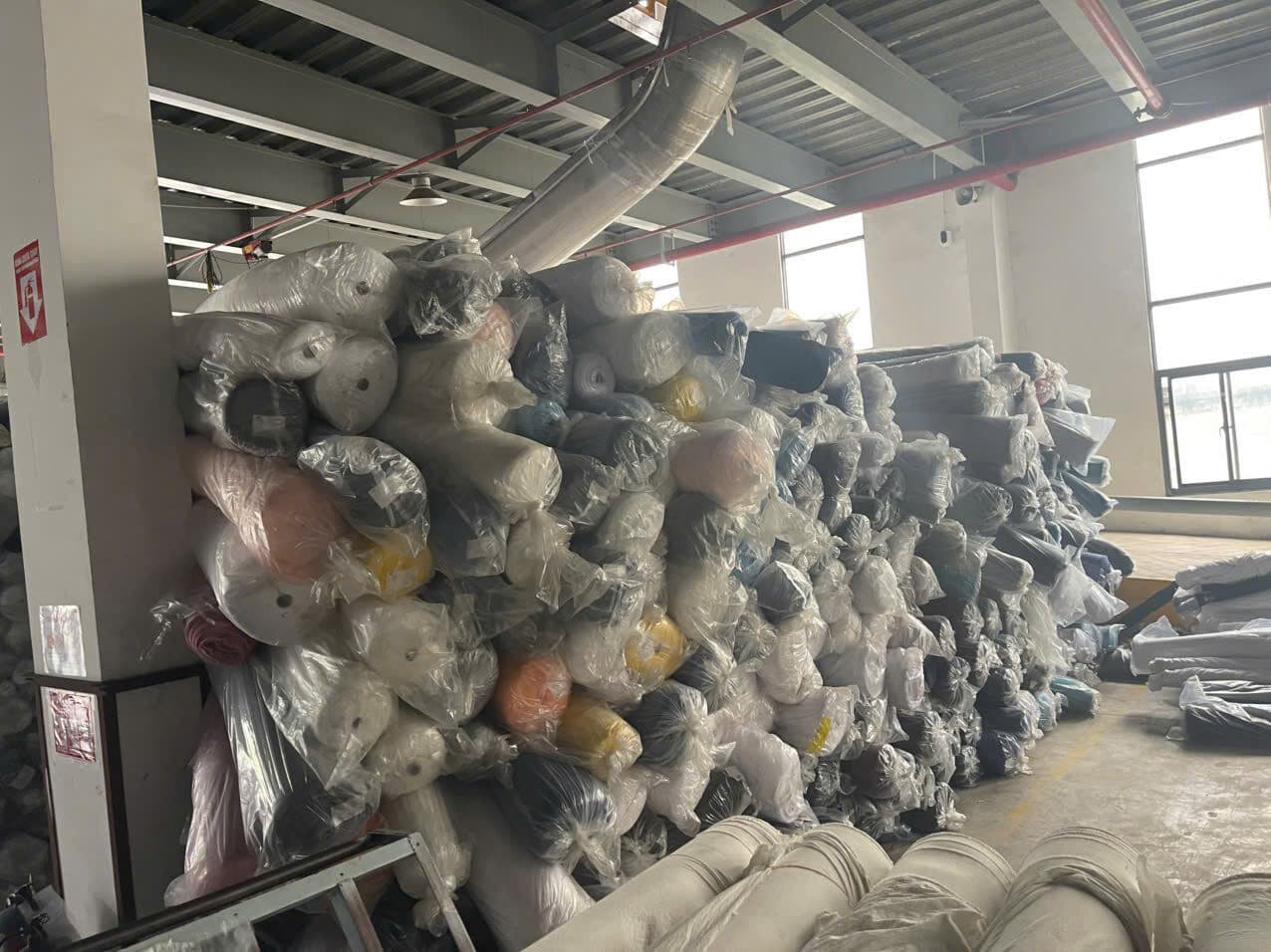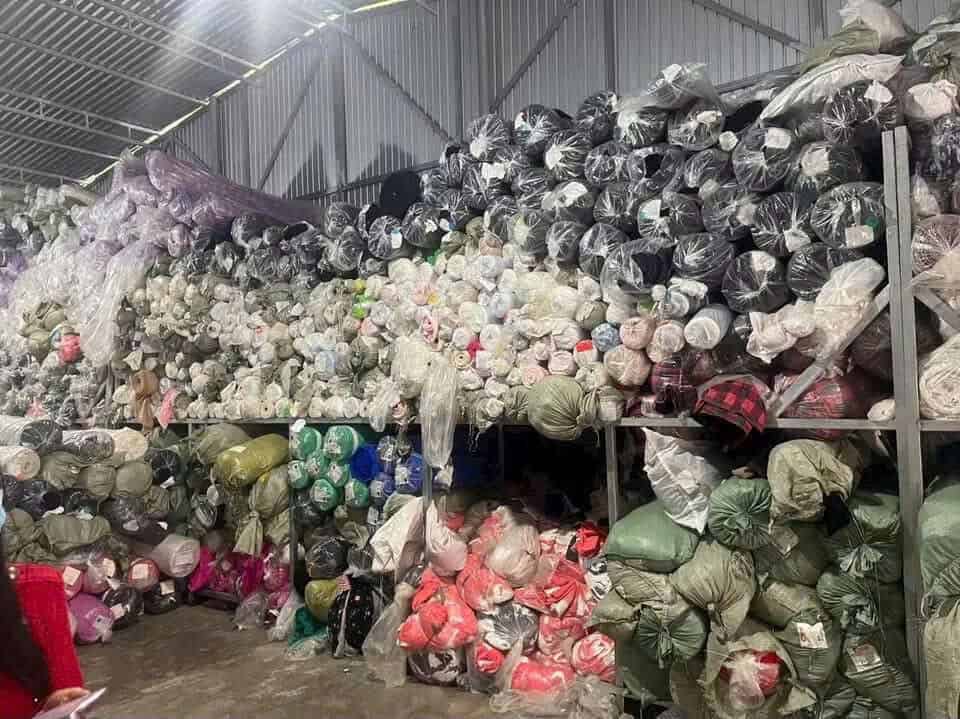
Buying surplus cotton fabric is the work Gia Bao does most often, because cotton and kate are two fabric lines that almost every garment factory in Ho Chi Minh City uses: shirts, office uniforms, school uniforms, sleepwear and children's clothing. After each order a few rolls are left over, a few colours the buyer changed their mind about, and the warehouse slowly fills up. This page explains how we tell each type apart, why two rolls that look alike can be worth very different amounts, and what you should prepare before sending photos for a quote.
How cotton and kate fabric differ
In the trade these two names are often used interchangeably, but when buying they have to be kept apart because their value differs.
Cotton fabric
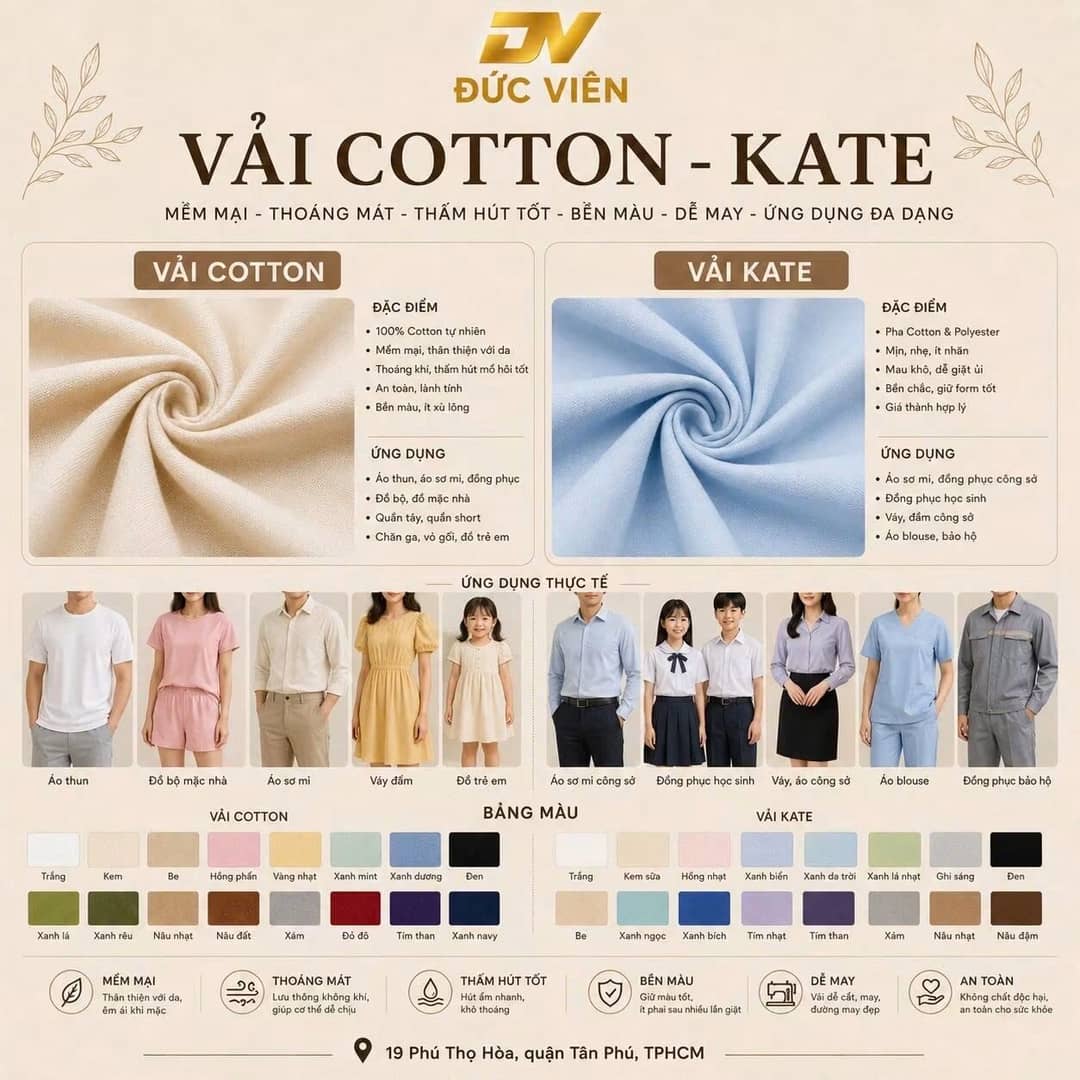
Cotton is a natural fibre made mainly of cellulose. 100% cotton fabric feels soft and slightly cool, absorbs sweat well, and creases noticeably when crumpled. Cotton comes in many constructions: woven into shirting, poplin and oxford; knitted into cotton jersey (which we cover separately on our knit fabric buying page). Combed cotton has finer yarn and a smoother face than carded cotton, and usually fetches a better price.
Kate fabric
Kate is the common Vietnamese name for woven polyester-cotton blends, most often TC (mostly polyester, such as 65/35) and CVC (mostly cotton, such as 60/40). The market also uses many trade names such as American kate, Korean kate, kate silk and kate ford. Kate creases less than cotton, holds its shape, dries quickly and costs less, so it is widely used for uniforms and everyday shirts. The downside is lower absorbency than cotton, and blends with a high polyester share feel hotter to wear.
The cotton and kate fabrics Gia Bao buys
- 100% cotton: poplin, oxford, cotton lawn, light cotton twill and undyed greige cotton.
- Cotton blends: CVC, cotton with spandex (light stretch) and cotton-linen.
- Kate: TC kate, American kate, Korean kate, kate silk, striped and checked kate used for school and office uniforms.
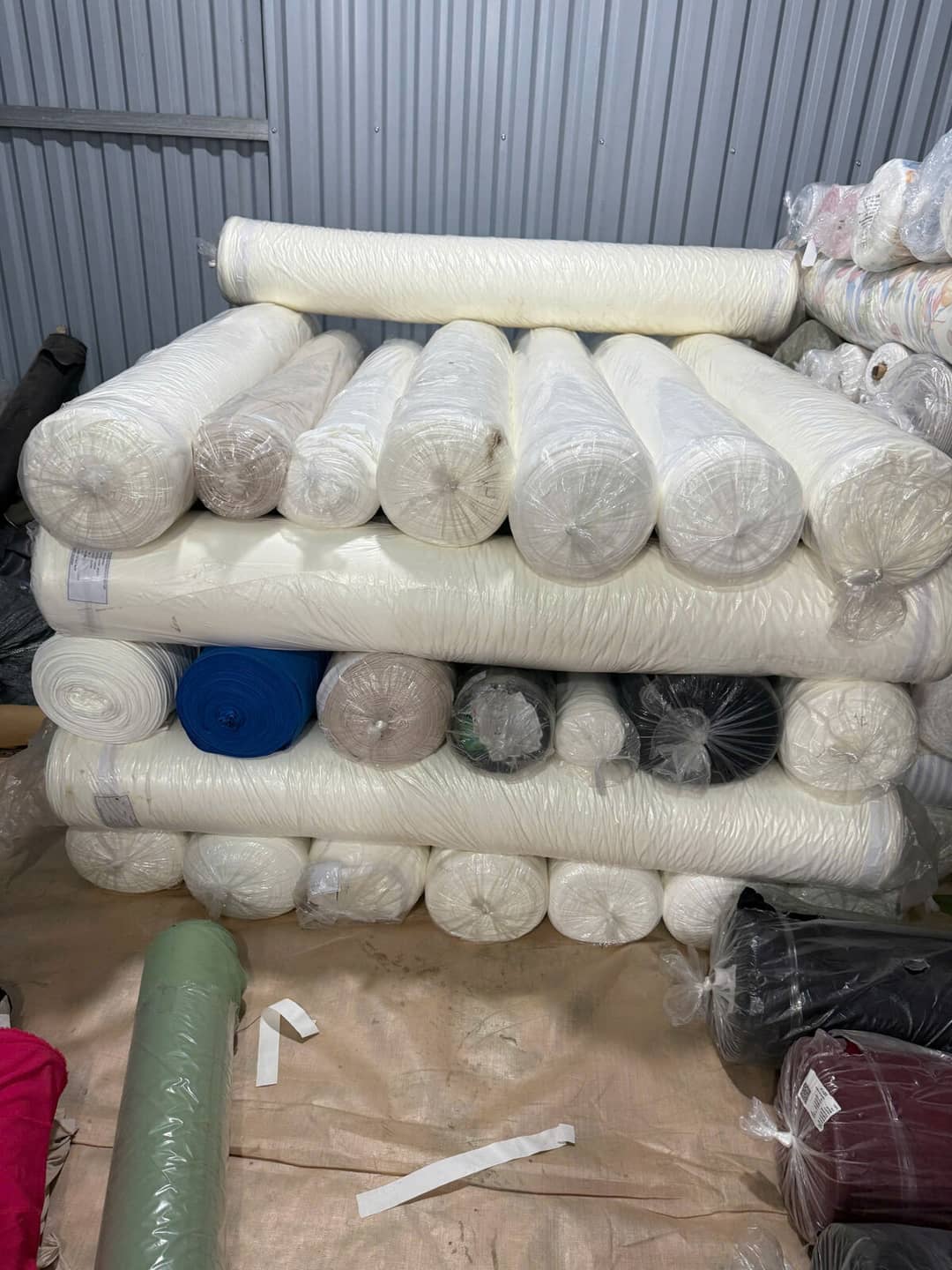
- Forms: sealed full rolls, part rolls, roll ends and large remnants. For small remnants and cutting scraps, see our fabric remnants buying page.
Why cotton and kate often end up as surplus stock
There are a few reasons we see again and again when we visit factories:
- Uniform orders are woven in a company's or school's own colour. Once the order is done, the excess can hardly be resold to anyone else because the colour is too specific.
- Factories over-buy to cover cutting waste, and actual waste turns out lower than planned.
- A shirt style changes fabric midway, leaving a whole delivered lot behind.
- Greige cotton bought for order-specific dyeing sits in full rolls after the order is cancelled.
Over time, cotton tends to yellow at the roll edges and can turn mouldy in a low, damp store; kate is more durable but its colours go out of fashion. Selling early always fetches more than selling late.
What determines the price of surplus cotton fabric
Gia Bao does not quote one price for every kind of cotton. For this fabric line, these factors matter most:
- The real cotton content. 100% cotton and CVC are priced differently from TC kate. This is why we always do a burn test.
- Weight and yarn fineness. Heavier fabric, combed yarn and a dense weave fetch more than thin, loose fabric.
- Colour. White, black, navy and sky blue resell easily; colours specific to a company logo are harder to sell.
- Length per roll and number of rolls per colour. Ten rolls in one colour are worth more than ten rolls in ten colours.
- Condition: yellowing, mould, faded edges and weaving faults. For faulty fabric, see how we buy it on our defective fabric buying page.
For a clearer picture of how prices are worked out for all fabric types, read our fabric buying quote page.
How to check your fabric before sending photos for a quote
Read the roll label
If the roll still has the mill label, photograph it clearly: it usually shows the item code, composition (for example 100% CO, T/C 65/35, CVC 60/40), width, metres or kilos, and dye lot number. CO or COTTON means cotton, T or PES means polyester. This information lets us quote almost exactly over Zalo.
Burn a small sample
Cut a small piece from the end of the roll and burn it on a ceramic plate, well away from the goods:
- Cotton burns quickly with a yellow flame and smells like burning paper; it leaves fine grey ash that crumbles when pressed.
- Polyester shrinks from the flame, melts, gives off black smoke and leaves a hard bead that will not crush.
- Kate, being a blend, shows both signs: it still burns, but the ash contains hard beads. The more beads, the higher the polyester share.
Take the right photos
Take an overview of the pile to show the quantity, a close-up of the fabric face in natural light to show the true colour, and a shot of the roll end to show how thick the roll is. If some rolls are stained or mouldy, photograph them too rather than hiding them, because we will check on arrival anyway and the price would have to be adjusted.
Storage tips to keep cotton and kate at a good price
- Keep rolls on pallets or racks, not directly on the concrete floor, because cotton absorbs moisture very quickly.
- Keep the mill's plastic wrap on; re-wrap the end of any roll that has been opened.
- Avoid direct sunlight through windows, which leaves dark cotton faded in streaks.
If surplus cotton or kate is taking up space, call or message Zalo 0904 623 046 (Mr. Tuan Tai). You can write to us in English and we will reply. Send a few photos and Gia Bao will give a preliminary quote the same day, arrange a time to inspect, and pay as soon as the weighing is done.