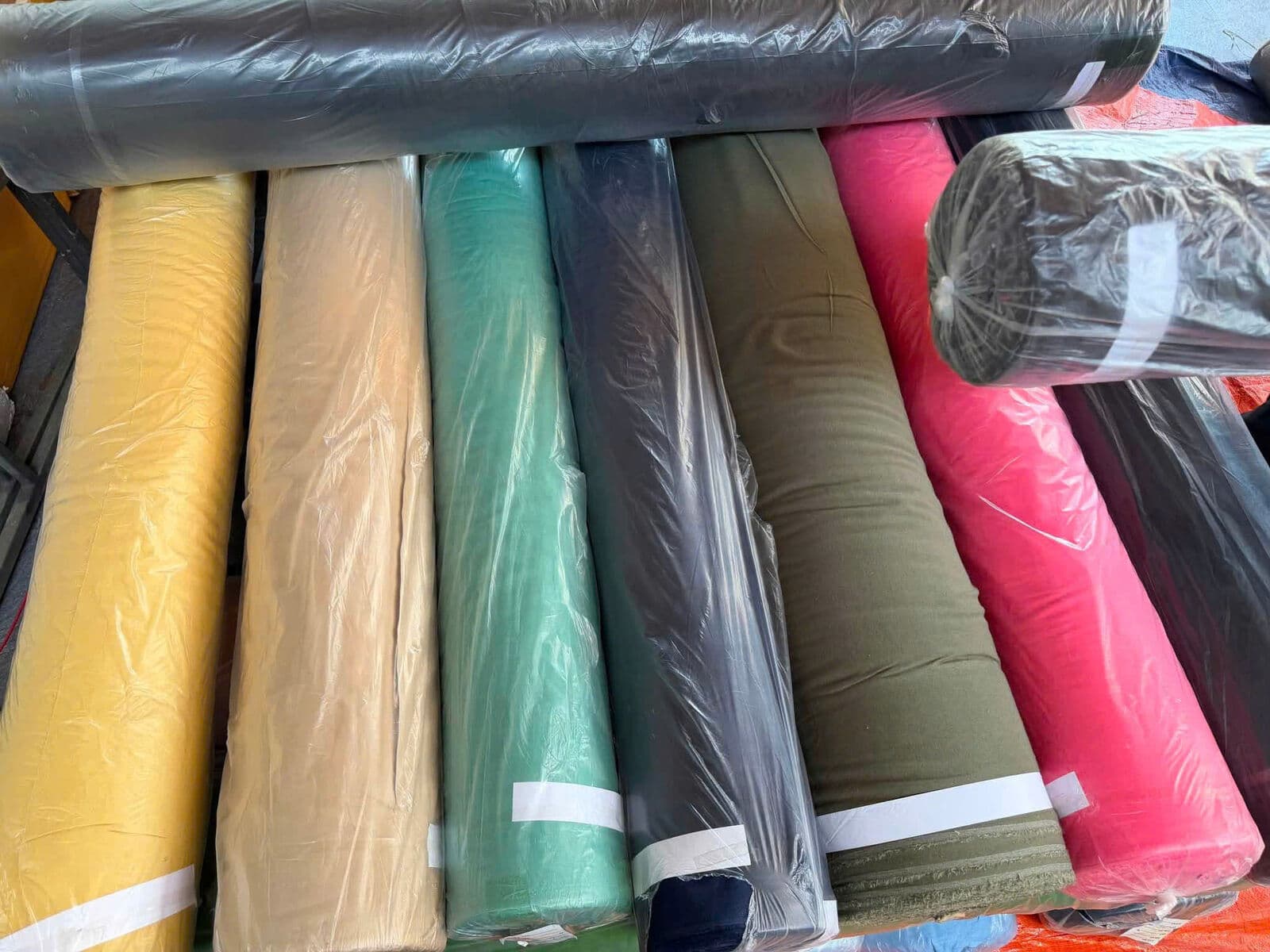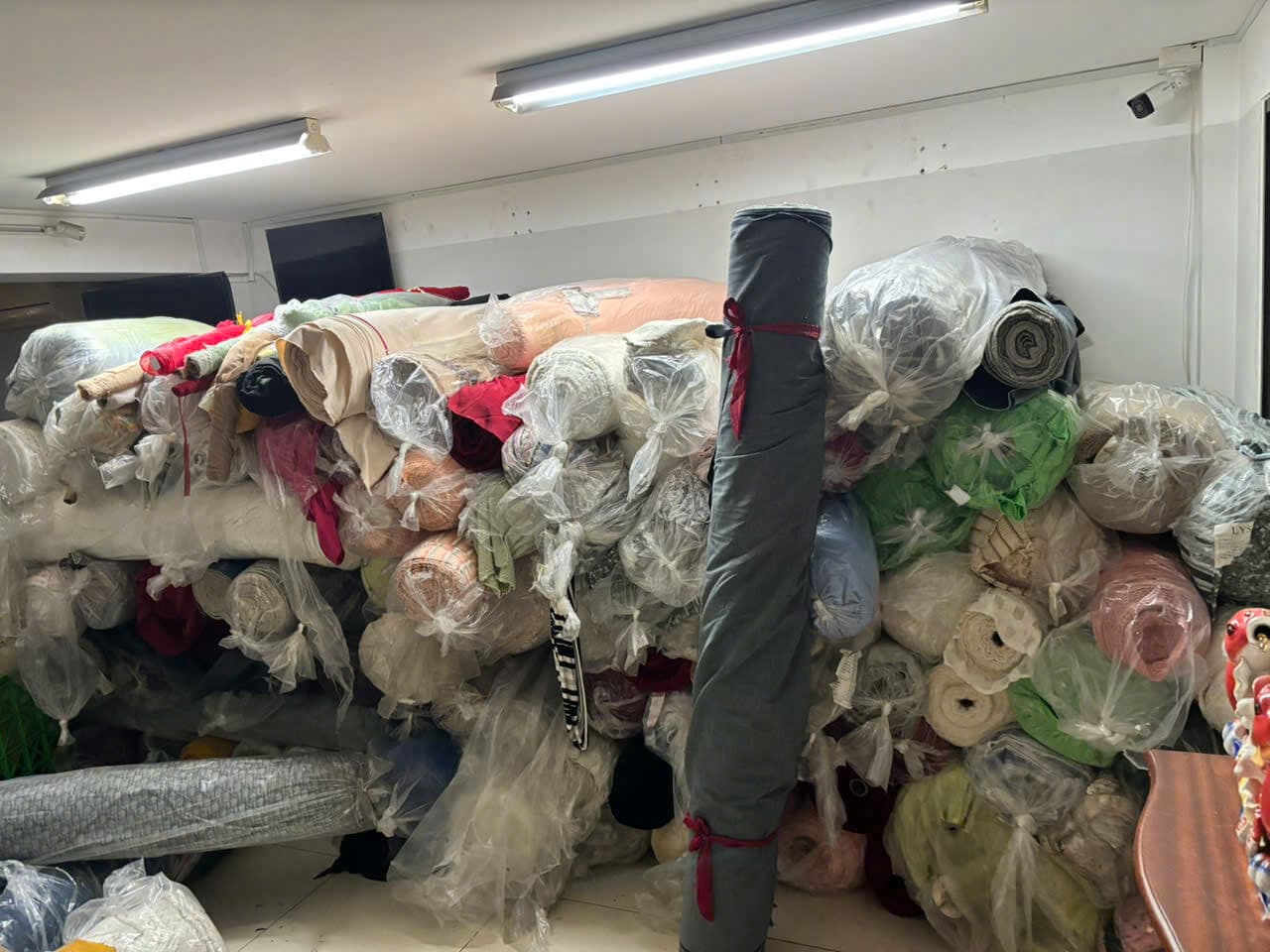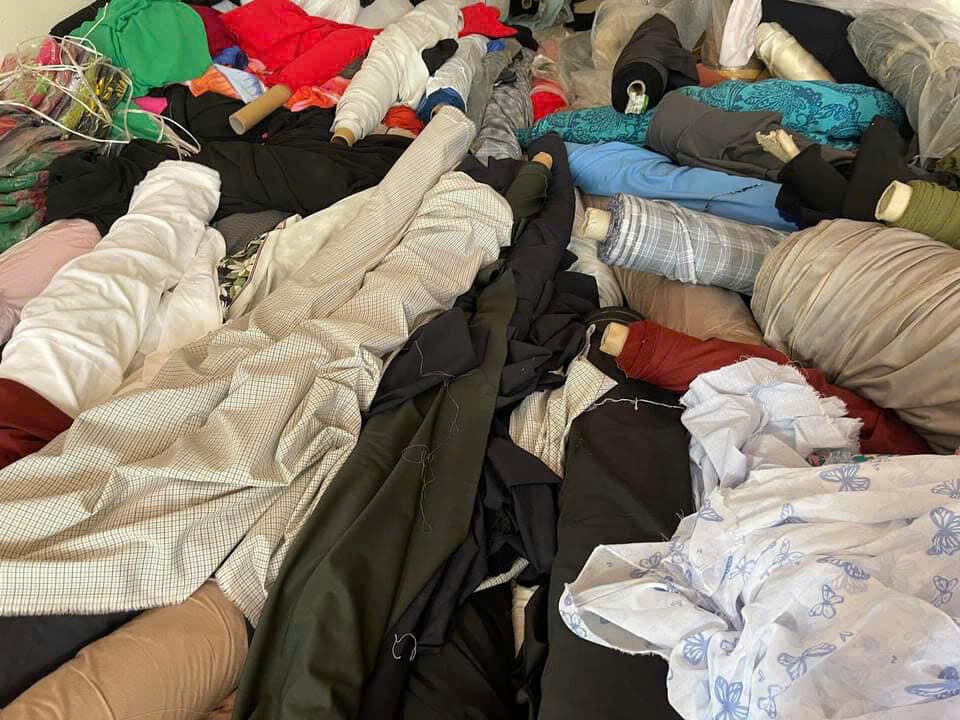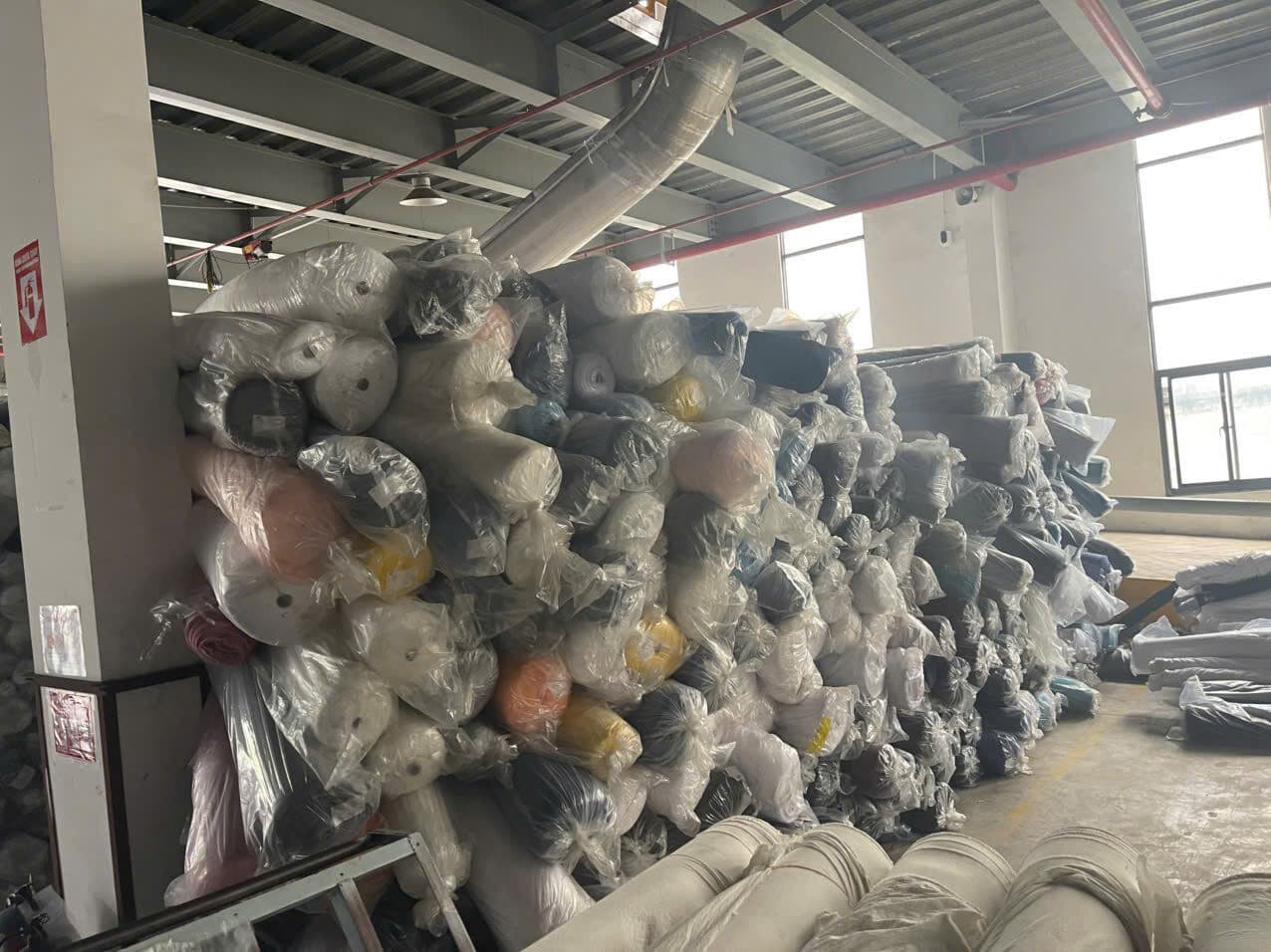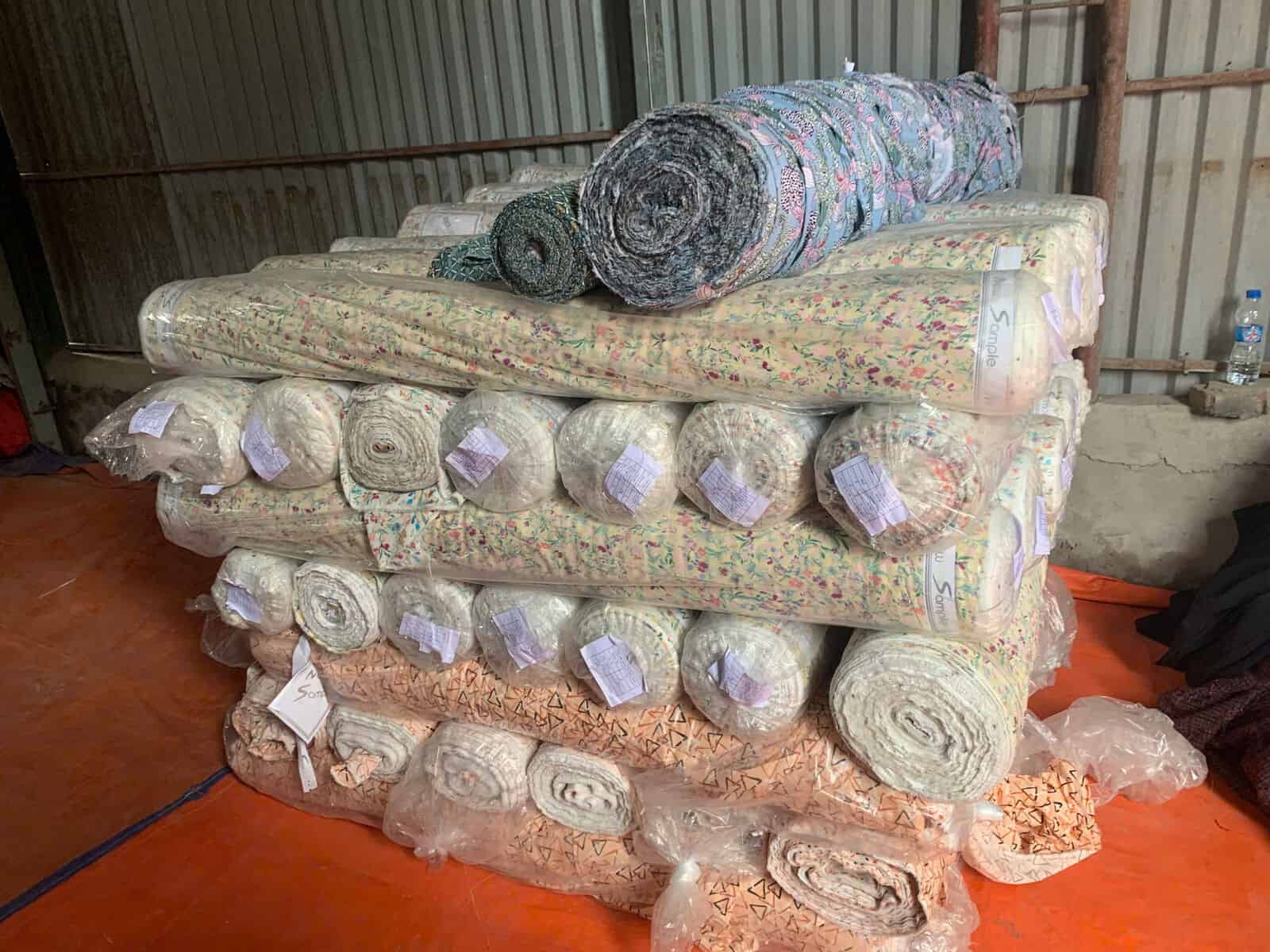
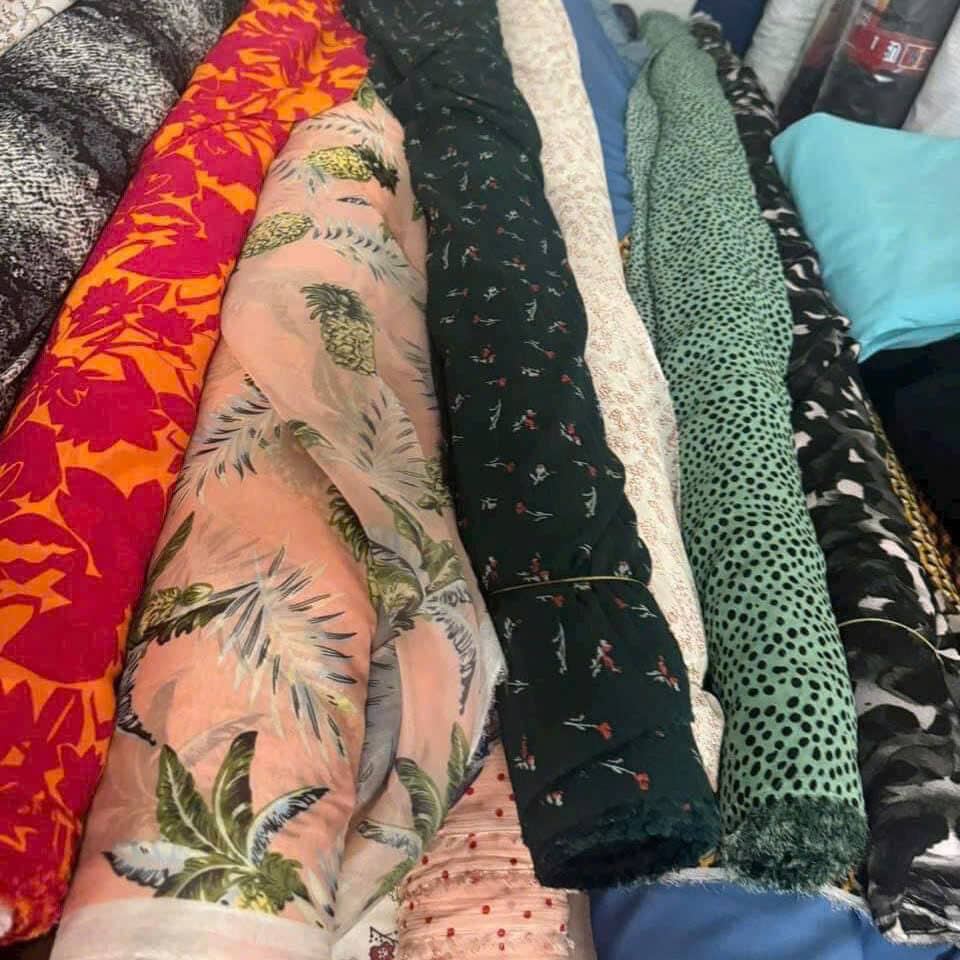
Buying surplus rayon and silk requires a buyer who can tell fibres apart, because this group includes both very ordinary and very expensive fabrics that look much alike in photos: a smooth, drapey face and plenty of floral prints. We often find such lots at factories making dresses, women's blouses and loungewear, and at designer fashion shops. Below is what Gia Bao looks at when we come to buy.
Rayon, mango and silk: the characteristics of each
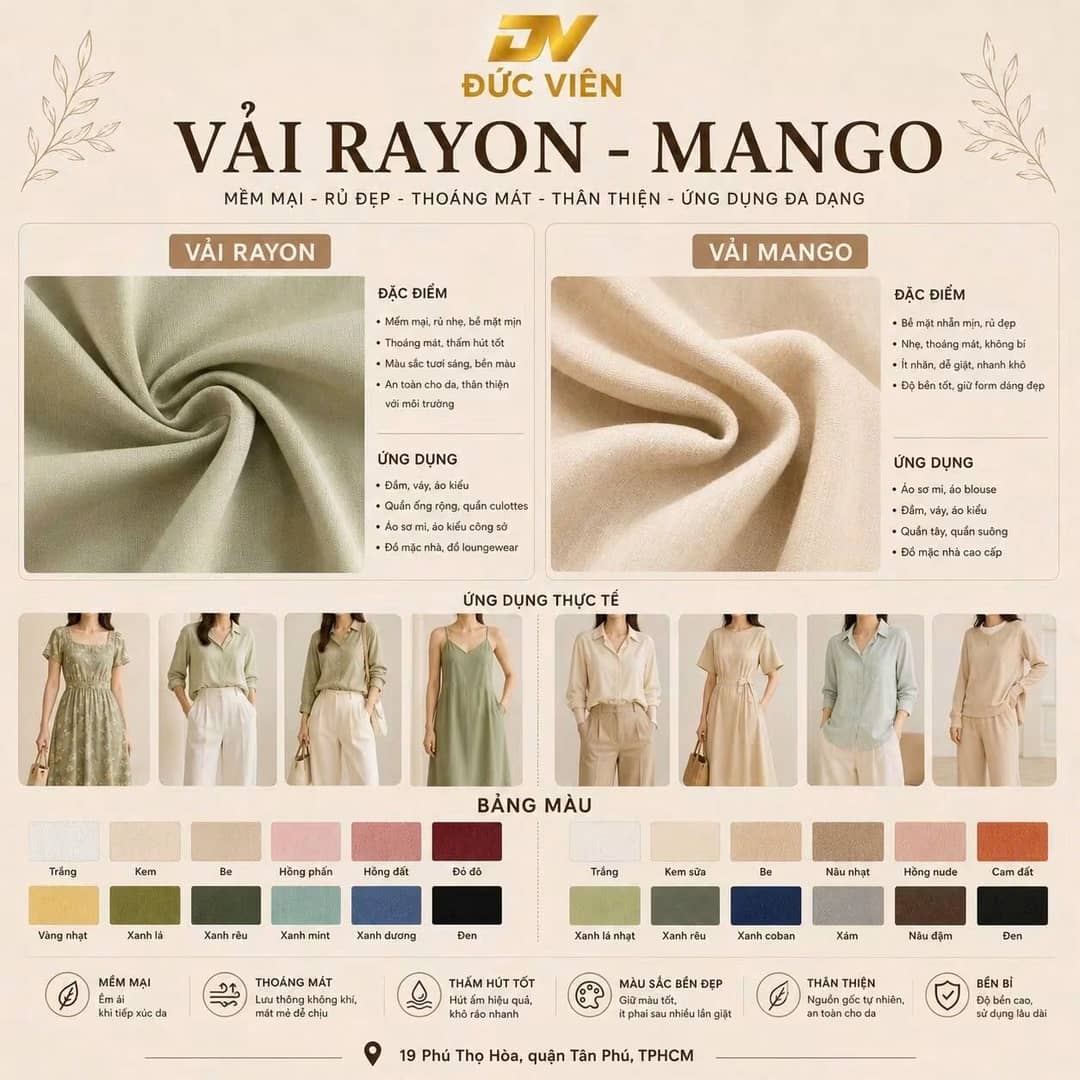
Rayon fabric
Rayon, also called viscose, is a regenerated cellulose fibre: wood pulp is dissolved and spun back into fibre. Being cellulose-based, rayon is cool, absorbent, soft and drapey, close to cotton in feel but silkier. Its drawbacks are shrinkage in the wash if untreated, creasing, and a clear loss of strength when wet. Rayon is widely used for loungewear sets, shift dresses, blouses and maxi skirts, especially in prints.
Mango fabric
Mango is a familiar trade name in Vietnamese fabric markets for a soft, smooth, drapey, slightly glossy fabric that creases little, often used for loungewear and dresses. Its composition is not fixed: depending on the supplier, some lots are synthetic and some are rayon blends. So with mango fabric we price by the actual fibre test, not by the name.
Silk fabric
Genuine mulberry silk is made from silkworm filament, a protein fibre, with a soft sheen, a cool and smooth feel and the highest value in the group. However, many fabrics sold as silk (satin silk, silk chiffon, Korean silk) are actually glossy woven polyester. There are also other premium fibres such as Tencel (lyocell) and modal, which are regenerated cellulose like rayon but stronger.
The premium fabrics Gia Bao buys
- Plain rayon, printed rayon, rayon-linen and rayon with spandex.
- Mango fabric, satin silk, silk chiffon, voile and cool-touch silk.
- Mulberry silk, Tencel, modal, cupro and other premium imported fabrics.
- Full rolls, part rolls and large usable remnants. For small remnants and sample fabric, see our fabric remnants buying page.
For linen-look fabric made from rayon, see our linen buying page to tell it apart from real flax.
Why rayon and silk often end up as surplus
This is the fabric group most driven by prints and seasons. A floral print that sells well this season gets no interest the next. Fashion shops usually order many prints in moderate quantities to test the market, and when a print does not sell, several rolls are left behind. With silk and expensive imported fabrics, factories do not dare to cut many trials and do not want to sell cheap either, so they hold on waiting for an order, and the years go by.
What determines the price of surplus rayon and silk
- The actual fibre: mulberry silk, Tencel and modal are priced very differently from ordinary rayon; synthetic silk is priced with the polyester group.
- Print and colour: small florals, classic patterns and basic solid colours resell more easily than trend-driven prints.
- Weight and drape: medium-weight fabric with good drape that is not too sheer is usually preferred.
- Condition: rayon kept damp easily develops speckled mould; silk left in the light for a long time fades and the fibre becomes brittle. For fabric with clear faults, see our defective fabric buying page.
- Metres per design: many rolls of the same print are worth more than many odd designs.
How to check the fibre before sending photos for a quote
Read the label
Look for these codes on the roll label: CV or VI is viscose (rayon), SE is silk, CLY is lyocell (Tencel), CMD is modal, PES is polyester. Photograph the label clearly.
Burn a single thread
- Rayon, Tencel, modal: burn quickly like paper, with a burning-paper smell and very little fine ash.
- Mulberry silk: burns slowly and goes out when removed from the flame, smells like burning hair, and leaves a brittle black bead that crumbles when pressed.
- Synthetic silk: shrinks, melts, gives off black smoke and leaves a hard bead that will not crush.
Test by hand
Dip a corner of rayon in water and it goes limp and noticeably weaker than when dry. Rub two layers of mulberry silk together lightly and you hear a dry rustle and feel it warm up in your hand.
Storing rayon and silk to keep their value
Roll the fabric around a core instead of folding it, so thin fabric does not hold crease marks. Keep it somewhere dry, dark and ventilated; wrap mulberry silk in clean paper or cloth and store it separately to protect it from insects. Never keep rayon near any source of damp, because mould that gets into the fibre is very hard to remove.
Call or message Zalo 0904 623 046 (Mr. Tuan Tai) with photos of the label, the fabric face and the whole lot; you can write in English and we will reply. Gia Bao will give a preliminary quote and arrange a date to inspect.