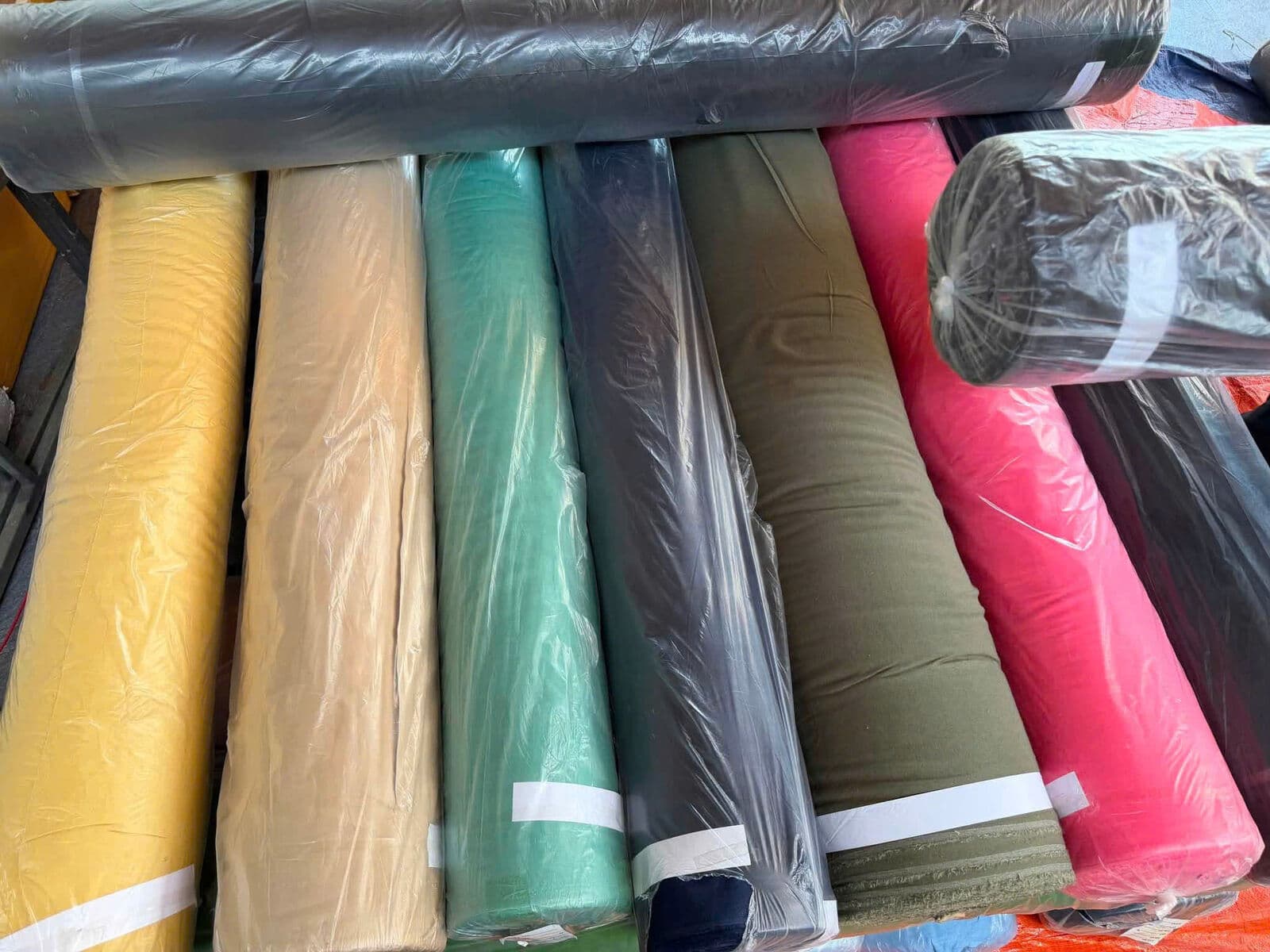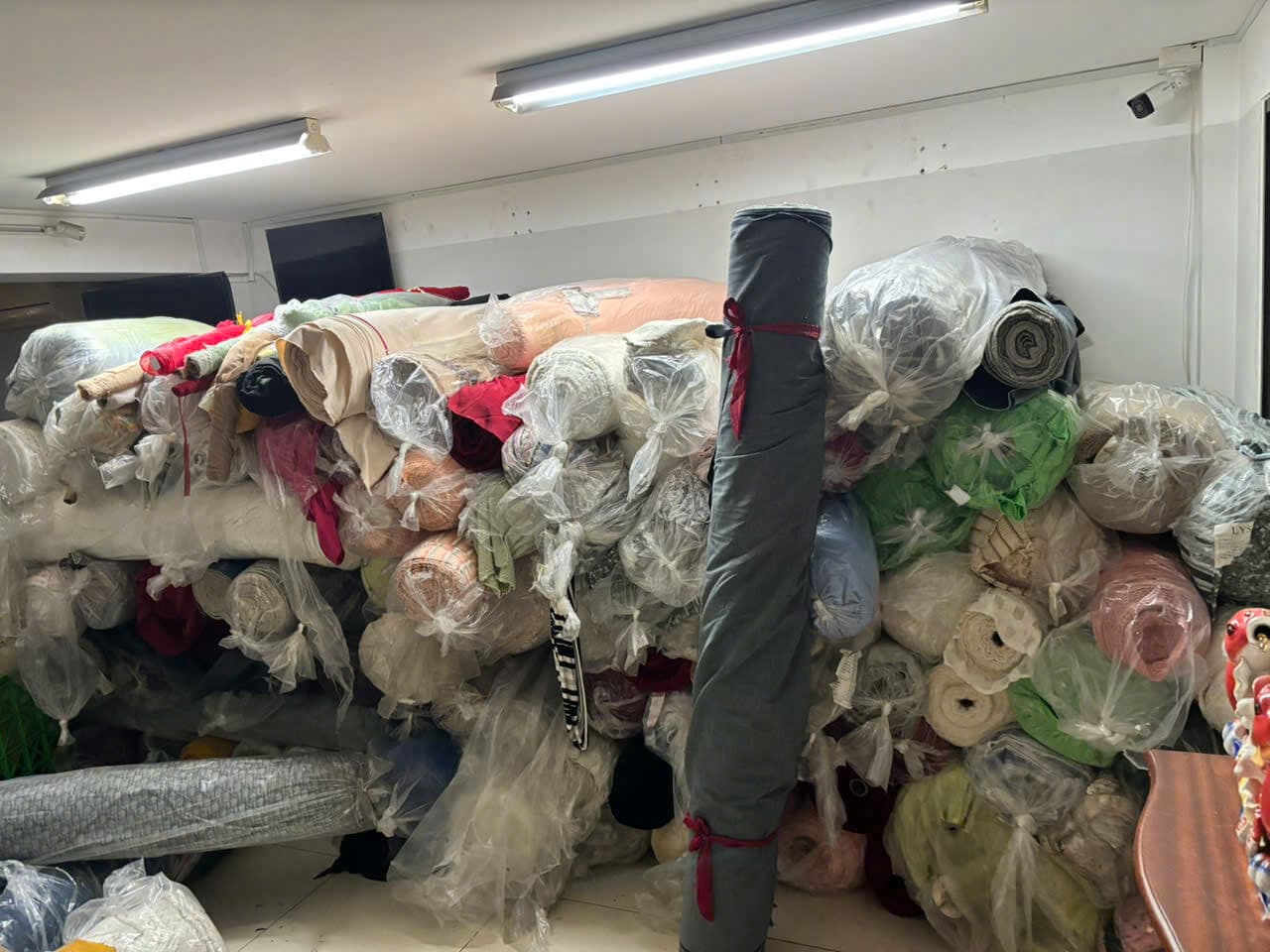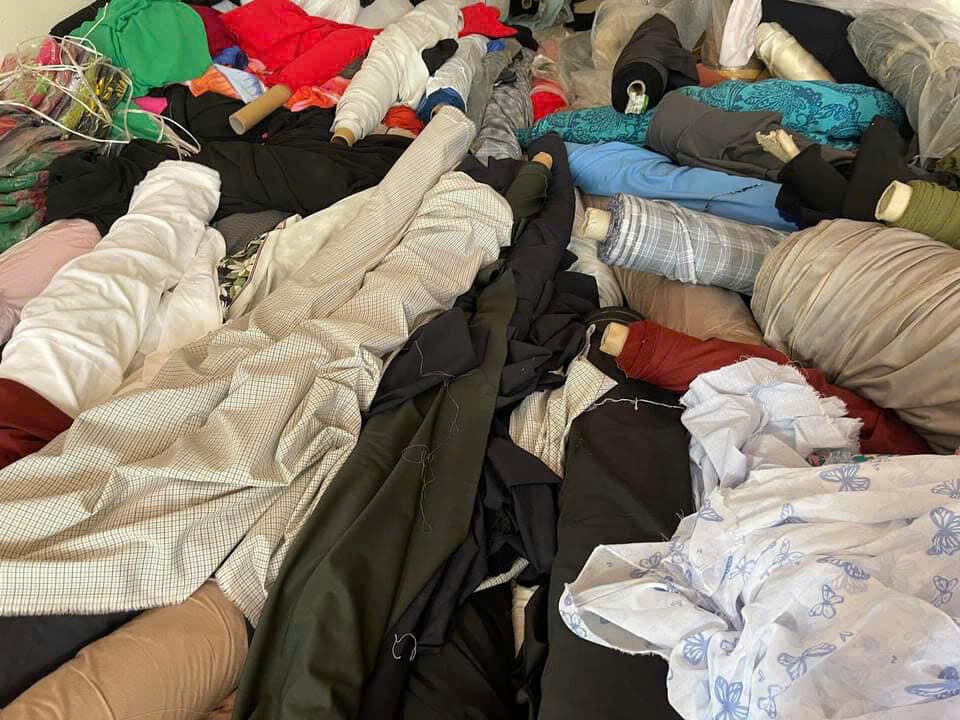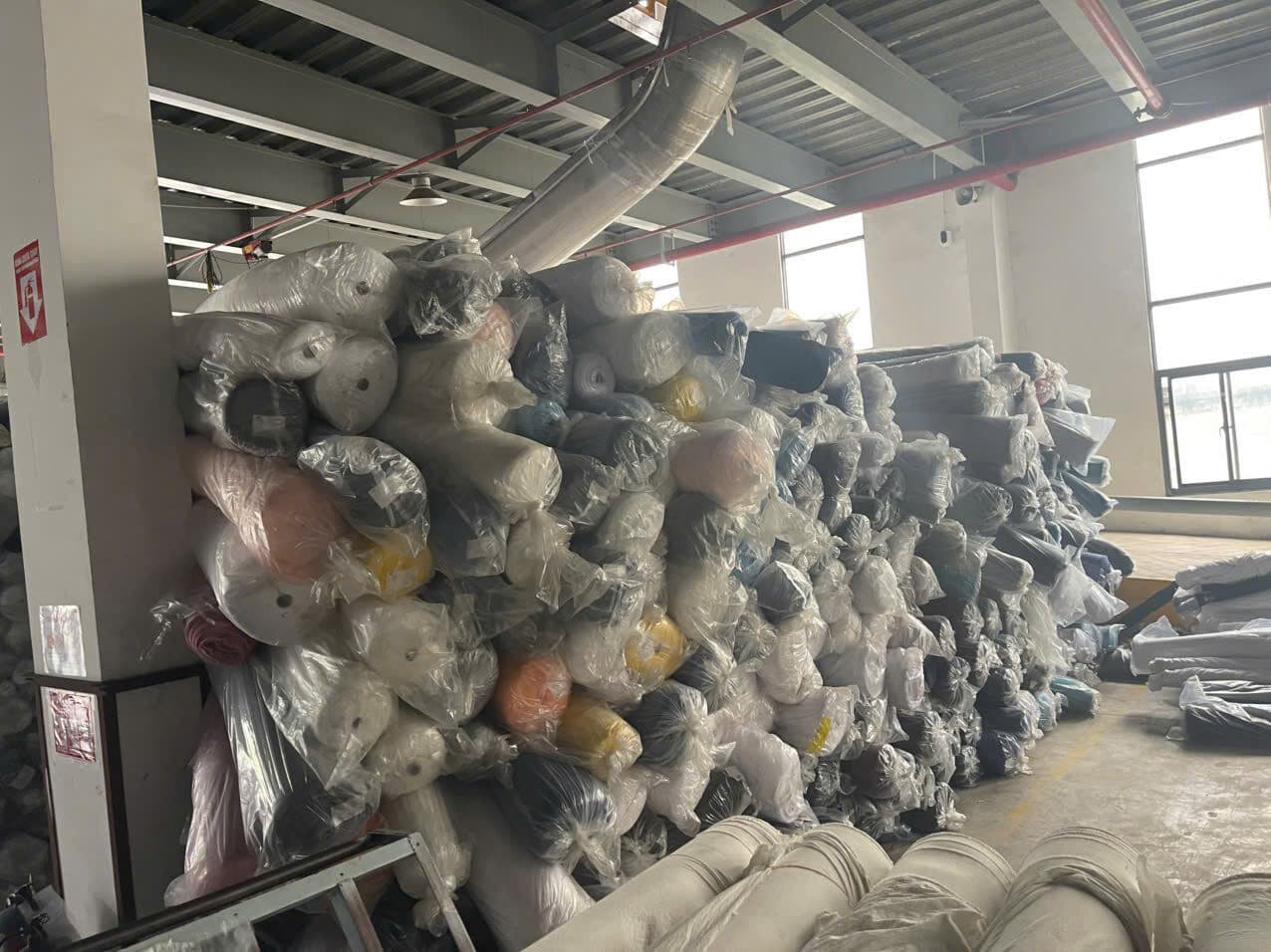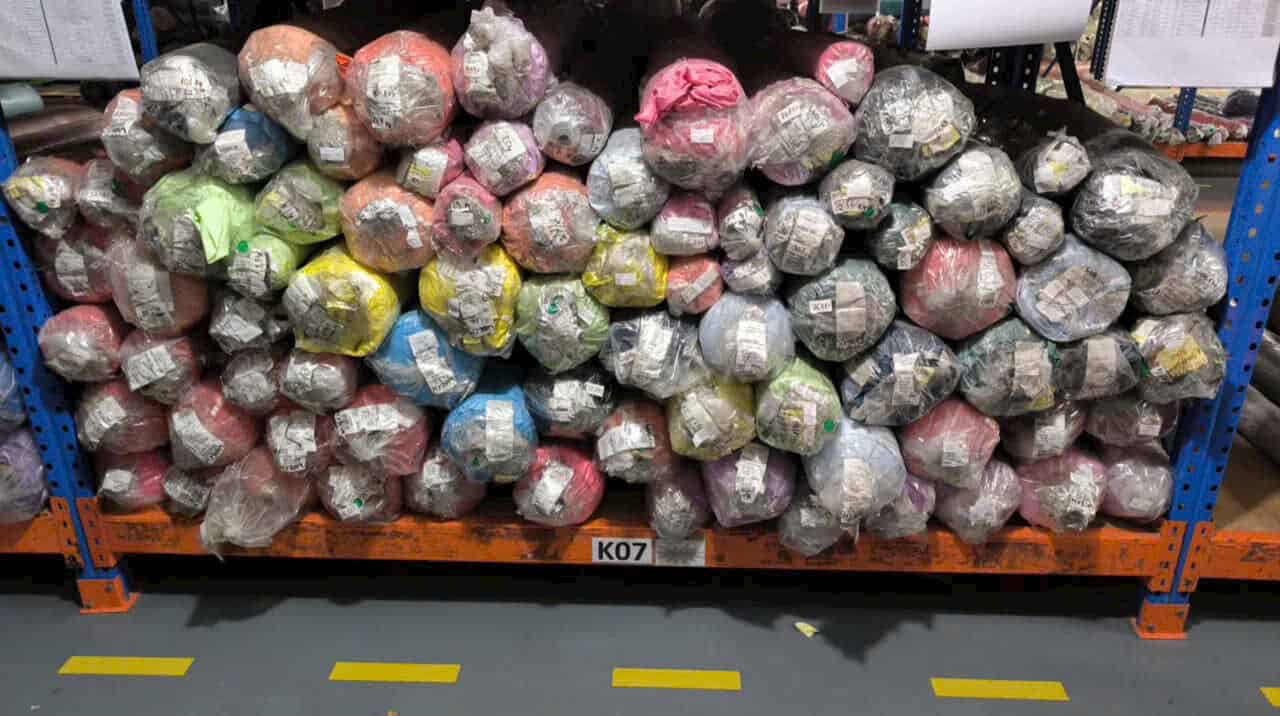
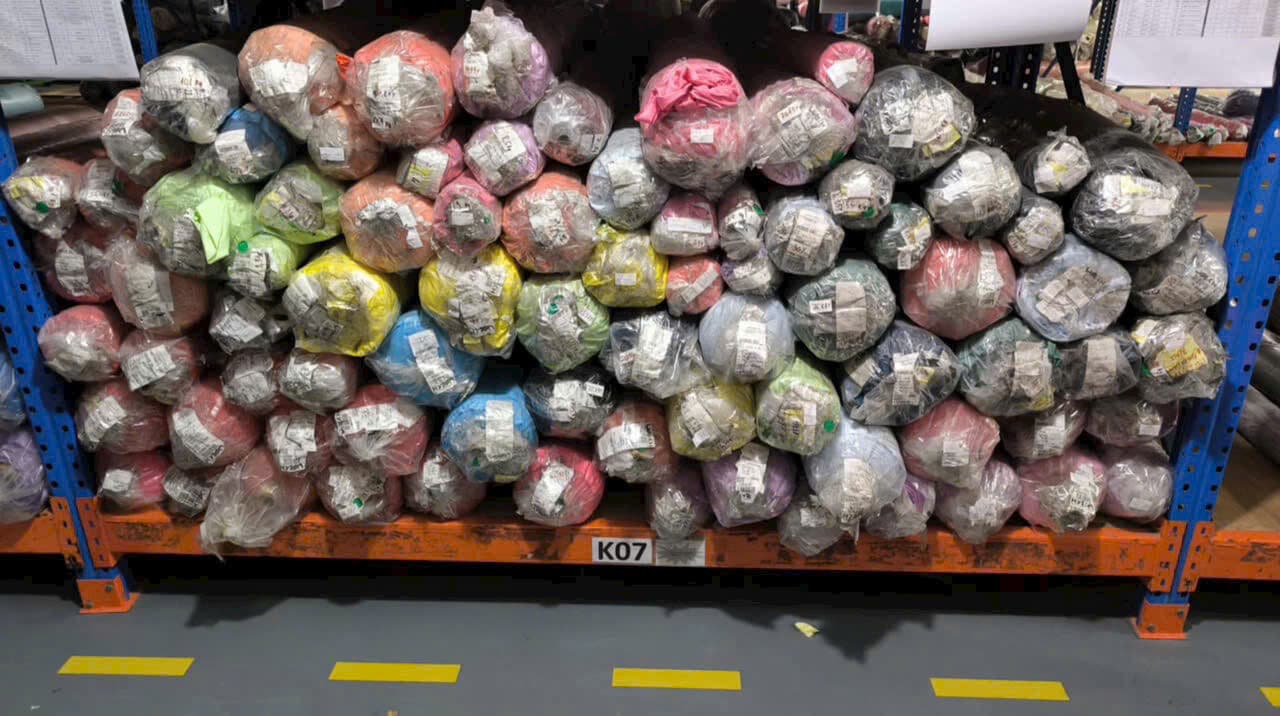
Buying surplus knit fabric differs in many ways from buying woven fabrics such as kate or khaki. Knit fabric is stretchy, usually traded by the kilo rather than the metre, and its price depends heavily on weight and cotton content. T-shirt, uniform and sportswear factories in Ho Chi Minh City, Binh Duong (now part of HCMC) and Long An end up with a significant amount of surplus knit almost every year after the season. Here is how Gia Bao looks at a lot of knit fabric when we come to buy.
Recognising knit fabric: how it differs from woven
Knit fabric is made of interlocking loops of yarn, so it stretches when pulled sideways and springs back when released. Look closely at the face and you will see rows of small V shapes; the back shows horizontal loops. This is the basic difference from woven fabric, where warp and weft cross at right angles and hardly stretch without spandex.
Knit fabric comes off circular knitting machines in tubular form. Some lots are kept tubular, others have been slit open-width and heat-set. We take both, as long as you state which so the width is calculated correctly.
The knit fabrics Gia Bao buys
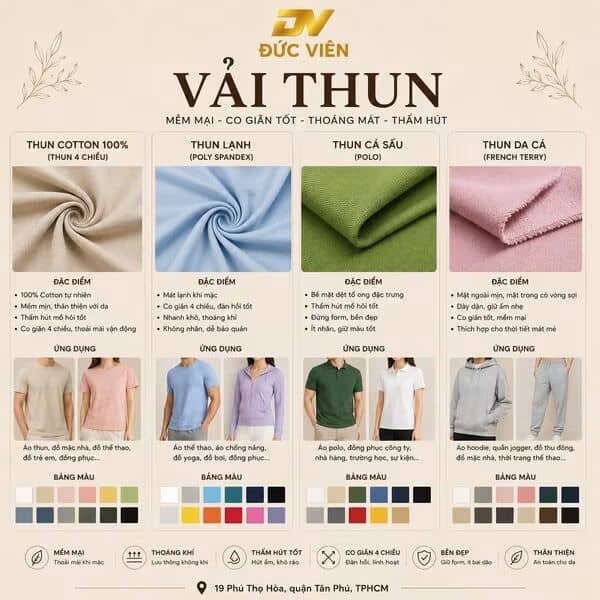
- 100% cotton jersey: soft and absorbent, often used for plain T-shirts and children's clothing.
- CVC and TC knit: cotton blended with polyester, with less pilling and shrinkage than pure cotton.
- Cool-touch knit: polyester or nylon with spandex, slightly glossy, cool to the touch, with four-way stretch, used for sportswear and swimwear.
- Pique: a knit with a small mesh-like texture that holds its shape, the main fabric for uniform polo shirts.
- French terry: smooth on the face with small loops on the back like fish scales, heavier than regular jersey, used for light sweatshirts and joggers.
- Rib knit: with vertical ribs and strong elasticity, used for collars, cuffs and fitted tops.
- Knits with spandex: cotton spandex, poly spandex and four-way stretch types.
Why so much knit fabric ends up as surplus
Knit fabric follows the seasons and uniform orders. A company orders five hundred polo shirts in its own shade of blue, the factory buys extra fabric to cover faults, and when the job is done a few dozen kilos of pique in that colour are left that no other client needs. Fashion T-shirt colours follow trends and are out of date after a season. On top of that, knit fabric shrinks and twists after washing, so factories often buy extra for testing, and what is left after testing stays in the warehouse. For knit cut into small offcuts, see also our fabric scraps buying page.
What determines the price of surplus knit fabric
Fibre content
100% cotton jersey and high-cotton CVC usually fetch more than TC or polyester knit. Cool-touch knit has its own price depending on spandex content and weight.
Fabric weight
Fabric weight is the weight of one square metre in grams (GSM). Heavy, firm knit resells easily for uniform shirts; very thin or loose knit is worth less.
Colour and consistency
White, black, heather grey and navy are the easiest colours to sell on. Lots with many rolls in one colour and one dye lot are valued higher than lots with many odd colours.
Elasticity
When knit with spandex is stored too long or somewhere hot, the spandex ages and no longer springs back fully. Such lots can still be bought, but at a lower price. The general pricing method is explained on our fabric buying quote page.
How to check and describe your knit when sending photos
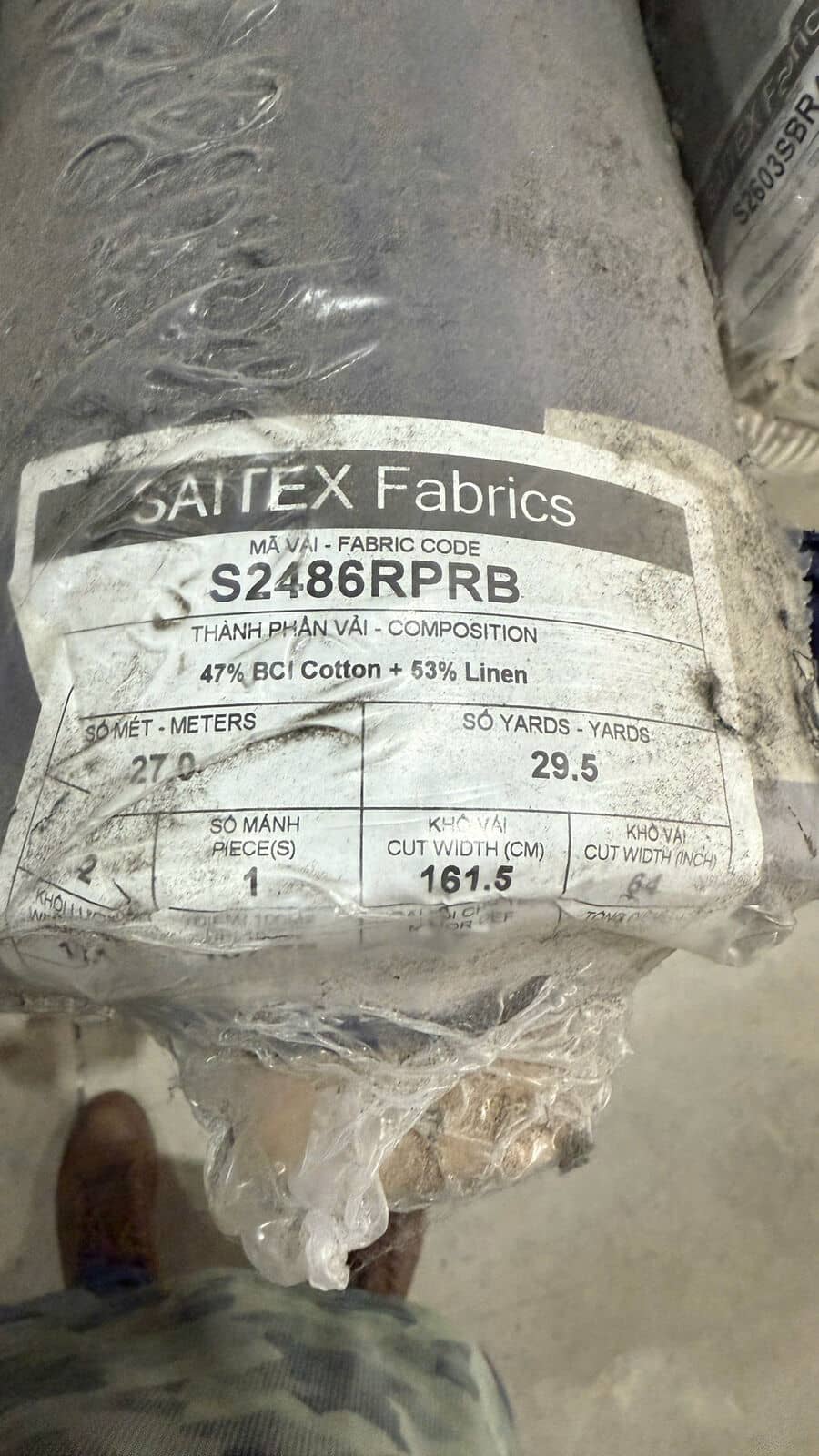
- Photograph the roll label: it usually shows composition (CO, PES, SP or EL for spandex), weight in GSM, width and kilos.
- Stretch test: pull a section taut and release it to see whether it springs back fully. Photograph the face and back so we can identify the knit structure.
- Burn test: cotton knit burns like paper with fine grey ash; polyester knit shrinks, melts, gives off black smoke and leaves a hard bead; blends show both ash and beads.
- Estimate the volume: note the number of rolls and the kilos on the labels if available, or photograph the pile next to a familiar object for scale.
Storing knit fabric so it keeps its value
Light-coloured cotton knit yellows easily and picks up a musty smell in a closed store, especially in the rainy season. Keep rolls off the floor, keep the plastic wrap sealed, and keep them away from heat sources such as heat presses and air compressors. For knit with spandex, heat is what kills the stretch fastest. If your warehouse has many fabric types that need clearing at once, see how we do it on our fabric stock clearance page.
Call or message Zalo 0904 623 046 (Mr. Tuan Tai) with a few photos of the labels and fabric face; you can write in English and we will reply. Gia Bao will give a preliminary quote and arrange to bring the scales to your factory.