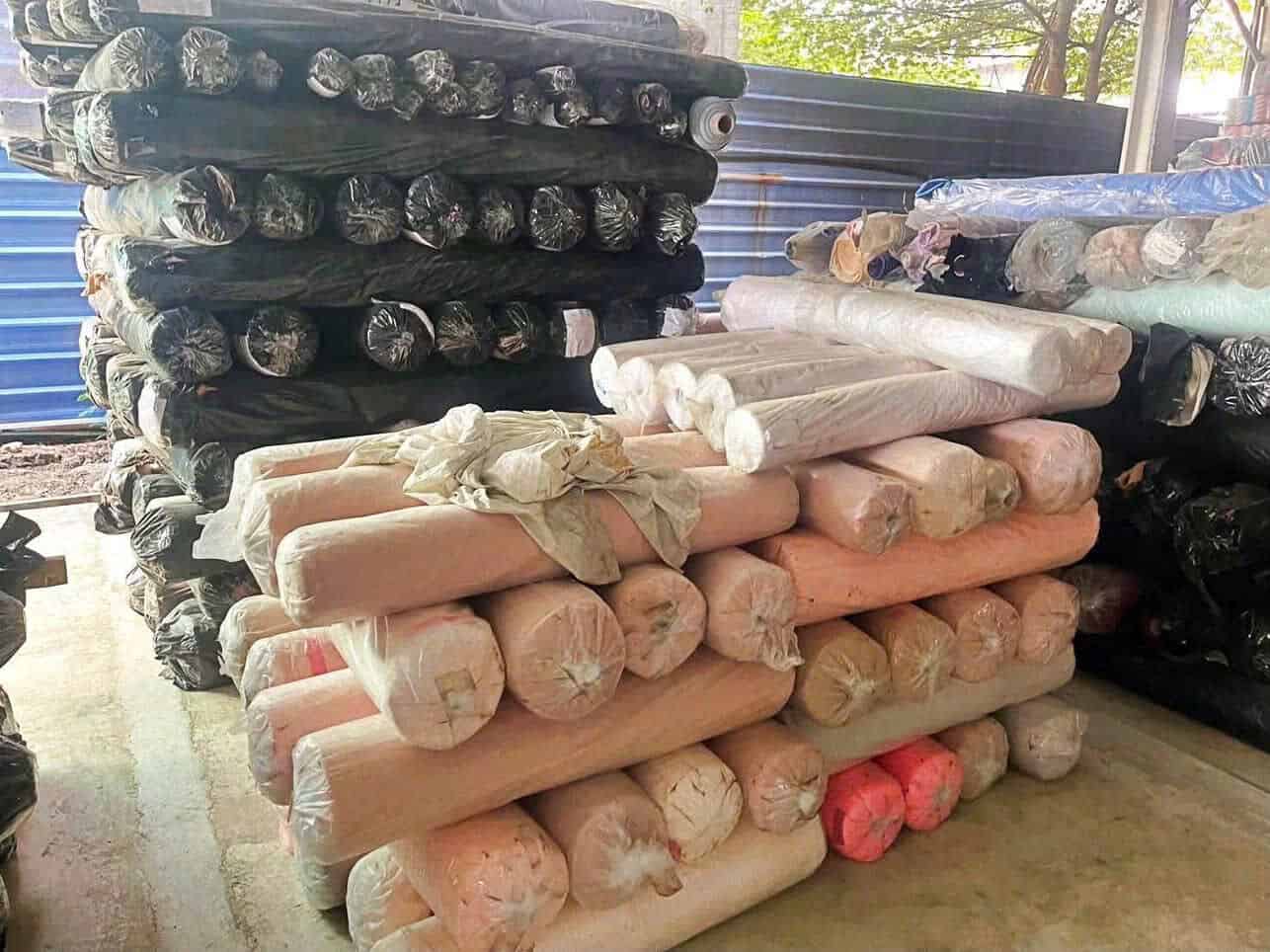
Deadstock fabric price quote
Every lot has its own price. Below are the factors that decide what we pay — and the fastest way to get a concrete figure the same day.
8 factors that decide the price
Knowing how we price helps you prepare your goods better and understand where your lot stands.
| Factor | Effect on price |
|---|---|
| Material | Natural fibres (cotton, linen, silk) and branded fabric with clear labels usually fetch more than blends of unknown composition. |
| Form | Full rolls > part rolls > remnants > scraps. The longer the rolls and the less re-sorting needed, the better the price. |
| Colour & pattern | Solid and basic colours (white, black, beige, navy) are easy to resell and fetch more than loud colours or niche prints. |
| Fabric width | Wide and standard widths are easy to put into production; odd or narrow widths are harder to use. |
| Age & storage | Fabric still strapped, wrapped in plastic, free of damp and yellowing holds its value. Old, dusty or faded-edge fabric is marked down. |
| Defects | Minor defects (slight off-shade, loose weave) still get a decent price; heavy defects, tears or rot are priced as scraps. |
| Quantity & uniformity | Large lots of a single type are quicker to weigh and transport, and usually get a better price than small mixed lots. |
| Warehouse location | A warehouse in the city with truck access and no stairs to carry goods up and down cuts costs, so the price is better too. |
Why don't we publish fixed prices?
The surplus fabric market moves with the seasons and with demand from small garment workshops and fabric shops. For the same cotton jersey, a white lot still in its straps can fetch many times more than a lot of stained remnants. A general price list would only mislead you — either below the real value of your lot, or a high promise followed by a lower offer at inspection. We prefer to quote lot by lot and explain each price.
How to get the best price
- Pre-sort: keep rolls, remnants, scraps and defective goods separate.
- Keep the roll-end labels and don't tear off the original packaging.
- Sell early while the fabric is still fresh — the longer it sits, the lower the price.
- Combine into a large lot if you can, rather than selling small amounts at a time.
See also: How the price of deadstock fabric is calculated and our 5-step buying process.
Questions about quotes
Do you have a fixed price per kilo or per metre?
Is a quote based on photos accurate?
Is there a fee for the inspection visit?
Which photos should I send for an accurate quote?
Get a quote the same day
Send the details and photos of your lot, and we will call you back with a quote as soon as possible.