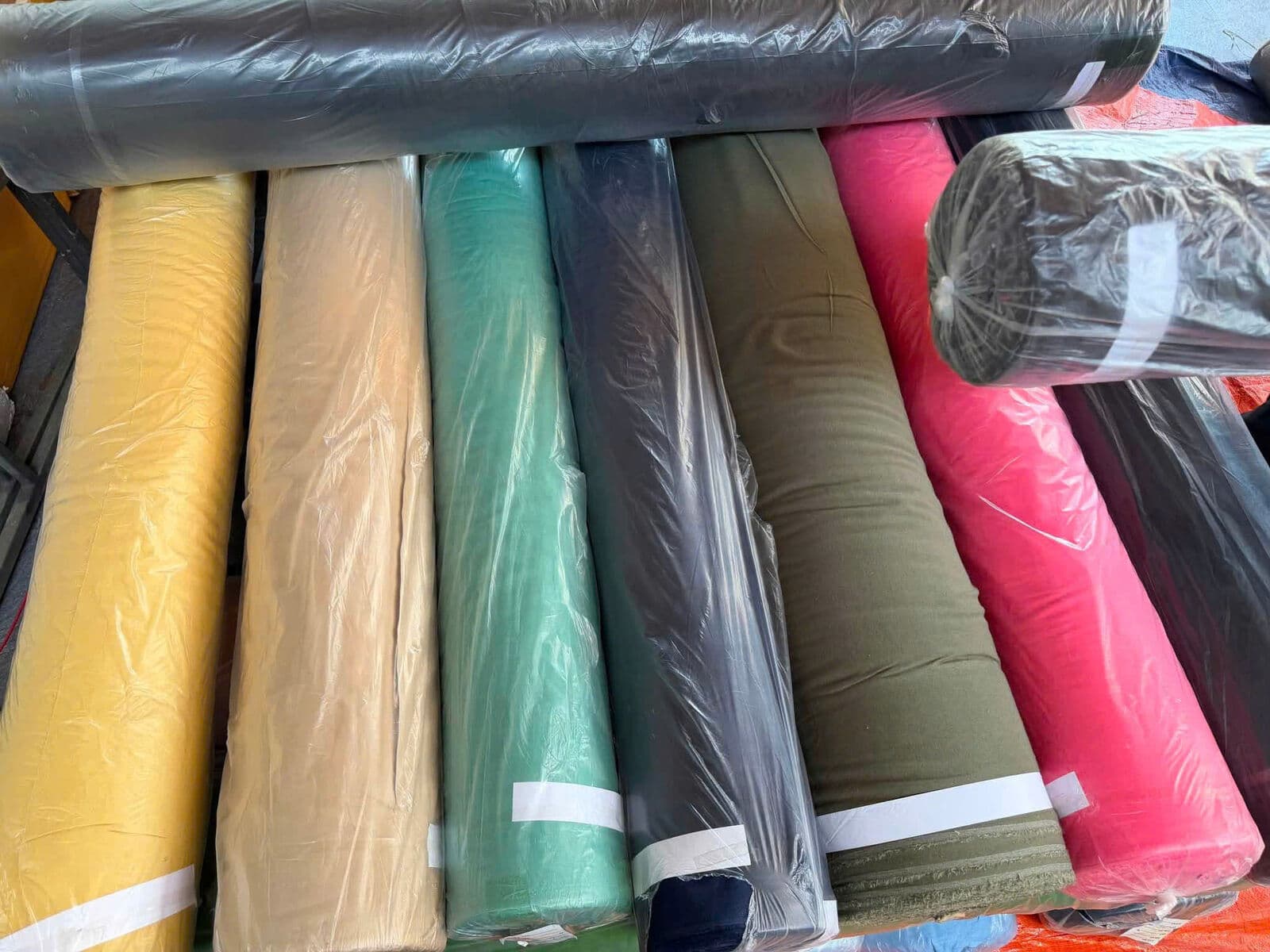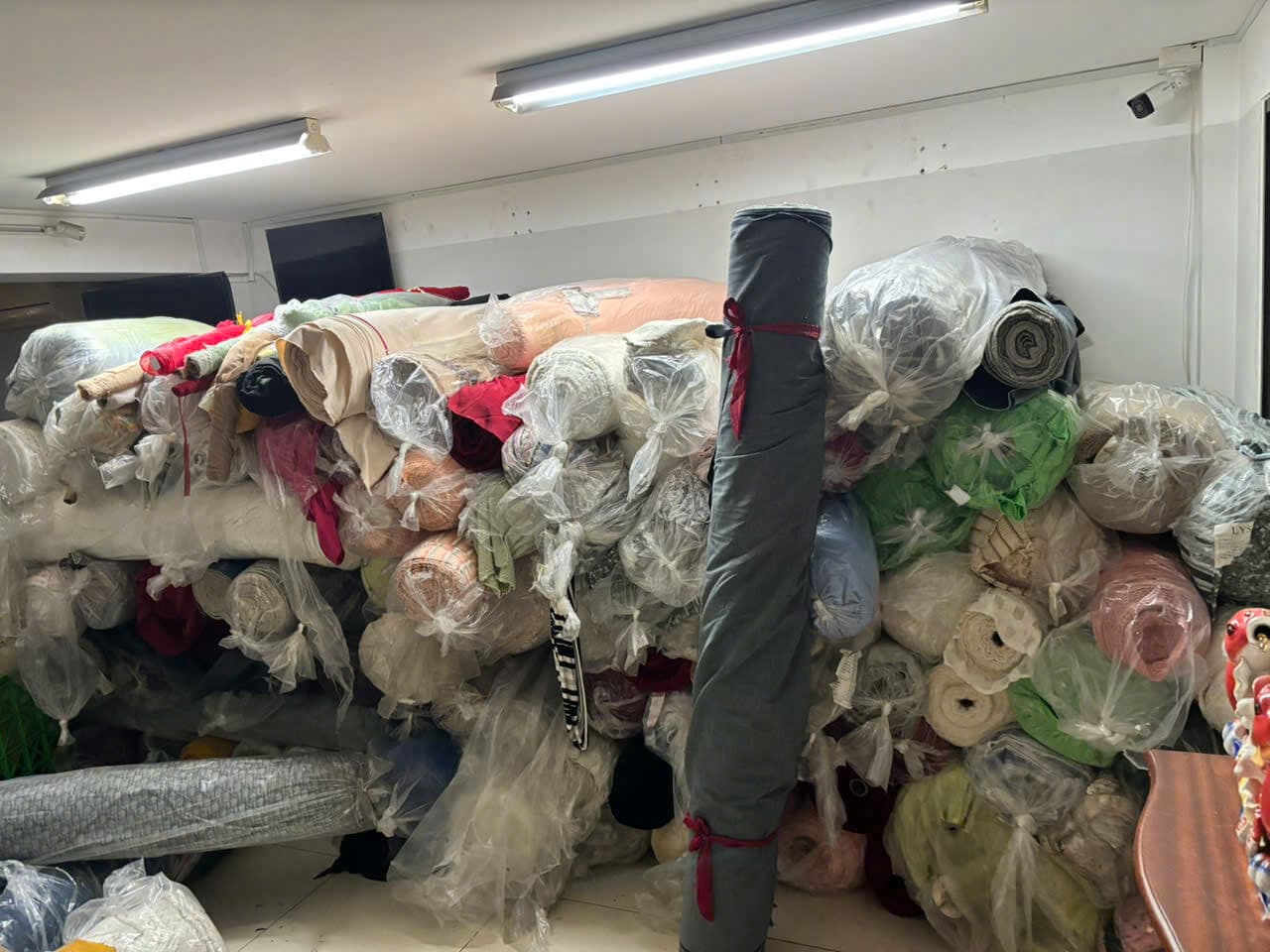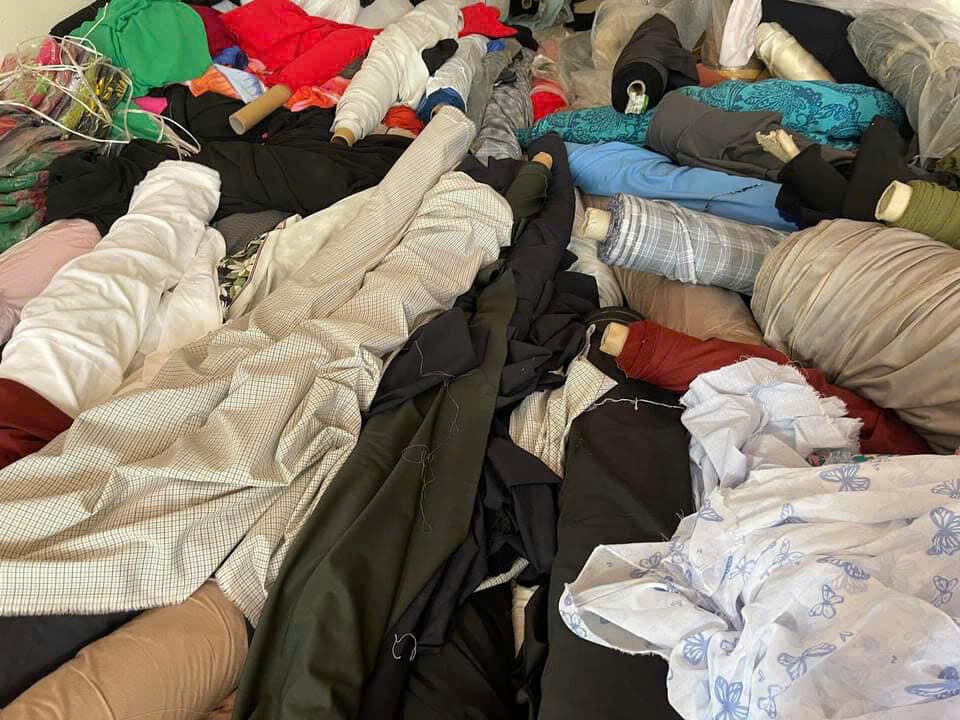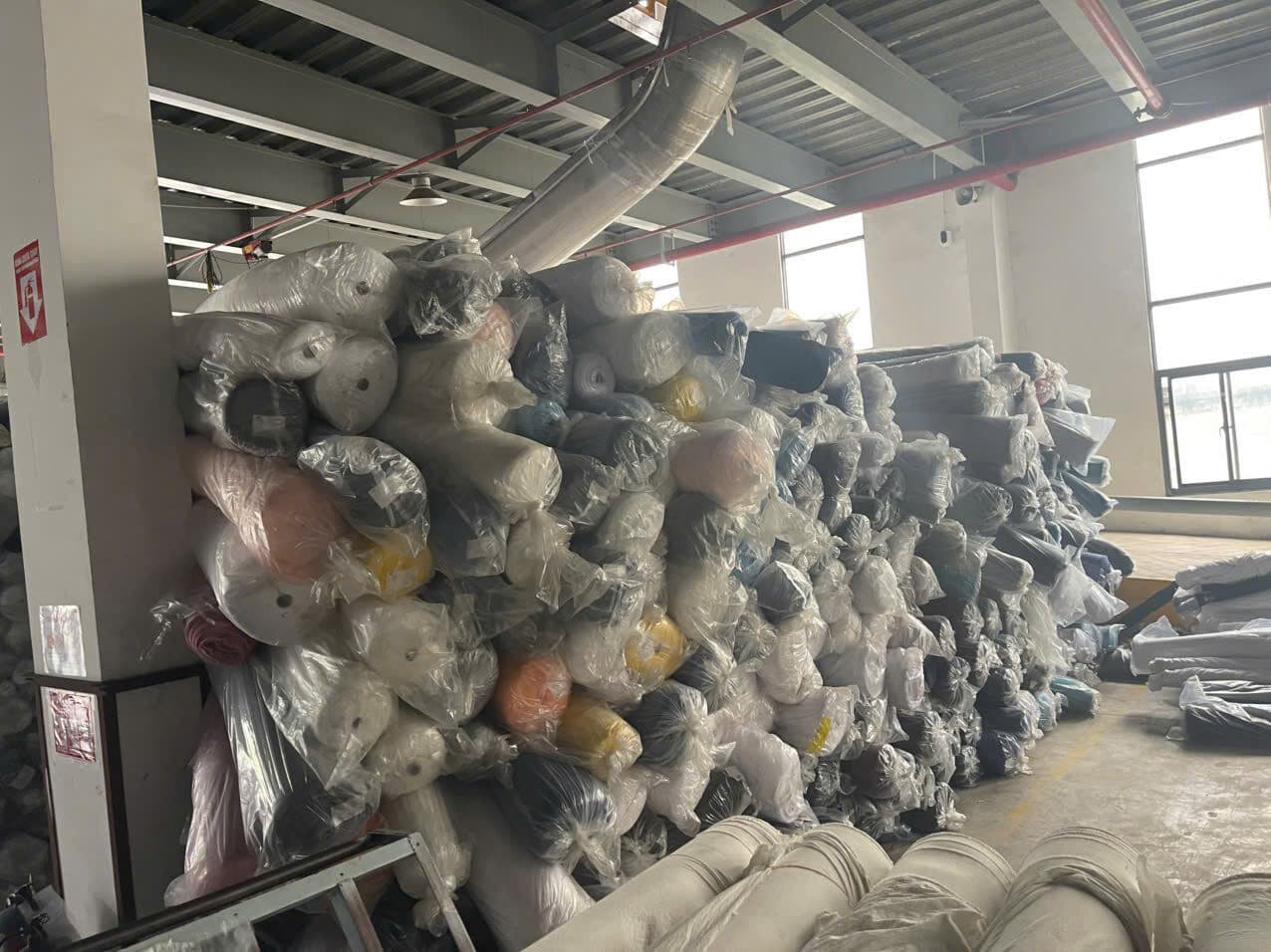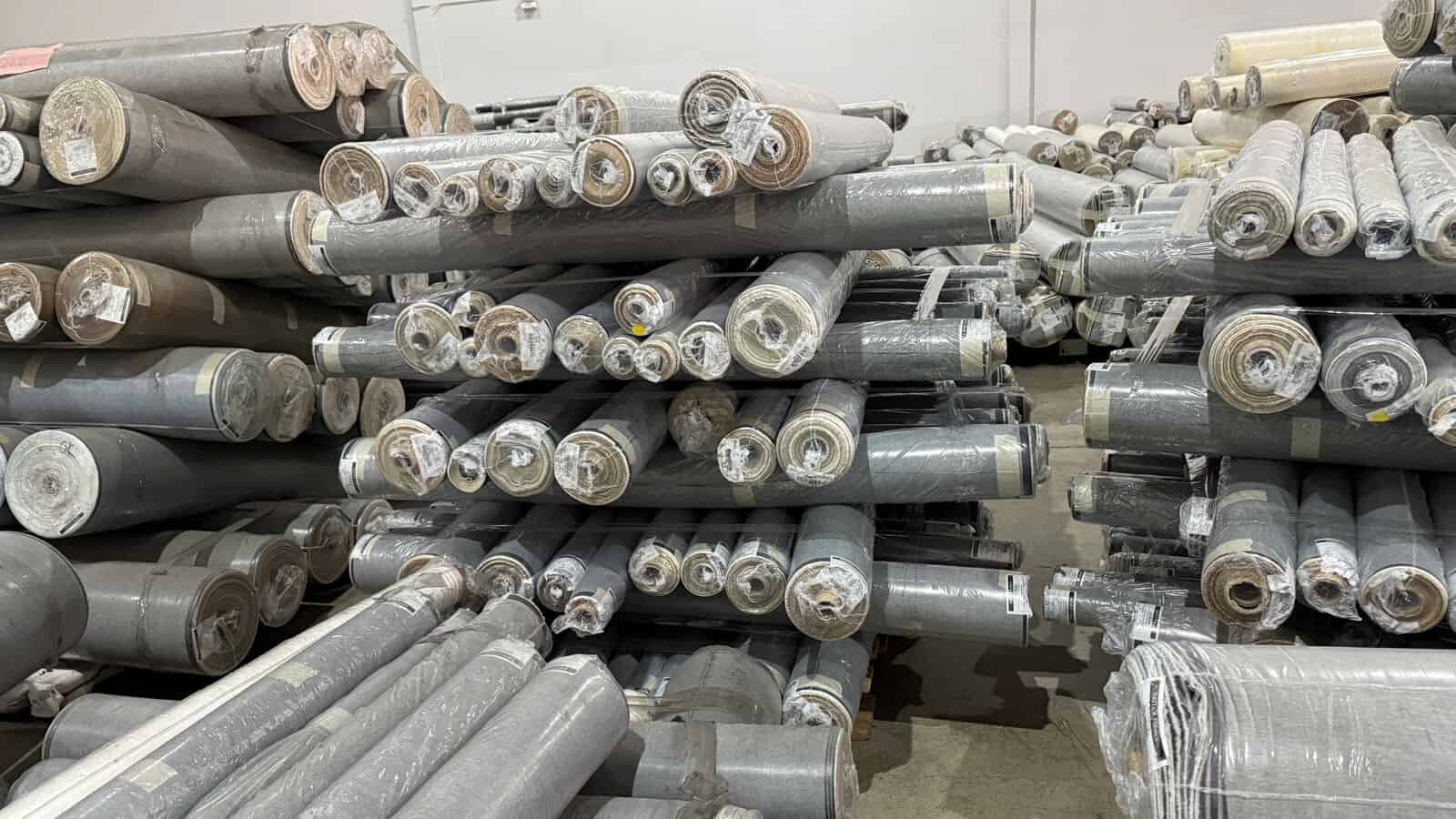
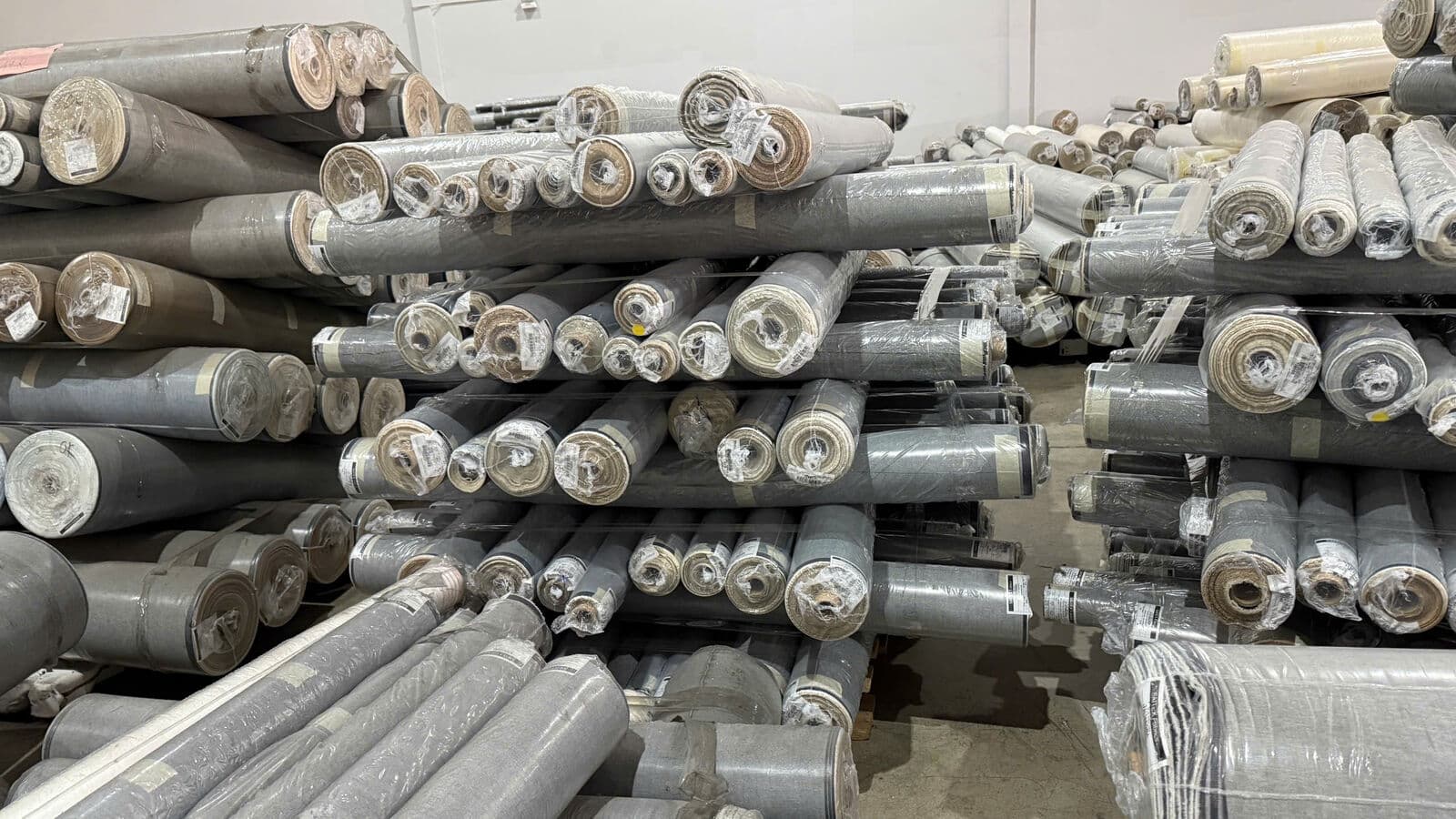
Buying surplus khaki and jeans fabric takes a fairly sharp eye, because these two fabric lines look simple but their value varies a lot with weight, composition and dyeing. We often find surplus khaki and denim at trouser factories and workwear uniform makers around Tan Tao and Vinh Loc, and at contract factories in Binh Duong (now part of HCMC). This page helps you understand your lot before getting in touch.
Characteristics of khaki and jeans fabric
Khaki fabric
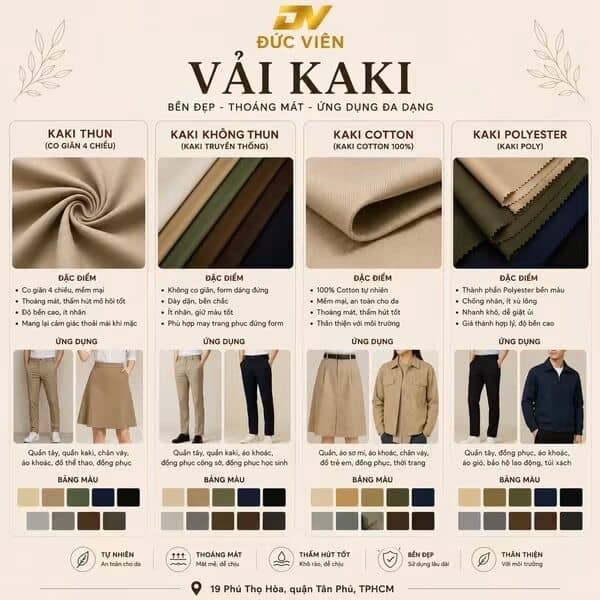
Khaki is a woven twill: look at the face and you will see parallel diagonal lines. This weave makes the fabric thick, strong, durable and less prone to creasing than plain weaves. Khaki is widely used for trousers, chinos, jackets, workers' uniforms, protective workwear and bags. By composition, the market divides it into cotton khaki, polyester-blend khaki and stretch khaki (blended with spandex for a little give and comfort).
Jeans fabric and denim
Denim is also a twill, but with a distinctive feature: the warp yarn is dyed (usually indigo) while the weft is left white or undyed. So the face is deep blue, while the back is much lighter, almost bluish white. Denim comes as stiff 100% cotton (often called rigid), stretch denim blended with spandex, and polyester blends. Denim weight is usually given in ounces (oz) per square yard; the higher the oz, the heavier the fabric.
The khaki and denim Gia Bao buys
- Cotton khaki, stretch khaki, polyester-blend khaki, Korean khaki and heavy canvas-weight khaki.
- Workwear uniform khaki with anti-crease or stain-resistant finishes.
- 100% cotton denim, stretch denim, light denim for shirts, and heavy denim for jeans and jackets.
- Raw unwashed denim, washed denim, striped denim and printed denim.
- Full rolls, part rolls, roll ends and large remnants. For finished fabric with colour or weaving faults, see our defective fabric buying page.
Why khaki and denim end up as surplus
Khaki trousers and jeans are made by size and style, so factories usually bring in fabric for a whole season. When a style sells slowly or a buyer pulls an order, the fabric stays in full rolls. With denim, every indigo dye lot has a slightly different shade, so factories will not mix two lots in one order, and the odd remainder of each lot is left behind. Workwear fabric follows each factory's corporate colour, so it becomes surplus when the contract ends. And because khaki and denim are so heavy, many factories put off clearing them and leave them stacked for years, taking up a whole corner of a large warehouse.
What determines the price of surplus khaki and denim
- Thickness and weight: heavy khaki and high-oz, tightly woven denim usually fetch more than thin, loose fabric.
- Composition: a high cotton share, pure cotton denim or good-quality stretch denim is priced differently from fabric with a lot of polyester.
- Colour: basic indigo, black denim, beige khaki, olive khaki and navy resell more easily than fashion colours.
- Length and lot consistency: many rolls from the same dye lot are worth far more than odd rolls from different lots.
- Condition: set-in fold marks, faded roll edges, damp or mould, and off-grain fabric.
How prices are worked out in specific situations is covered on our fabric buying quote page.
How to check a khaki or denim lot before sending photos
Look at both sides of the fabric
Hold the face up to the light to see the diagonal lines. Turn it over: if the back is much lighter with white weft yarns, it is almost certainly denim. Dyed khaki is usually the same colour on both sides, just slightly lighter or darker.
Test the stretch
Pull across the width of the fabric. If it stretches and springs back well, it contains spandex, like stretch khaki or stretch denim. If it does not stretch, it is rigid. Please mention this when you message us.
Read the label and do a burn test
The roll label usually shows composition (CO, PES, SP), width and metres, and for denim it may show the oz weight. If the label is missing, burn a small piece: cotton burns like paper and leaves fine ash; polyester shrinks and melts into a hard bead. Blends show both.
Keeping khaki and denim at a good price while you wait to sell
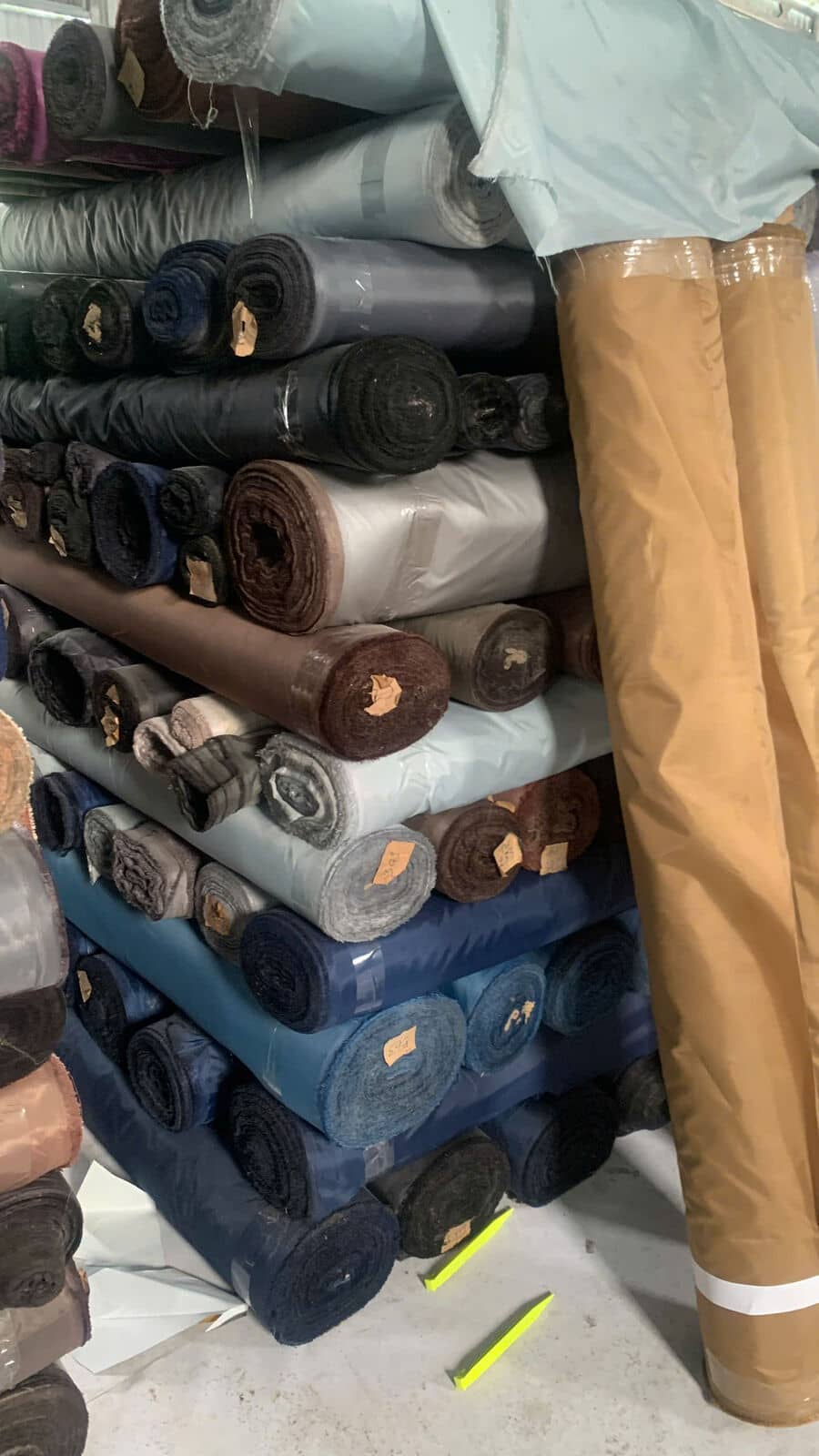
Heavy fabric absorbs moisture slowly, but once damp it is very hard to dry and easily grows mould from the core outward. Keep rolls on pallets and away from walls. Do not stack too many layers on the bottom roll, because heavy fabric holds fold marks for a long time. Denim left under sunlight or strong lights for long periods fades in streaks. For large volumes, see how Gia Bao organises a buying operation on our garment factory surplus fabric page.
Contact 0904 623 046 (Mr. Tuan Tai) to send photos and book an inspection; you can message us on Zalo in English and we will reply. We come to you, check each type and pay as soon as we agree.