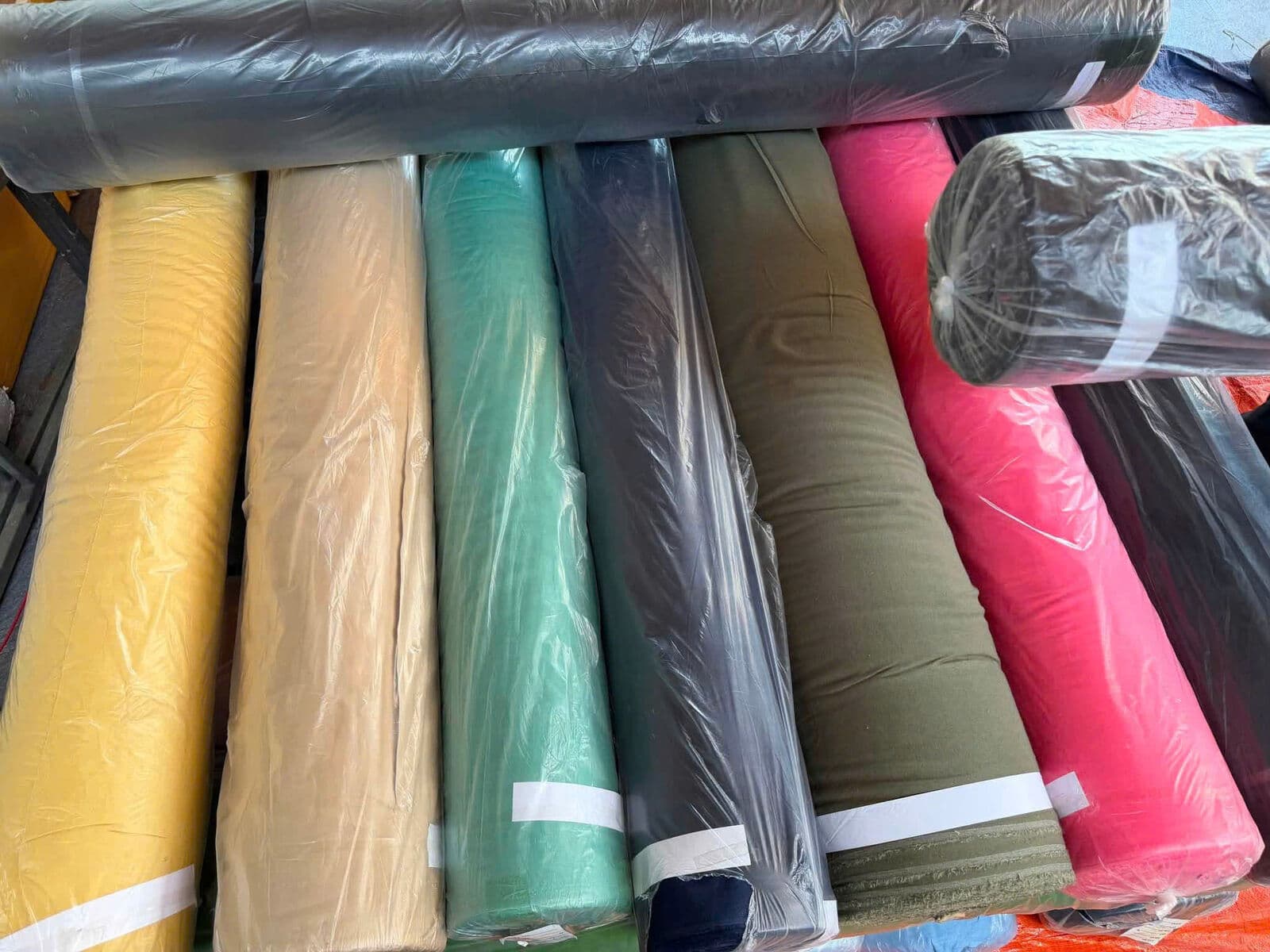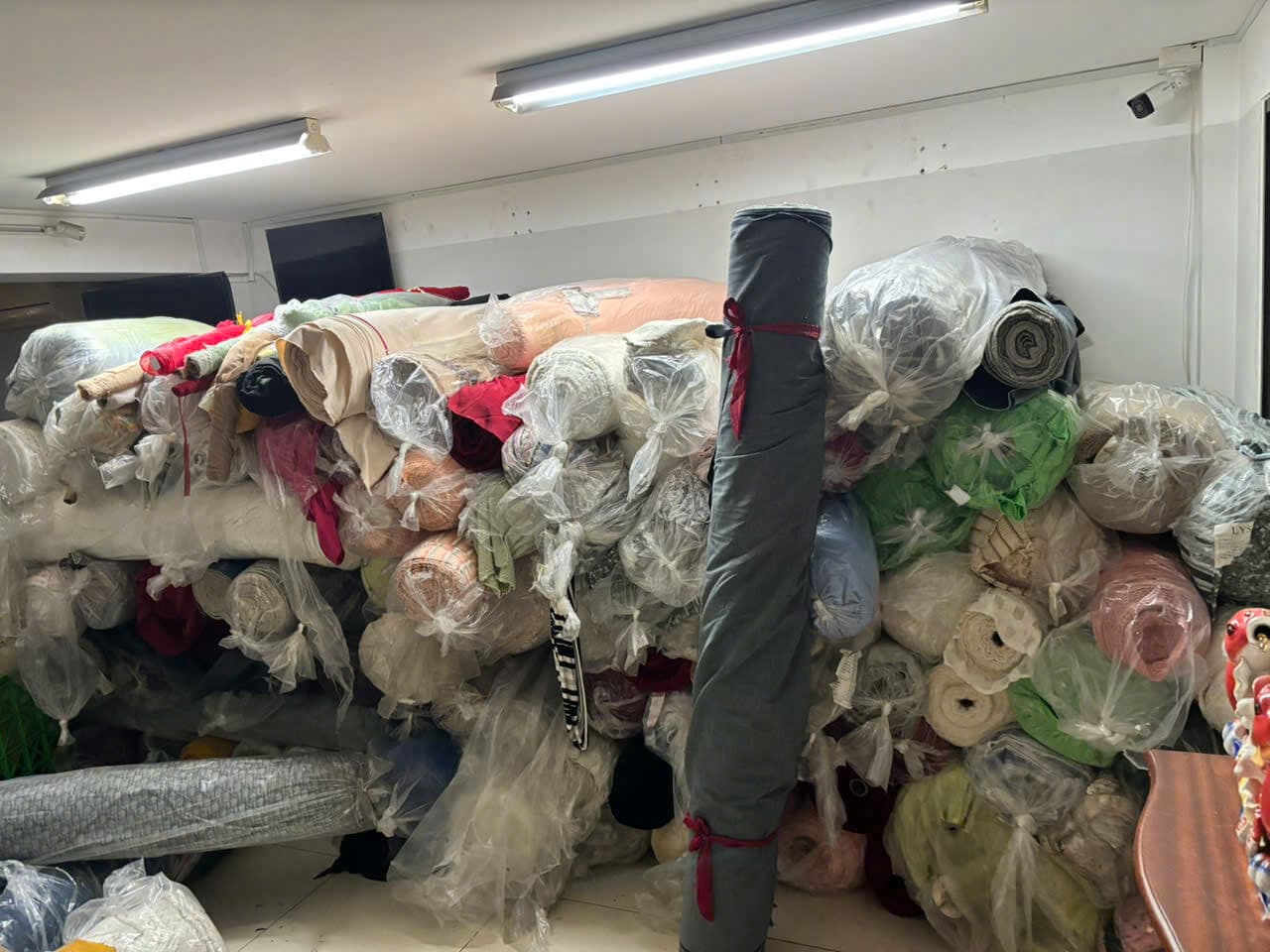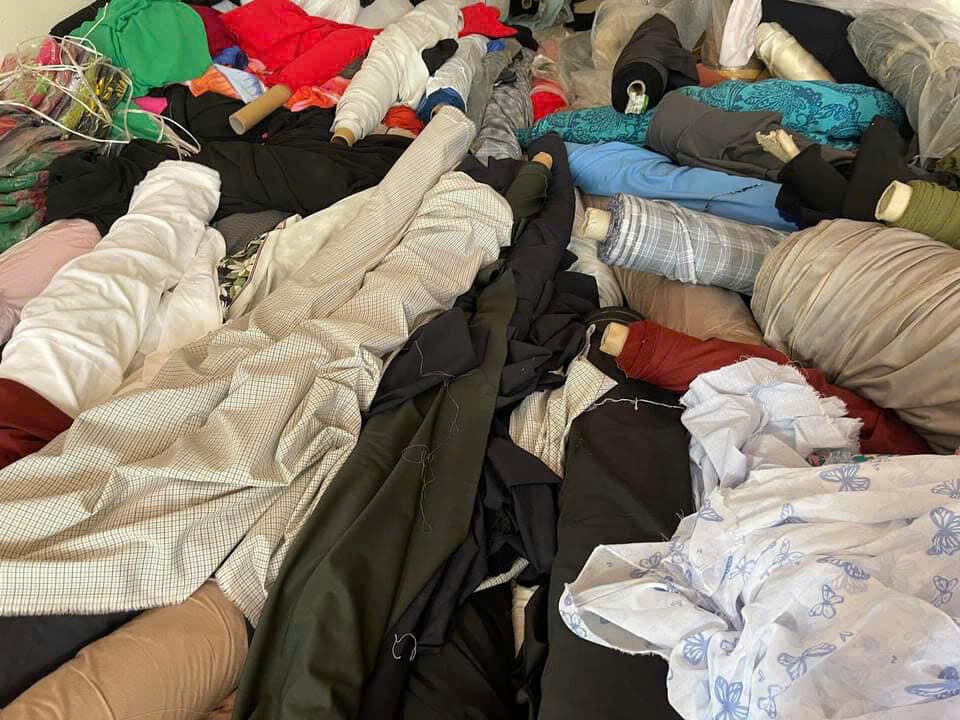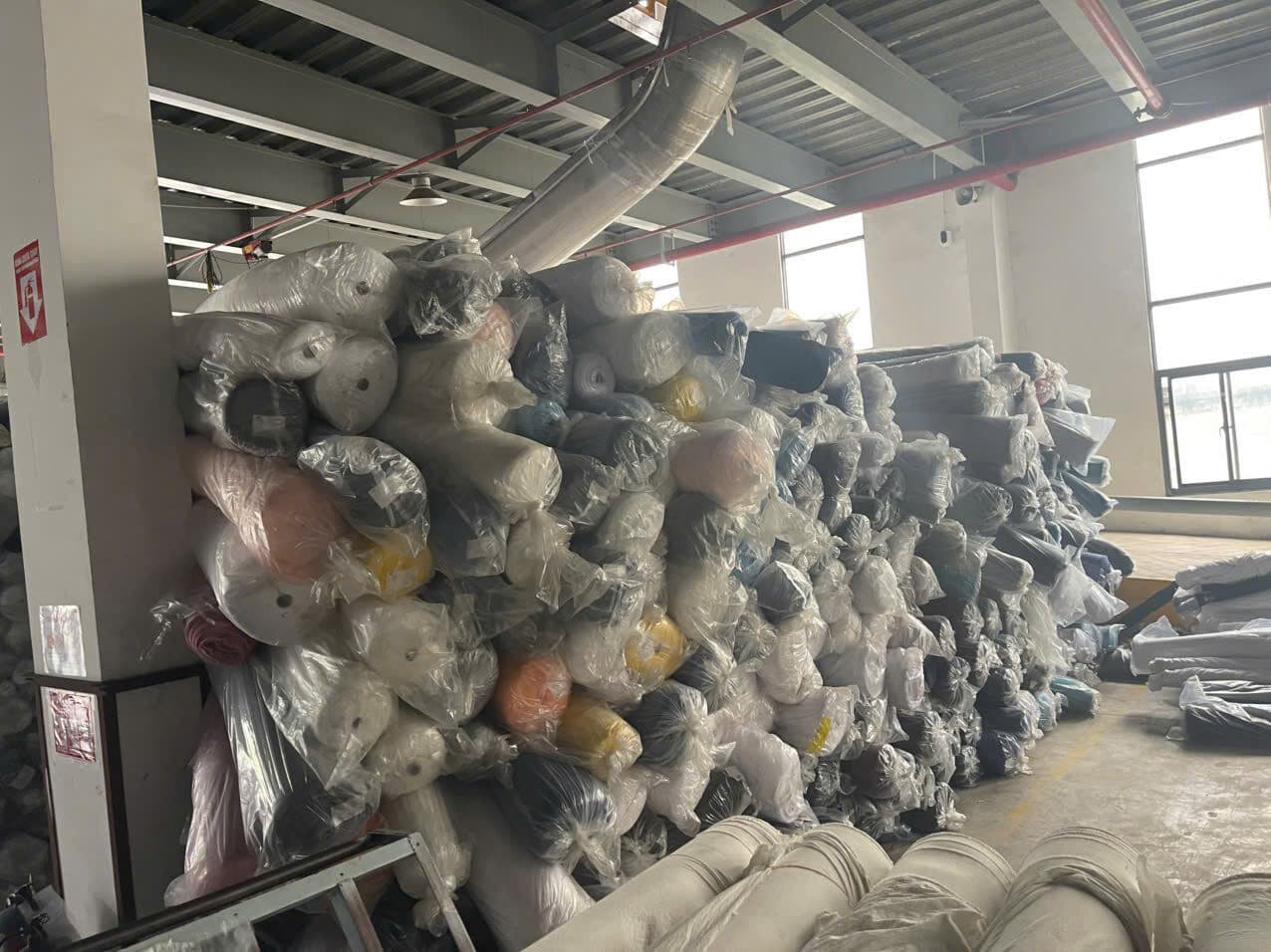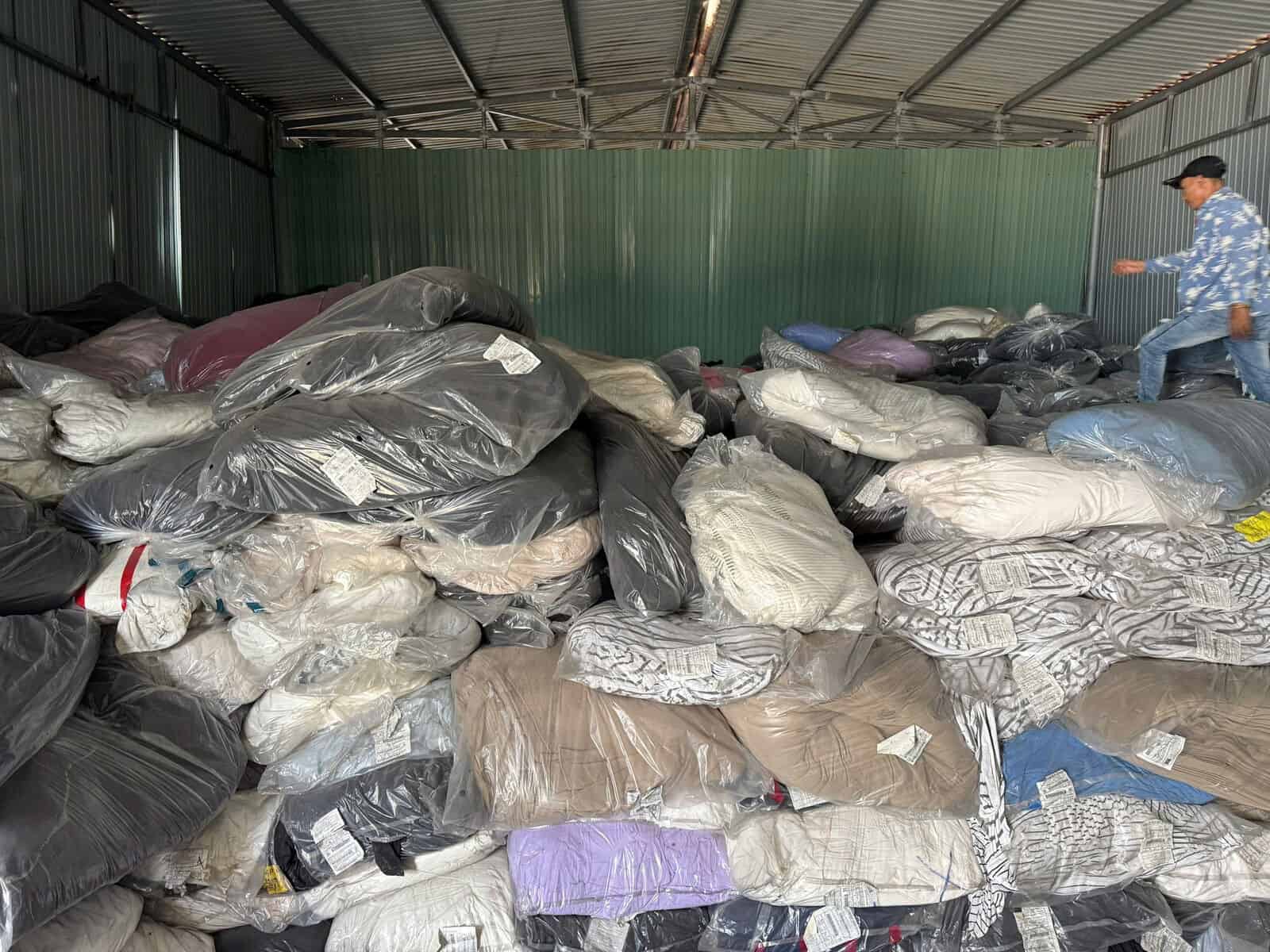
If you are looking for a surplus fabric buyer in Ho Chi Minh City to clear your storeroom, free up cash and make room for new orders, Gia Bao deals directly with garment workshops across the city. We buy fabric rolls and leftover bolts, remnants, scraps, defective fabric and garment trims. The buyer comes to you, looks at the real goods and offers a real price — no middlemen.
Why garment workshops in Ho Chi Minh City end up with surplus fabric
Ho Chi Minh City has a dense network of contract garment workshops, most of them in shophouses, small factory units and narrow alleys. Orders move fast: a workshop takes designs from online shops or wholesale traders at the markets, then sews runs of a few hundred to a few thousand pieces. Almost every run leaves a few rolls or roll ends behind, and when the client switches styles, that fabric stays in the storeroom.
After a few seasons the leftovers fill a mezzanine or half the floor, while rent in the inner city is anything but cheap. Many owners tell us they kept the fabric because it felt wasteful to sell — and by the time they needed the space it had faded or gone mouldy and lost much of its value. Selling early almost always pays more than waiting.
Where Gia Bao buys surplus fabric in Ho Chi Minh City
We cover the whole city, but most of our work is in the districts where the garment trade is concentrated:
- Tan Phu, Tan Binh: streets lined with workshops sewing fashion and market goods; close to the Tan Binh fabric market, so the stock is varied — lots of knit fabric, kate and floral prints.
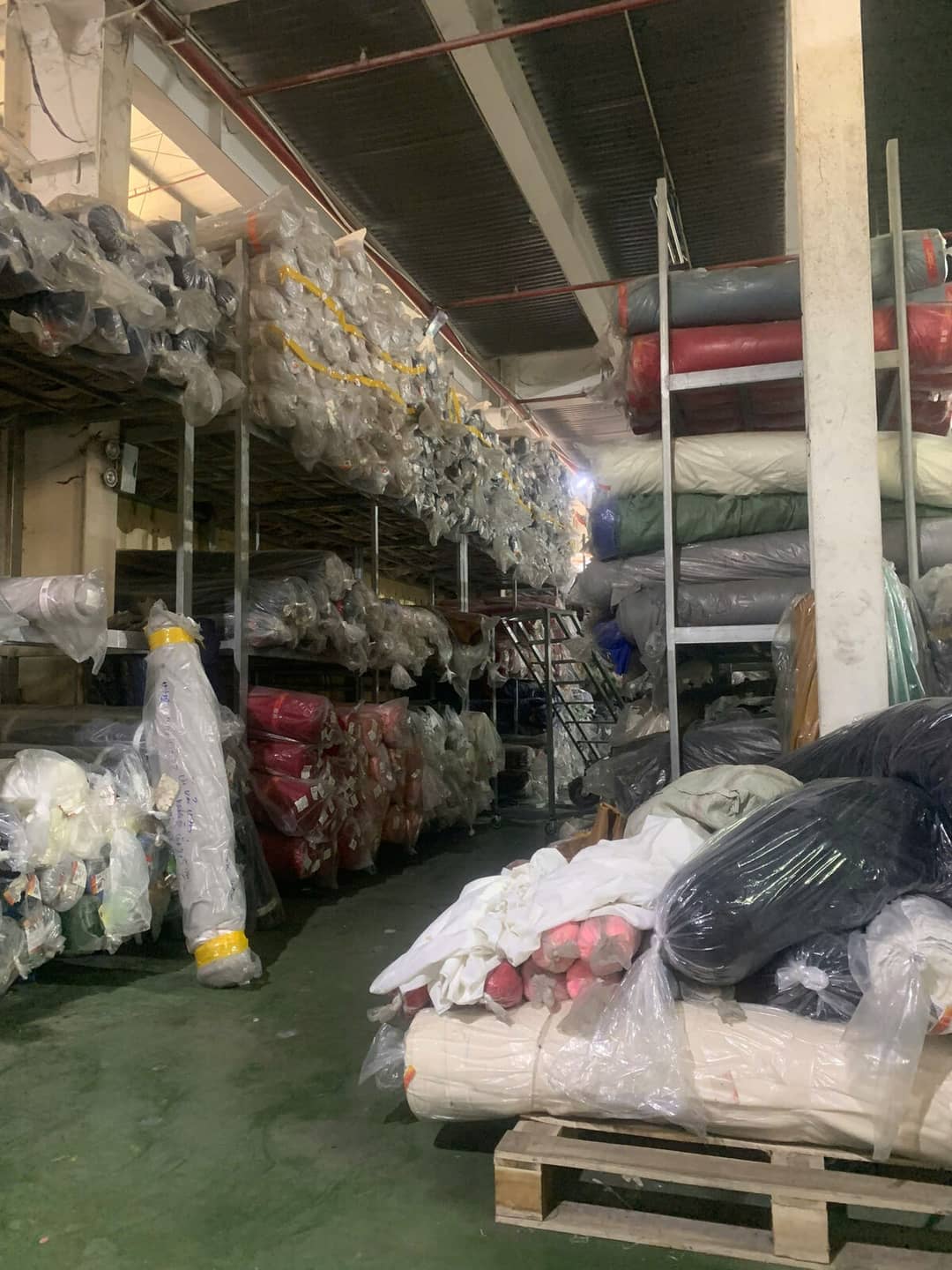
- Binh Tan: larger workshops around the Tan Tao and Vinh Loc industrial parks, often holding full rolls of khaki, nylon taffeta and lining fabric.
- District 12, Go Vap, Hoc Mon, Cu Chi: many uniform, packaging and bag makers with spacious premises — sometimes several tonnes of stock in one warehouse.
- District 5, District 11: near long-established fabric trading areas such as Soái Kình Lâm, where shops and dealers have odd rolls and out-of-season goods to clear.
Because our base is at 69C Đỗ Đức Dục, Phú Thọ Hòa Ward, we reach Tan Phu, Tan Binh, Binh Tan and District 11 very quickly. For areas further out such as Cu Chi or Hoc Mon we book a half-day in advance so we can send the right vehicle for the volume.
How our on-site buying works in Ho Chi Minh City
- Send photos on Zalo to 0904 623 046: a few rolls, the spec labels if there are any, and a wide shot of the whole stock so we can estimate the volume. You can message us on Zalo in English or Chinese — we will reply.
- Rough quote: based on material, colour, width and quantity. The final price is only agreed once we see the actual goods.
- Visit, weigh and measure: rolls are priced per roll or per kilo, scraps per kilo. You stand at the scale with us.
- Payment and loading: we pay as soon as the price is agreed, then our crew loads the truck and leaves the area tidy.
Narrow alleys in Tan Phu and Go Vap are nothing new to us. We use light trucks and cargo tricycles to get in, so you never have to haul the goods out to the main road. Every step is explained on our buying process page.
Types of surplus fabric we usually find in city workshops
Inner-city workshops mostly make fashion and market goods, so their leftover fabric comes in a wide range of colours and prints. The most common are cotton jersey, cool-touch knit and pique knit; kate and cotton shirting; floral prints, silk and rayon for dresses; and khaki and denim at trouser makers. On top of that come remnants and scraps from the cutting table, plus trims such as thread, buttons and zips left over after an order.
For full rolls, see our page on buying surplus fabric rolls; if most of what you have is cutting waste, the fabric scrap buying page explains how we sort and price it.
Getting a good price for surplus fabric in Ho Chi Minh City: what matters
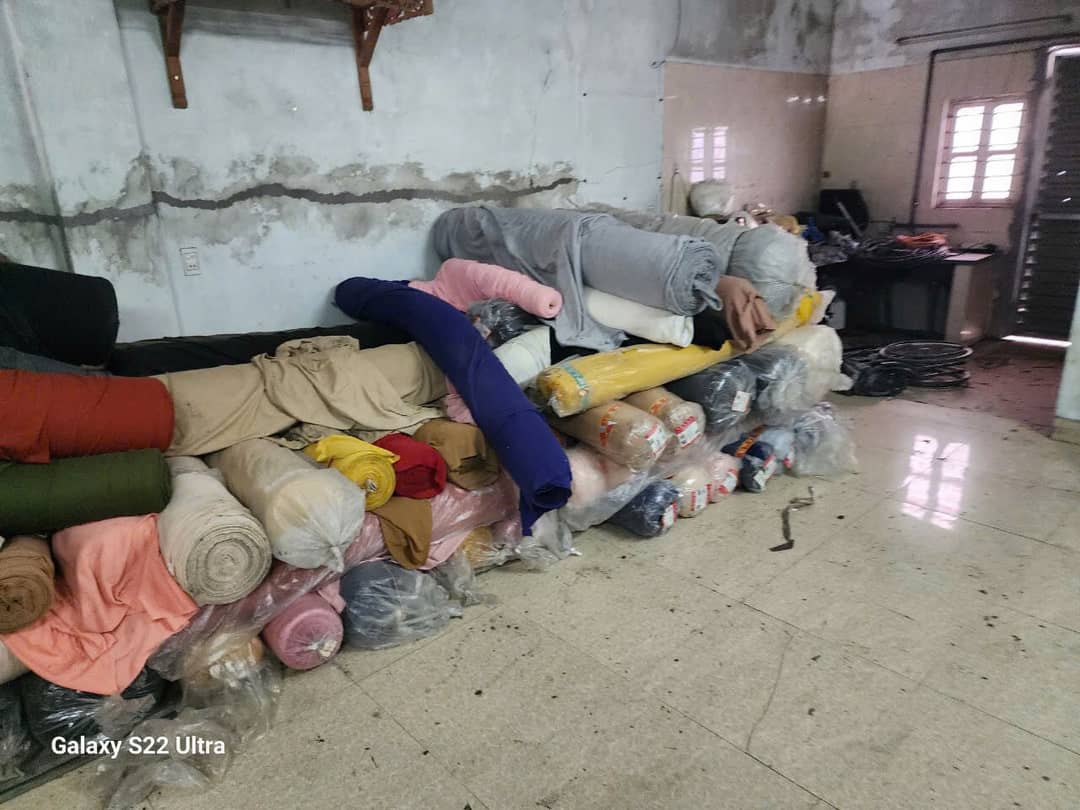
We do not publish a fixed price per kilo on this website, because every lot is different. Things that push the price up: full rolls, still in their plastic wrap; good materials such as cotton, linen and rayon; easy-to-use colours such as white, black, navy and beige; wide widths; and a large quantity of one consistent type. On the other hand, damp, mouldy or faded fabric, or a mix of many types that is hard to sort, fetches less.
A simple tip for a better price: separate full rolls, remnants and scraps before we arrive, and keep the spec labels on the rolls. More detail is on our fabric buying price page.
Where to sell surplus fabric from your garment workshop
You can bring fabric samples directly to 69C Đỗ Đức Dục, Phú Thọ Hòa Ward, Ho Chi Minh City, or call and we will come to you. For workshops that have leftovers after every order, we buy on a regular schedule — just message us when the goods are ready. If your company needs to clear an entire warehouse at once, tell us the volume in advance so we can send enough people and trucks in a single trip.
Call or message Mr. Tuan Tai on Zalo at 0904 623 046 for a quote on your surplus fabric in Ho Chi Minh City. The clearer the photos, the closer the quote.