22 September 20265 views
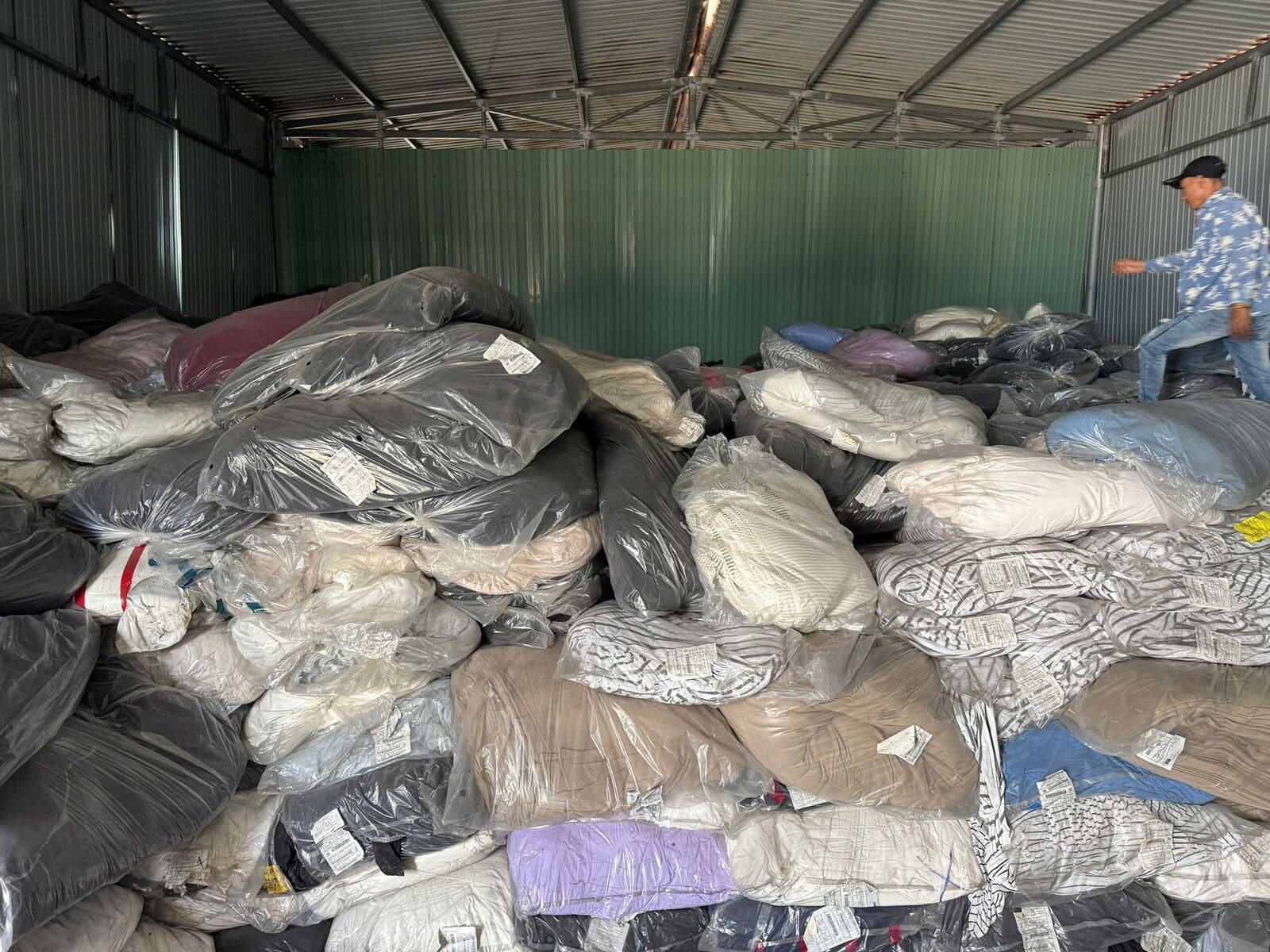
When factory owners ask for a quote on their surplus fabric, the first question is almost always "how much per kilo?". An experienced buyer will not answer with a single number straight away, because there is no fixed price for deadstock fabric. Two lots of the same knit fabric can be worth twice as much as each other simply because of the colors, the length of the rolls or the way they were stored. Below is how Gia Bao looks at a lot of fabric before quoting, so you understand where the differences come from and can prepare accordingly.
Why is there no fixed price list for surplus fabric?
Surplus fabric is not a uniform commodity. Every lot is a different mix of materials, colors, widths, ages and conditions. A buyer pays based on who the fabric can be resold to, how quickly it will move and how much labor it takes to sort. A roll of black khaki twill still in its strapping can go straight to a uniform factory, while a bag of mixed scraps has to go through several steps before it is worth anything.
That is why websites that post "today's surplus fabric price" as a single figure are usually just fishing for calls. We take the opposite approach: explain the factors clearly, look at the goods first, then quote, and stick to that quote as long as the goods match the description. You can see how we present this on our fabric buying quote page.
8 factors that decide the price of surplus fabric
1. Fabric type and fiber content
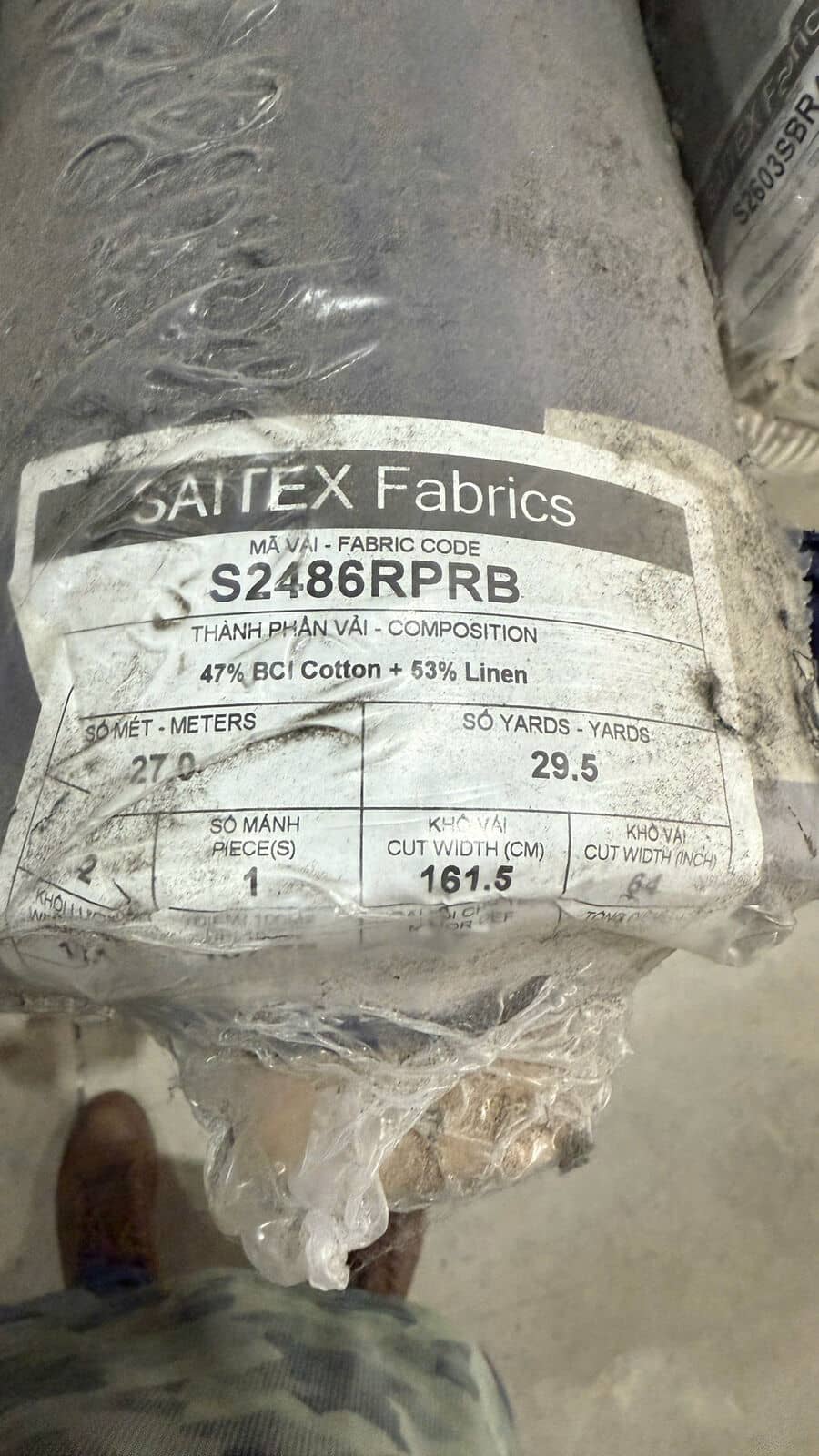
This is the heaviest factor. Fabrics with a high natural fiber content, such as 100% cotton, linen or silk, usually fetch more than blends with a lot of polyester, because there are more outlets for them and end buyers will pay more. Rolls that still carry a label showing composition, width and article number can be valued much faster and more accurately.
2. Width and fabric weight
Wide fabric, 1.6 m and above, is generally easier to sell than narrow widths because garment factories can fit more patterns onto it. Fabric weight (how thick the fabric is, measured in grams per square meter) also matters: when buying by the kilo, heavy fabric gives you more kilos, but that does not mean it is worth more than a fine, lightweight fabric.
3. Colors and prints
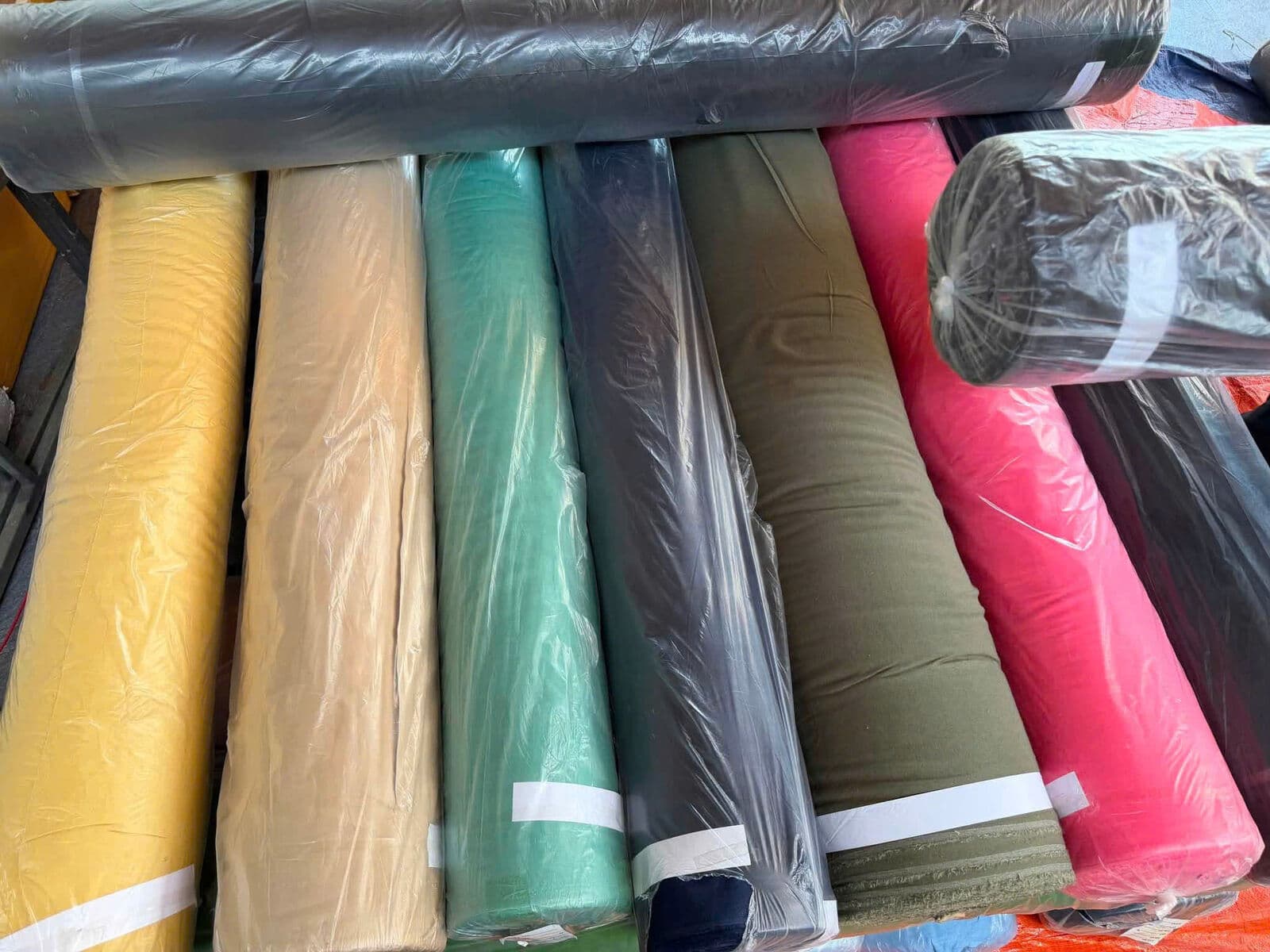
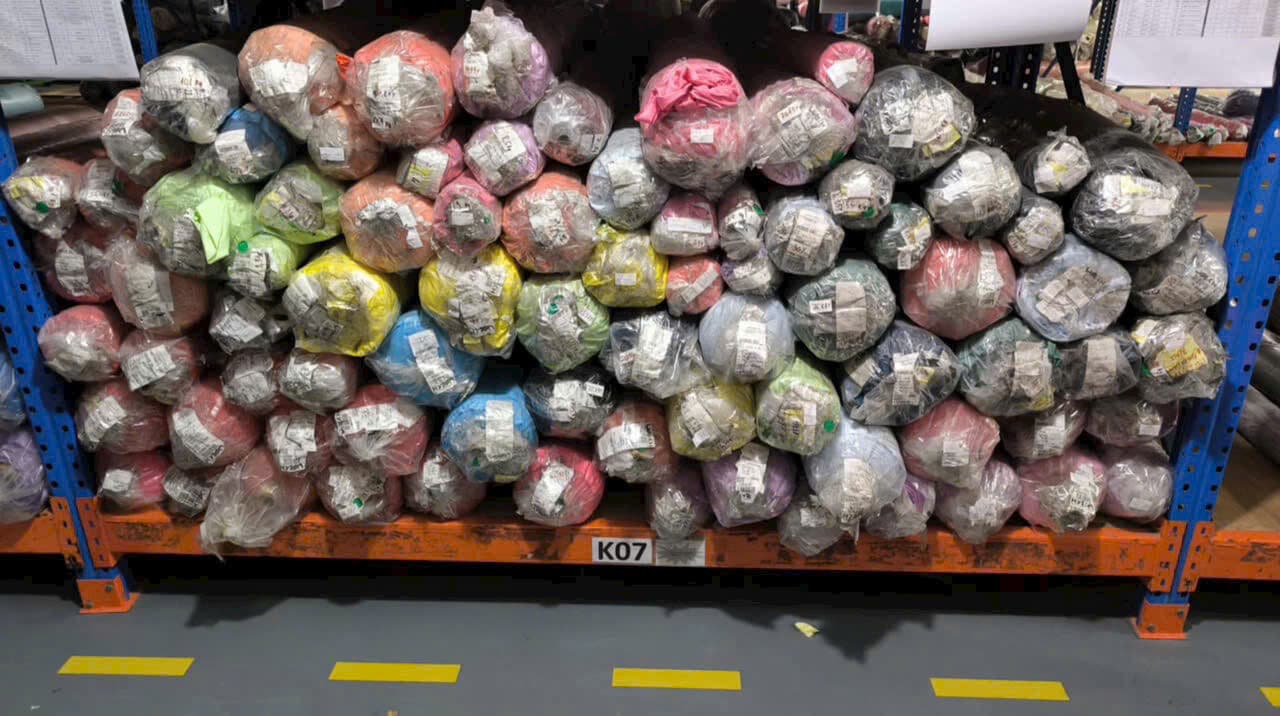
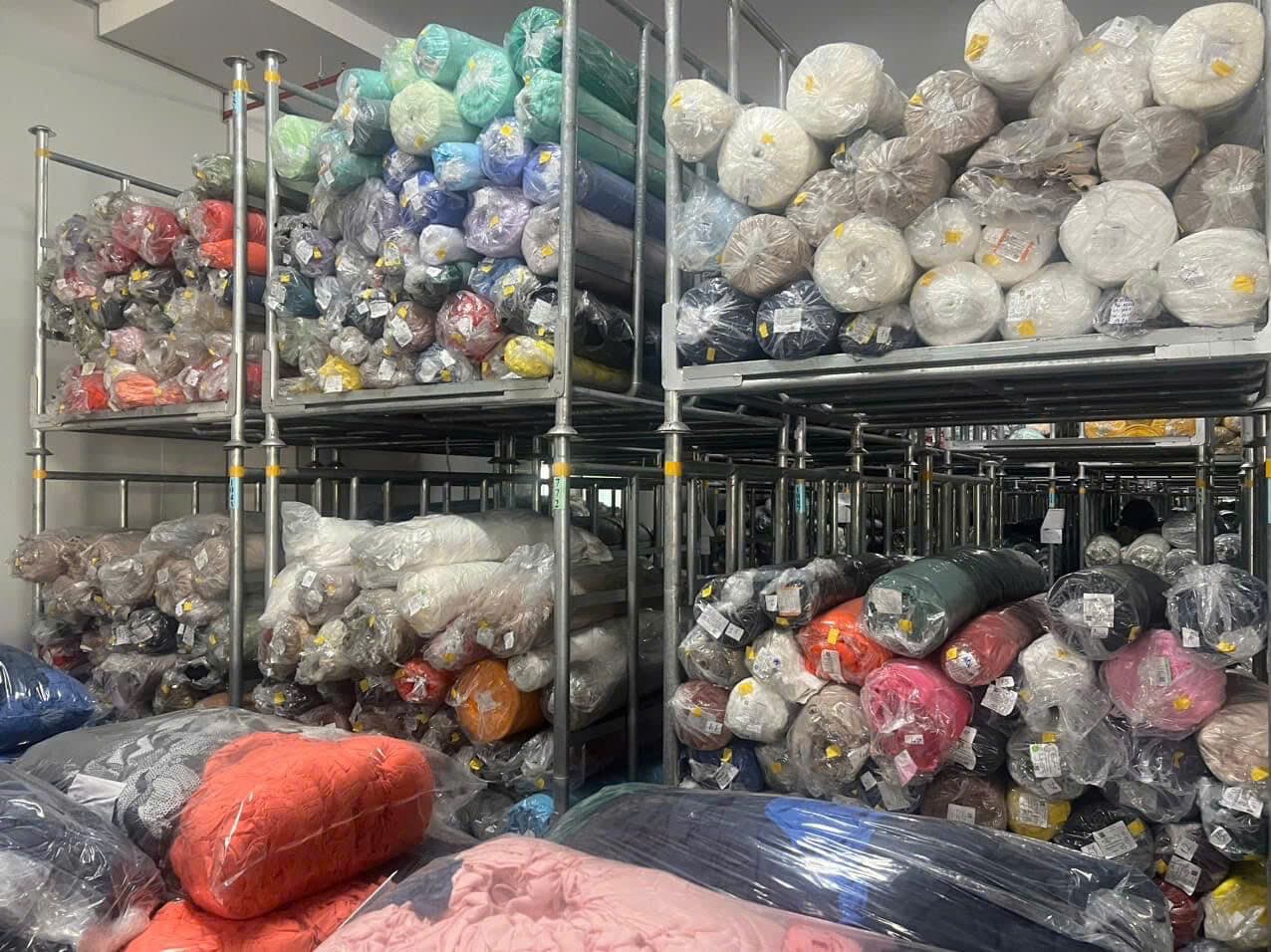
Basic colors such as black, white, navy, grey and beige always find a buyer because they work for uniforms, contract sewing and market goods. Seasonal fashion colors like neon pink or bright orange, or prints made for one specific order, have a narrower market. Fabric printed with a particular brand's logo is worth noticeably less.
4. Form: full rolls, remnants or scraps
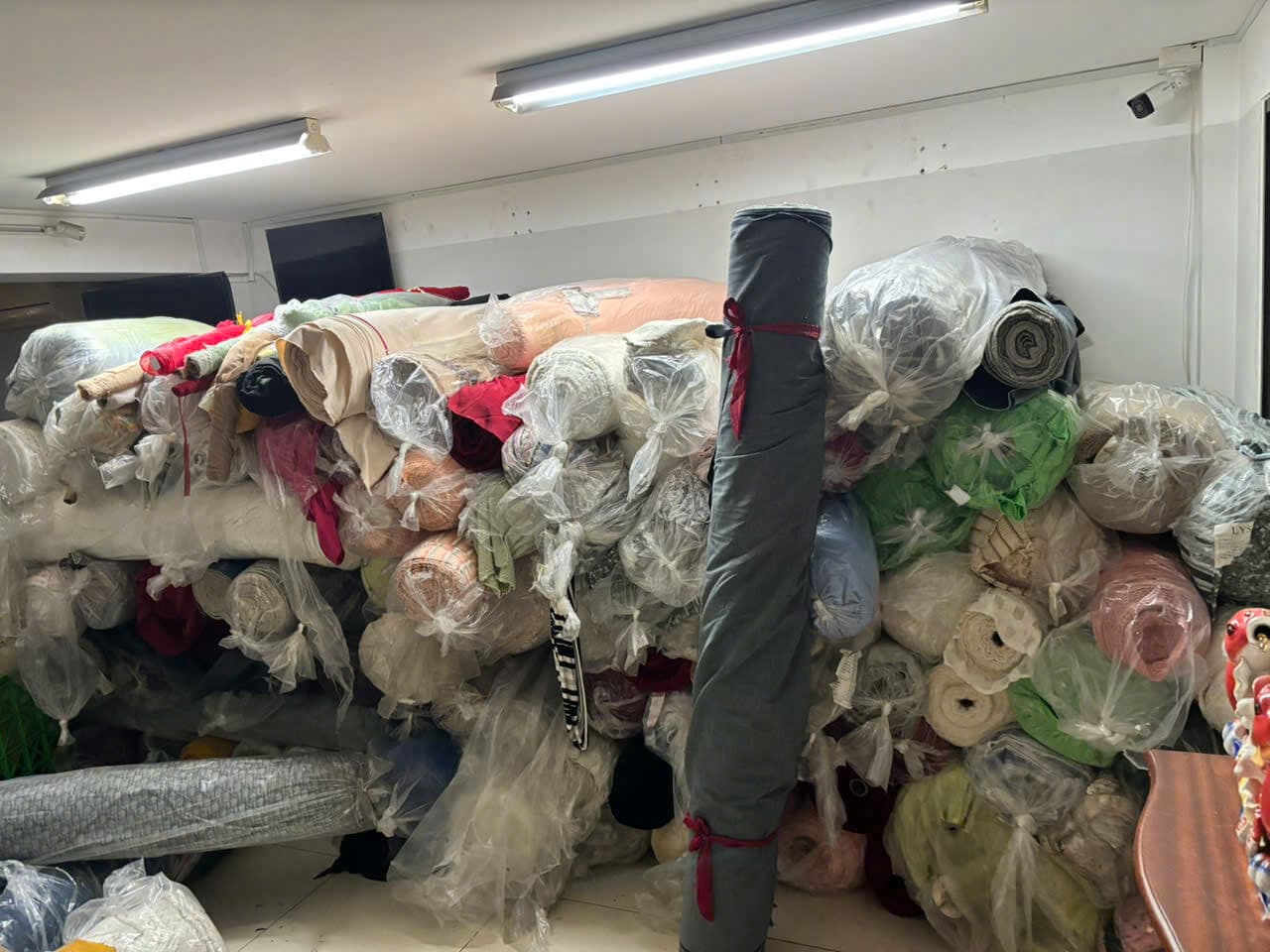
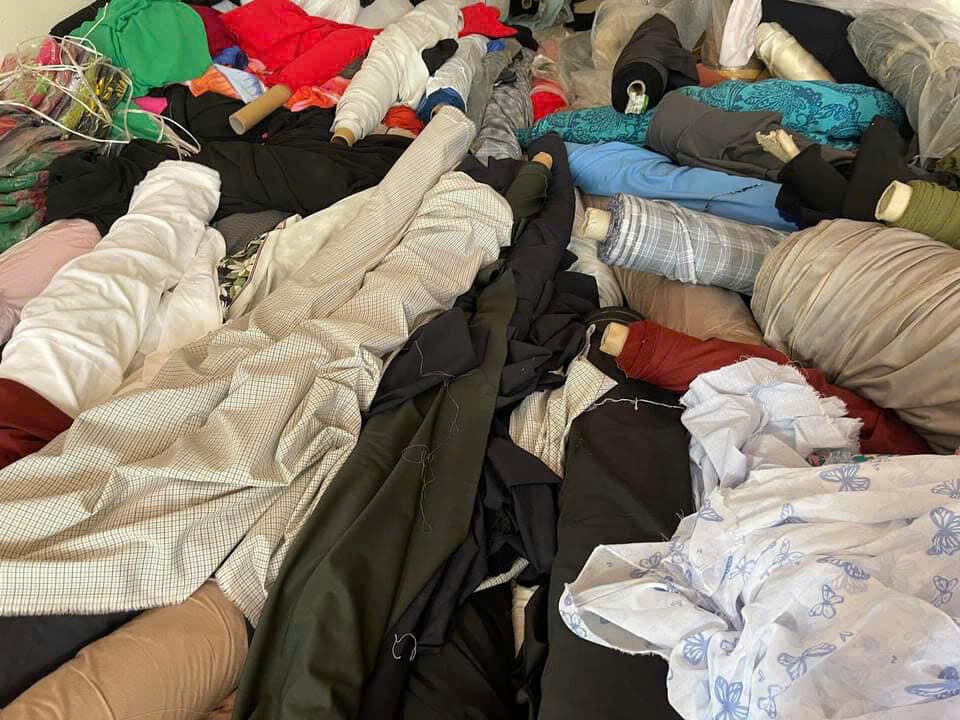
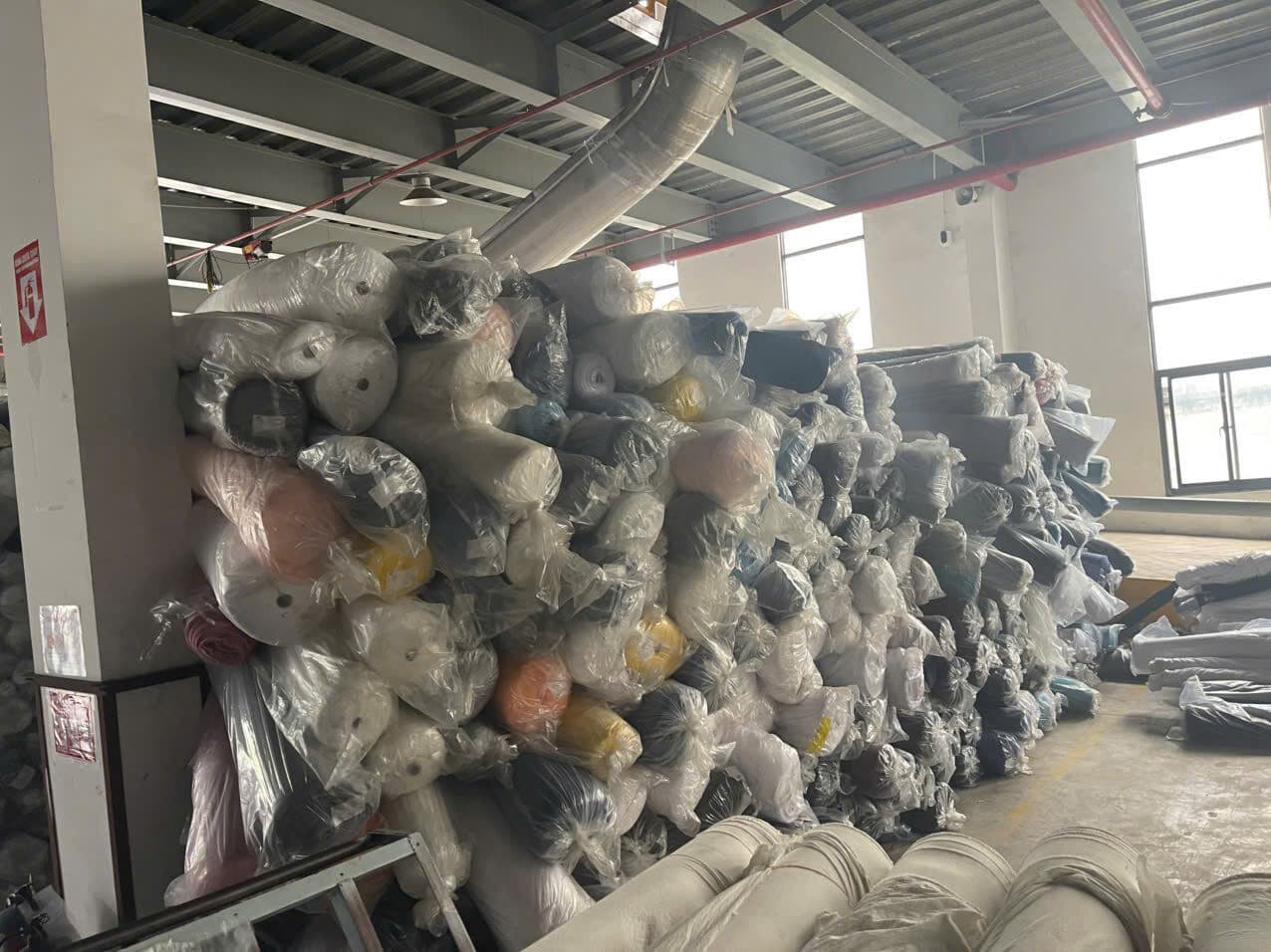
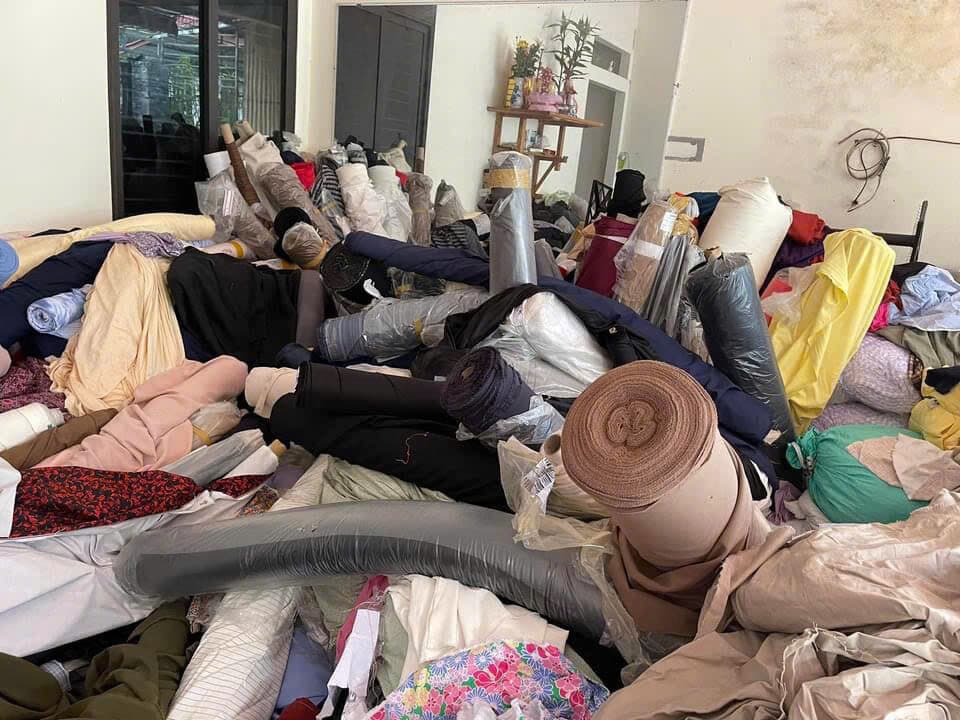
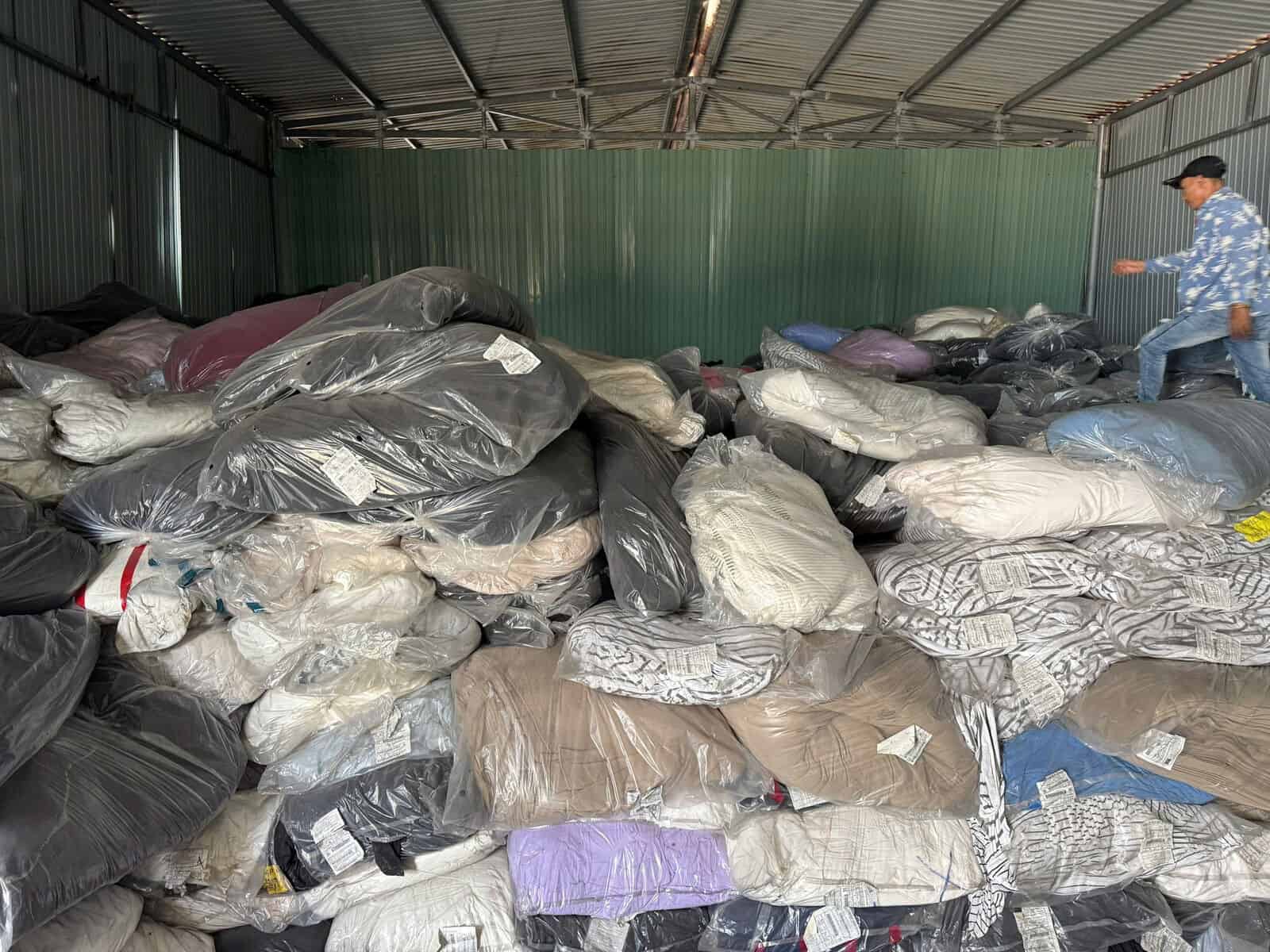
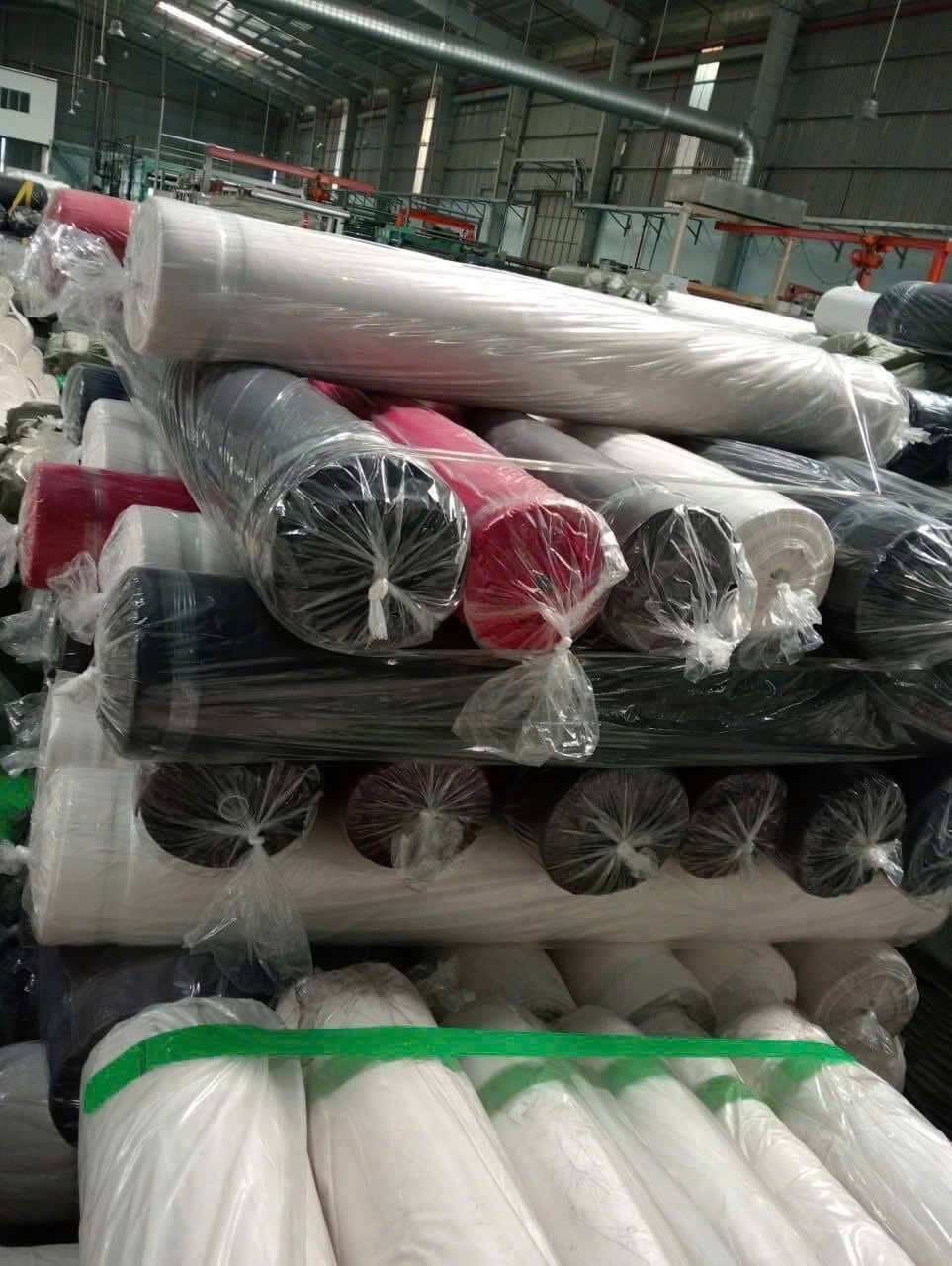
Full rolls still strapped and wrapped in plastic are the highest-value group. Remnants of a few meters up to a few dozen meters sit in the middle. Scraps and cutting leftovers come last. If your warehouse has all three, keep them apart rather than piling them together, because once they are mixed the buyer has to price everything at the level of the lowest grade. How to tell them apart is covered on our page about buying surplus fabric rolls.
5. Condition and quality
Fabric stored for a long time can develop yellow stains along the edges, color bleeding, mildew, weakened fibers or odors. These faults pull the price down sharply, mildew most of all, since it can hardly be rescued. Minor weaving or dyeing defects can still be bought, but they go into the defective goods category. You can see how we handle that category on our defective fabric buying page. A small tip: do not try to hide faulty rolls in the middle of a lot. Experienced buyers spot-check at random, and when they find a problem they usually lower the price of the whole lot, not just that roll.
6. Quantity and consistency of the lot
A large, consistent lot, say two hundred rolls of one fabric in three colors, is easy to resell to a single customer and usually gets a good price. A small lot made up of a dozen fabrics with a few rolls each has to be broken up and sold piece by piece, which takes more work and more time. Gia Bao still buys small lots.
7. Warehouse location and loading conditions
A ground-floor warehouse where a truck can pull up to the door keeps loading costs low. A storeroom on the third floor, down a narrow alley that only a cargo tricycle can reach, or with goods carried through several tight passages, means more labor and more time. Distance works the same way: a warehouse in Ho Chi Minh City is different from one in Duc Hoa, Long An (now part of Tay Ninh) or Nhon Trach, Dong Nai. We state this cost clearly from the start so you can compare quotes easily.
8. Timing of the sale
Demand for fabric is seasonal. In the three or four months before Tet (Lunar New Year), contract workshops and small traders need a lot of goods, so basic fabrics move faster. Heavy, warm fabrics, on the other hand, sell slowly in the hot season. If you are sure you will not use the fabric, selling early usually pays off better than waiting another year.
How Gia Bao quotes for surplus fabric
To save you time, we usually work through these steps:
- You take a few overview photos of the warehouse and a few close-ups of the rolls and labels (if any), and send them via Zalo along with the warehouse address.
- We give you a preliminary price range based on the photos and description, and point out anything that still needs checking in person.
- Our staff come to inspect the goods, spot-check at random, measure widths and check condition, then confirm a specific price.
- Once both sides agree, the goods are weighed or the rolls counted on the spot, payment is made in cash or by bank transfer, and we handle loading and transport ourselves.
You can find the steps in more detail on our buying process page.
How sellers can get the best price for their surplus fabric
Many people searching for the "best price for surplus fabric" really mean the buyer who will pay the most for their lot. Here are some simple things that genuinely raise the price you get:
- Separate the lot by type: full rolls in one place, remnants in another, scraps in a third. Note a rough quantity for each group.
- Keep labels and packaging: do not tear off the plastic or peel off labels when clearing the warehouse. They are proof of quality.
- Be honest about defects: say upfront which rolls are faulty or damp. The first quote will then be accurate and will not be adjusted when the buyer arrives.
- Sell early: the longer stock sits, the more value it loses, both in condition and in fashion.
- Ask exactly how it is priced: by the kilo, by the meter or by the roll, whether packaging and cardboard tubes are deducted, and who pays for transport.
A real-world example of the price gap
Picture two garment factories, each with about one tonne of cotton knit fabric. The first keeps its fabric on full rolls, still in plastic, mostly in black, white and grey, stacked on pallets on the ground floor. The second has the same fabric, but it has been cut into many short lengths, mixed with pink, orange and turquoise, kept in a damp room under a tin roof for nearly two years, and has to be carried down from the second floor.
Even though the weight is the same, the first lot can fetch considerably more than the second. The reason is that the second lot needs extra sorting, has a higher rate of waste and resells more slowly. Once you understand this, you will know what to tidy up before you call a buyer in.
Get a free quote for your surplus fabric
If your warehouse has fabric rolls, remnants, scraps or defective fabric that you need to clear, the fastest way is to call our hotline 0904 623 046 (Mr. Tuan Tai) or send a few photos via Zalo to the same number. You can message us on Zalo in English and we will reply. We will give you a preliminary quote the same day and arrange a visit to inspect the goods in Ho Chi Minh City and the surrounding provinces. You can also leave your details on our contact page and Gia Bao will call you back right away.