29 September 20260 views
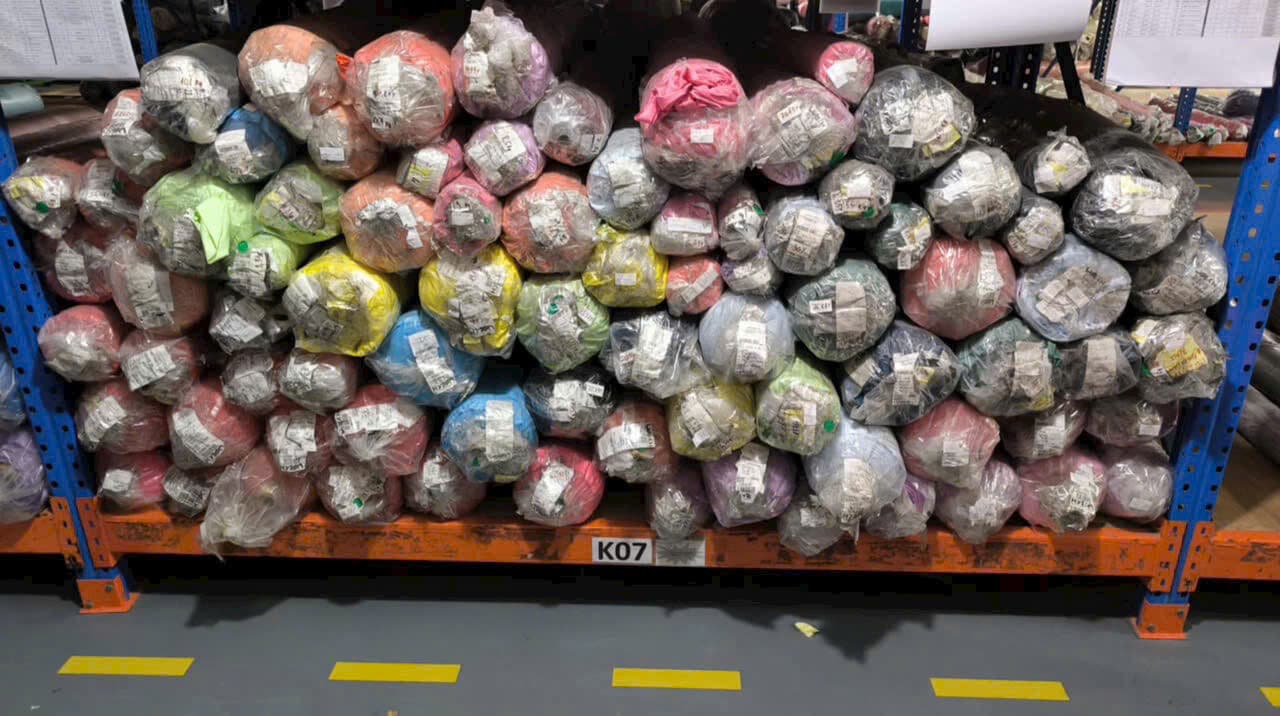
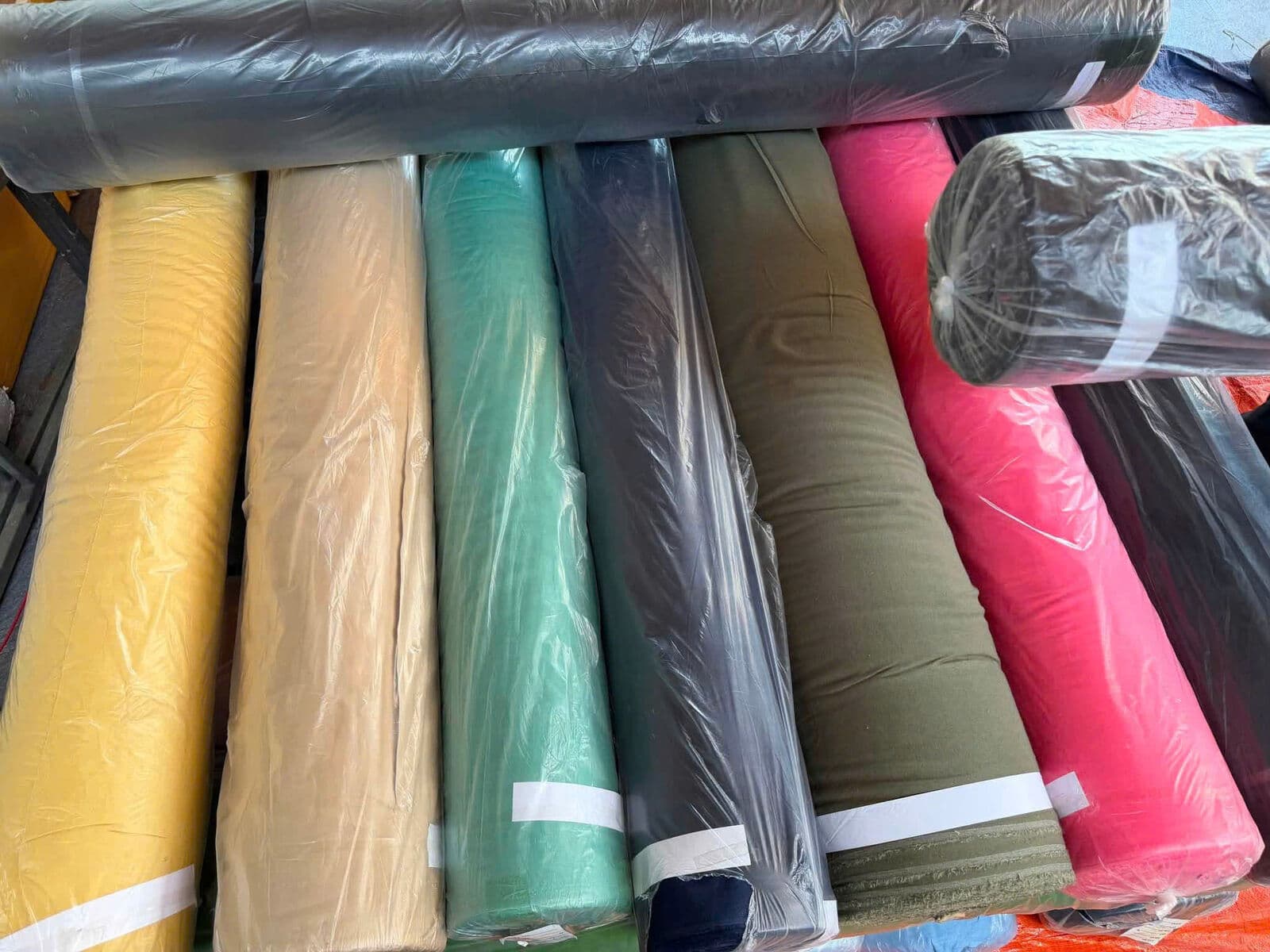
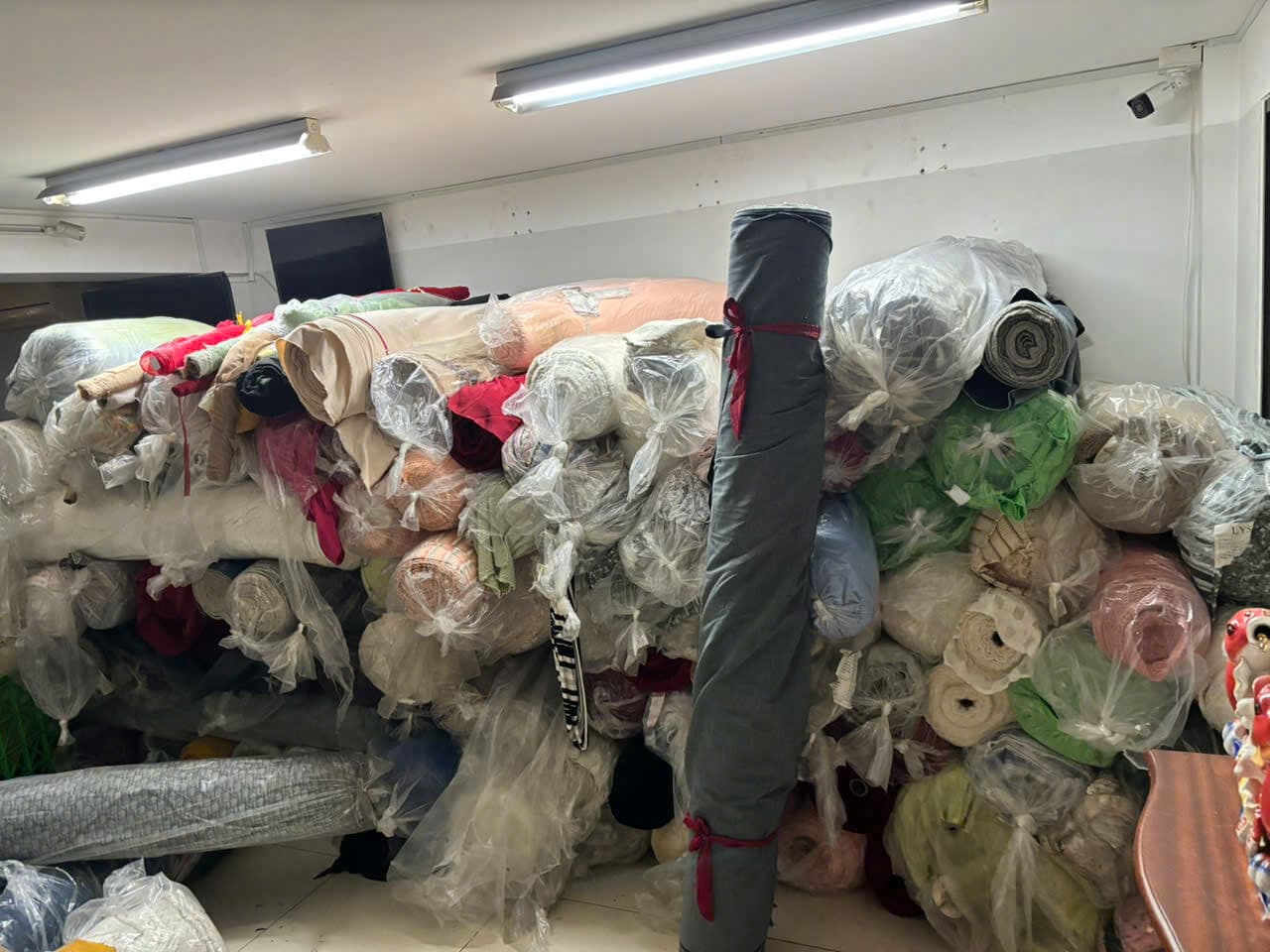
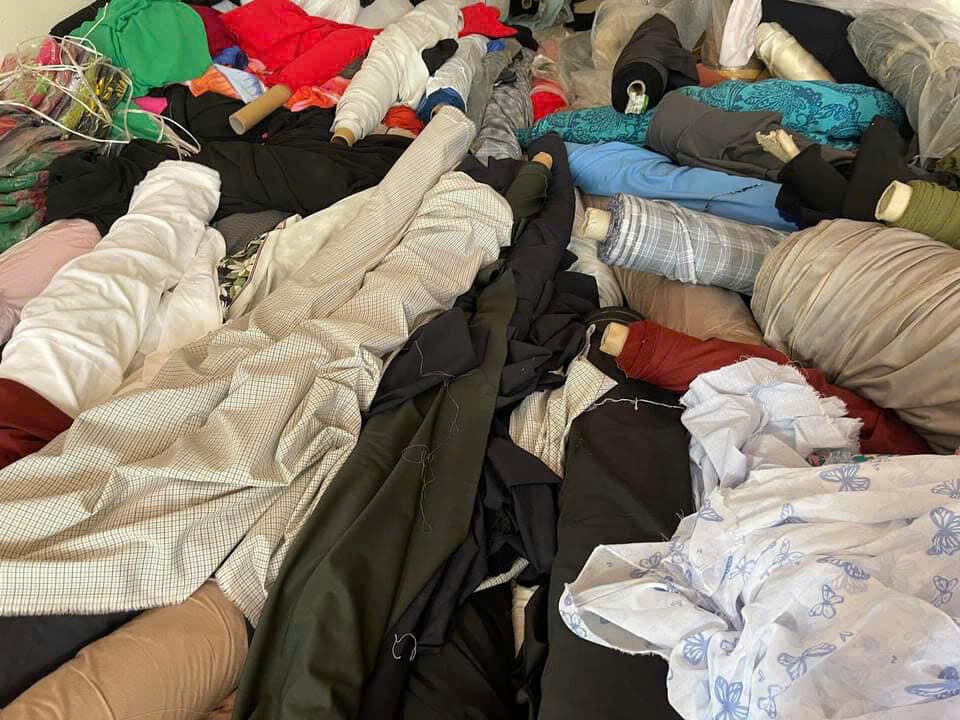
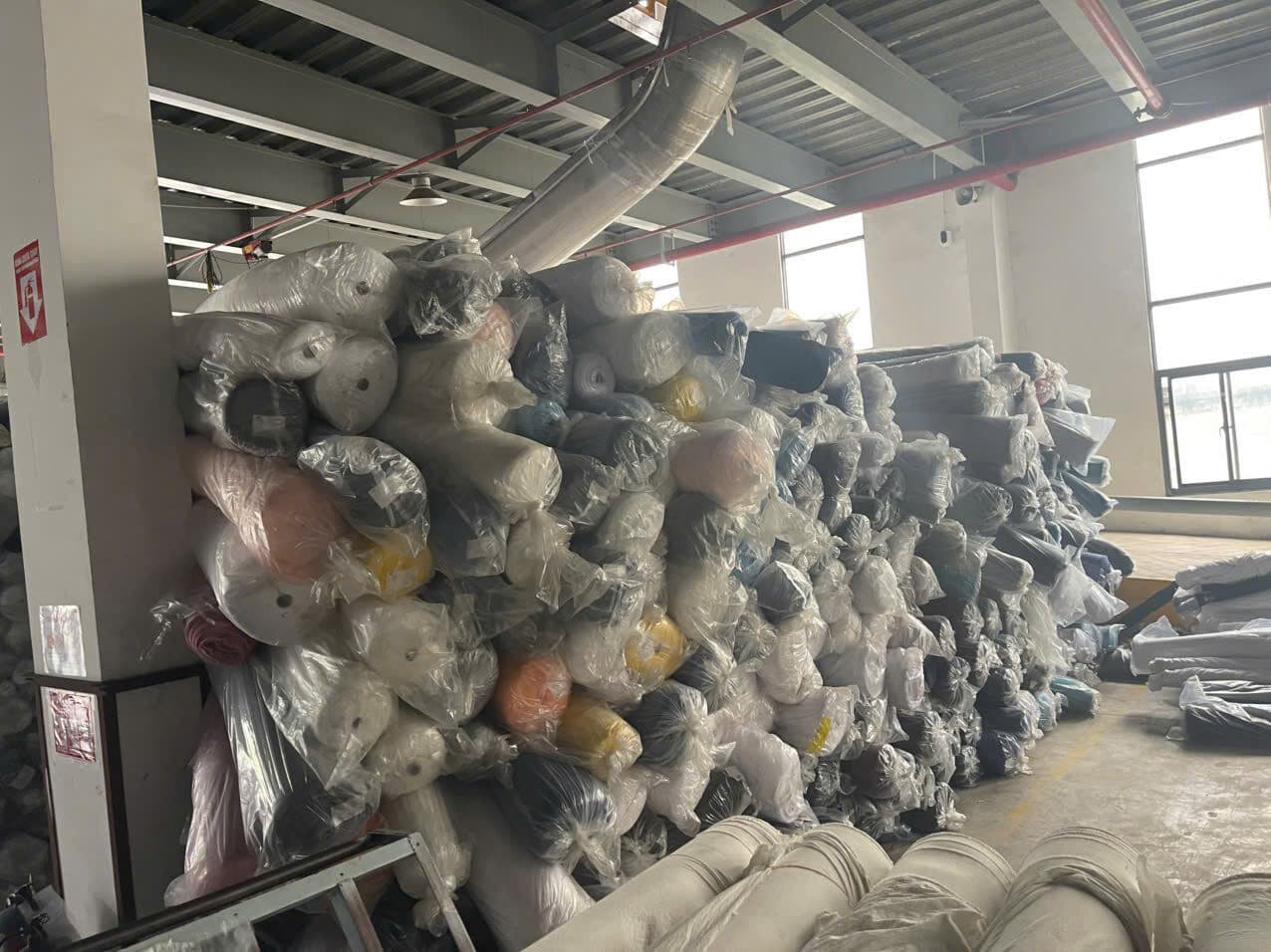
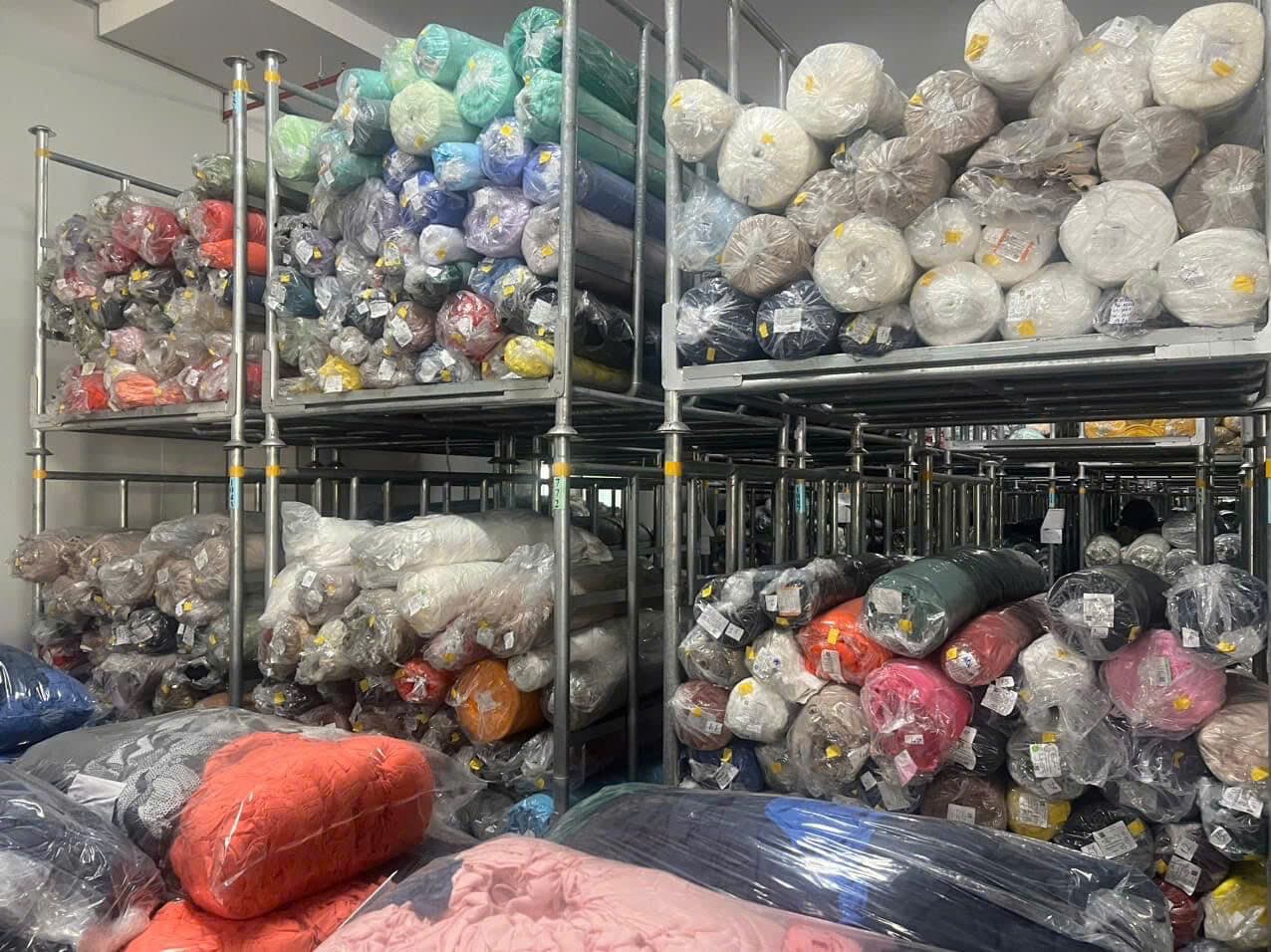
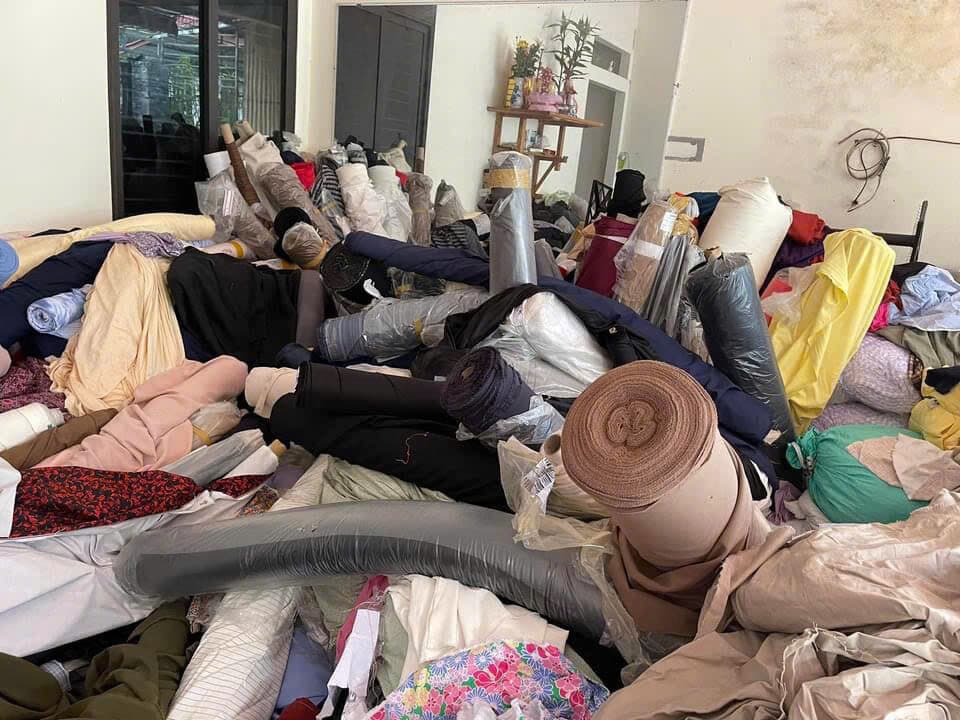
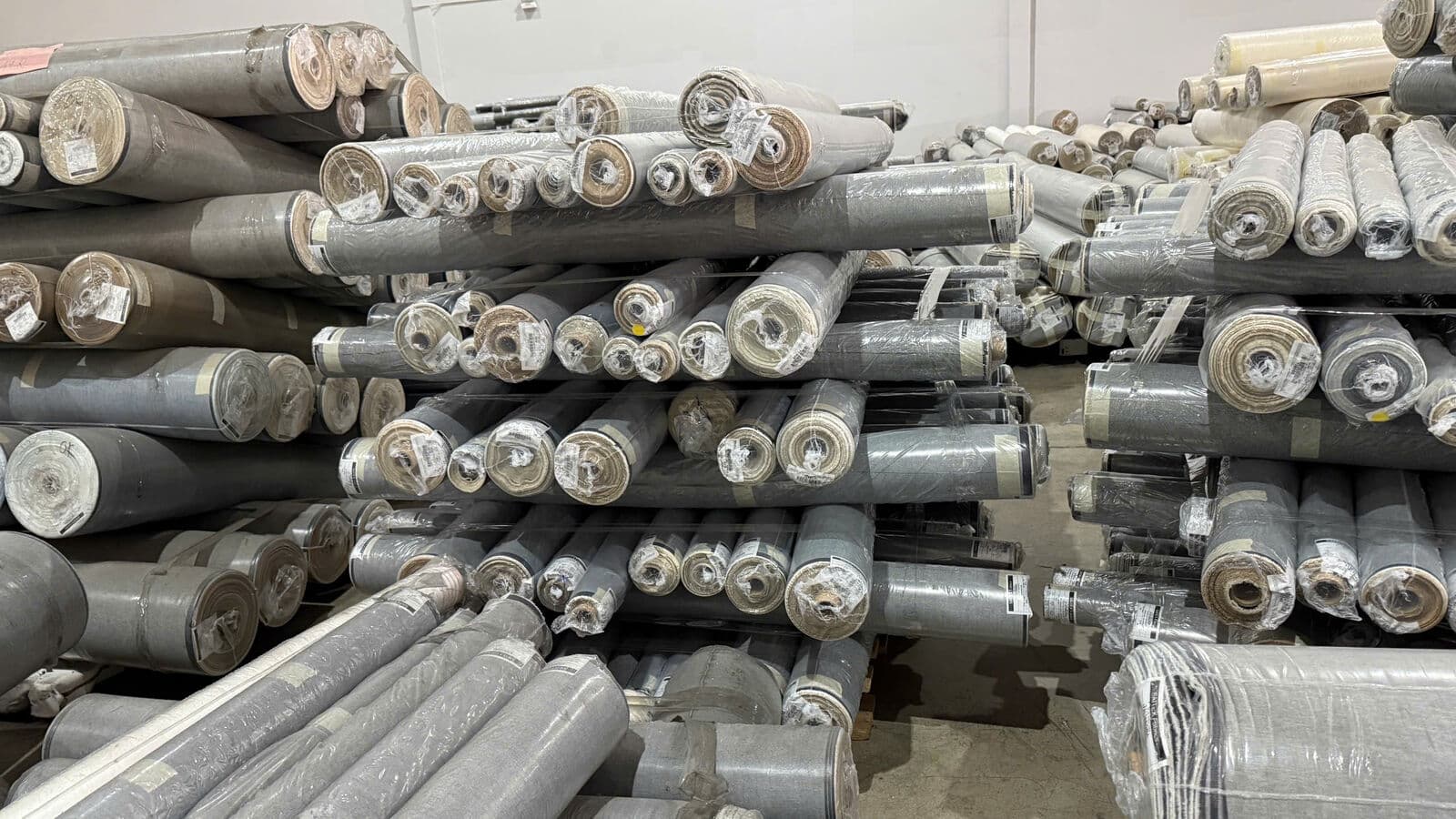
Being able to identify fabrics helps factory and shop owners ask for the right price when selling surplus stock. Two warehouses can look identical, yet a lot of cotton or linen is worth far more than a lot of polyester in the same color. If you do not know what you have, it is very hard to tell whether the price you are offered is fair. This article covers three simple ways to check and the characteristics of the 8 fabrics most often found in garment factory warehouses.
Three ways to identify fabric: read the label, feel it and burn test it
You do not need any lab equipment. You can combine the following three methods, in order from easiest to hardest:
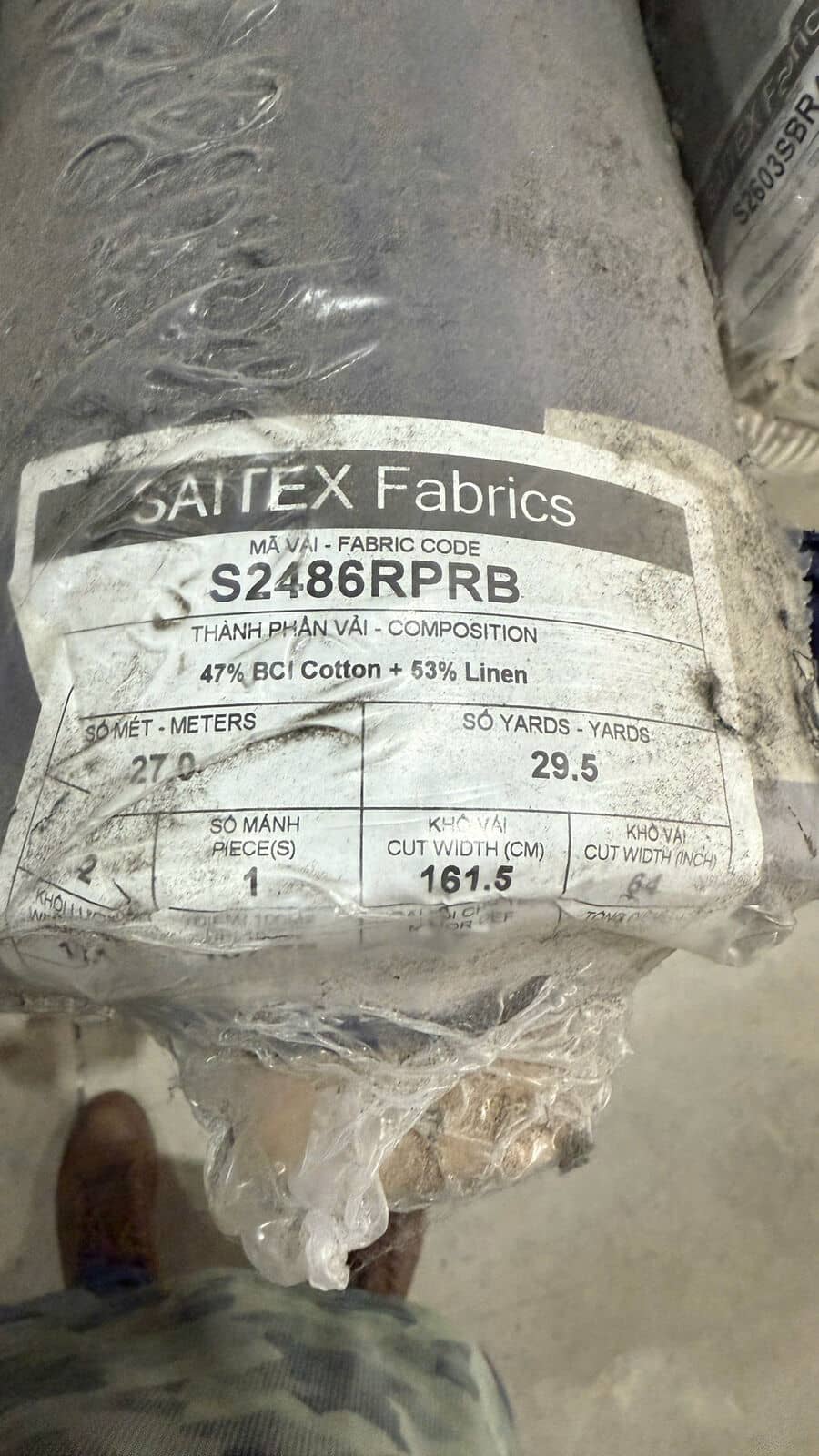
- Read the roll label. The most accurate method if the label is intact.
- Look and feel. Check the weave, the sheen, the stretch, whether it feels cool or warm, and how much it creases when crumpled.
- Burn a small piece. The way it burns, the smell and the ash tell you whether it is a natural, regenerated or synthetic fiber.
Reading the roll label
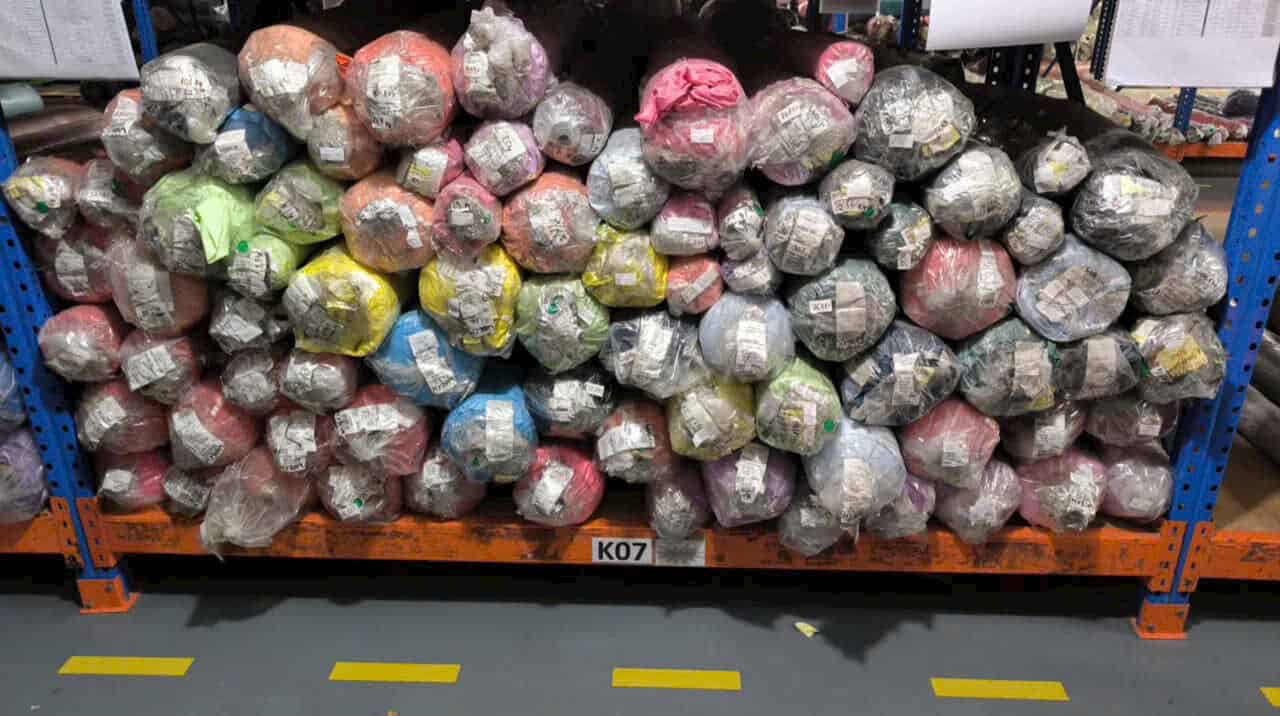
The label on the end of the roll or the tube usually shows the article number, color, width, meters or yards, roll weight, GSM and composition. Composition is the most important piece of information: "100% CO" or "100% Cotton" is cotton, "T/C 65/35" is a polyester-cotton blend, "CVC" means cotton is the majority, "PES" or "PET" is polyester, "PA" is nylon, "CV" or "VI" is viscose (rayon), "LI" is linen, and "EA", "EL" or "SP" usually means spandex.
How to do a burn test properly
Cut a small piece about the size of a finger from the edge of the fabric, hold it with tweezers and burn it over a ceramic dish or metal tray, in a ventilated spot with a cup of water at hand. Watch for three things: whether it burns fast or slowly, and whether it shrinks back and melts; the smell as it burns; and whether the cooled ash is soft and crumbles or forms a hard bead. Note that blends with several fibers give mixed results, so a burn test only narrows things down; it does not replace the label.
Cotton-based fabrics: cotton and kate
1. Cotton
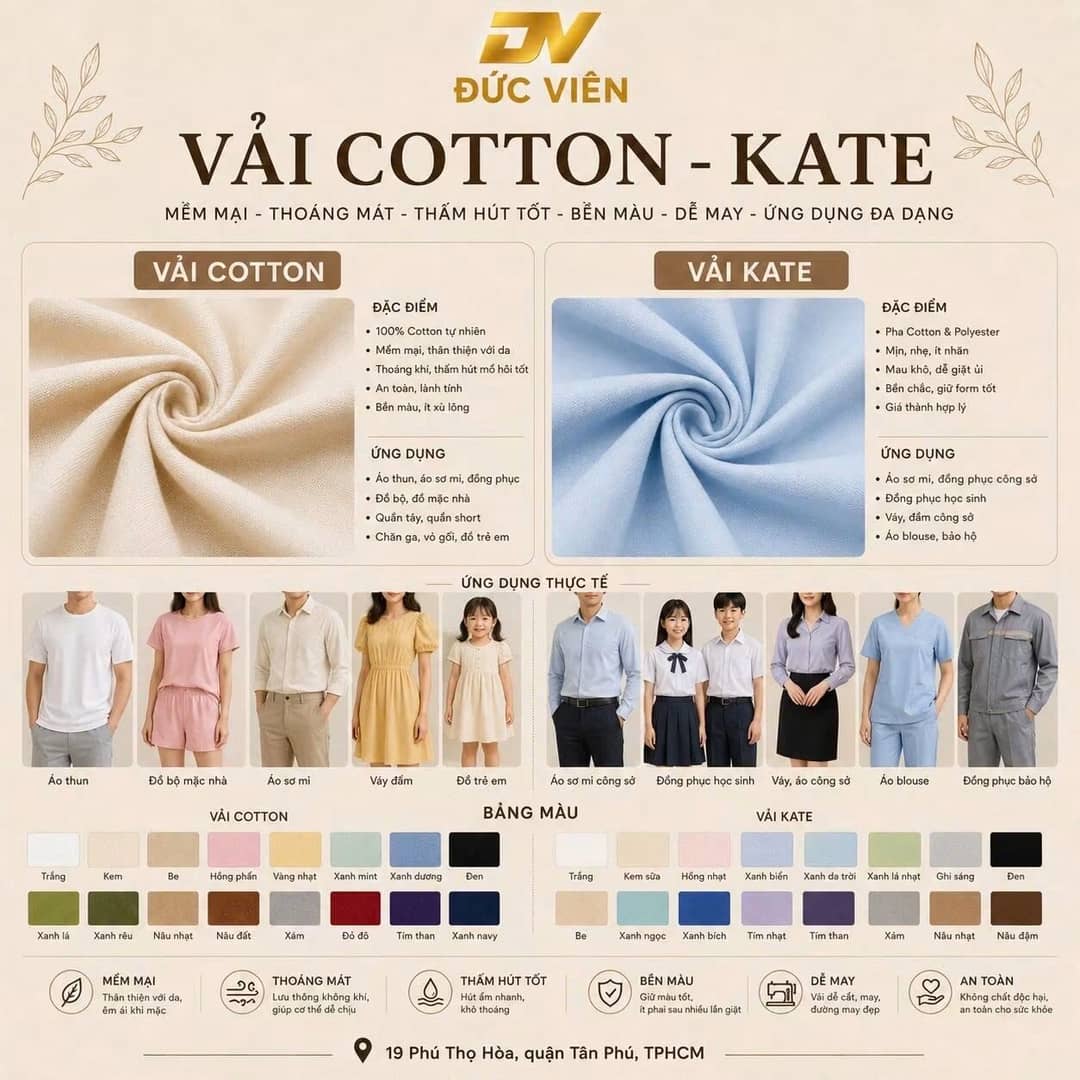
Cotton is made from natural cotton fiber. It feels soft and slightly cool, absorbs moisture well, and creases quite a lot when crumpled. Look closely at the surface and you will see the fibers are slightly fuzzy, without the sheen of synthetics. When burned, cotton burns quickly with a yellow flame and smells like burning paper; it does not shrink back, and the ash is light grey, fine and crumbles when pressed.
2. Kate (poly-cotton shirting)
Kate is usually a cotton-polyester blend, most commonly in a 65/35 ratio, or CVC types with more cotton. Compared with cotton, kate is flatter, creases less, and has a smooth, slightly glossy surface; it is widely used for shirts and uniforms. When burned, kate gives off a mix of burning paper and plastic smells, and the ash is partly fine with small hard beads from the melted polyester. Lots of cotton and kate on full rolls are usually easy to resell; see our cotton and kate fabric buying page.
Knit and twill fabrics: knit jersey, khaki twill and denim
3. Knit fabric (jersey)
Knit fabric is made by knitting rather than weaving: the yarn is formed into loops that interlock. The quickest way to tell: pull it gently sideways and it stretches noticeably, then springs back; look closely at the face and you will see rows of small V-shaped loops; cut edges usually curl up on their own. Knit that stretches both across and along its length is called four-way stretch and usually contains spandex. Knit fabrics vary widely in content, from cotton and cotton blends to polyester, so to know exactly you need to check the label or do a burn test.
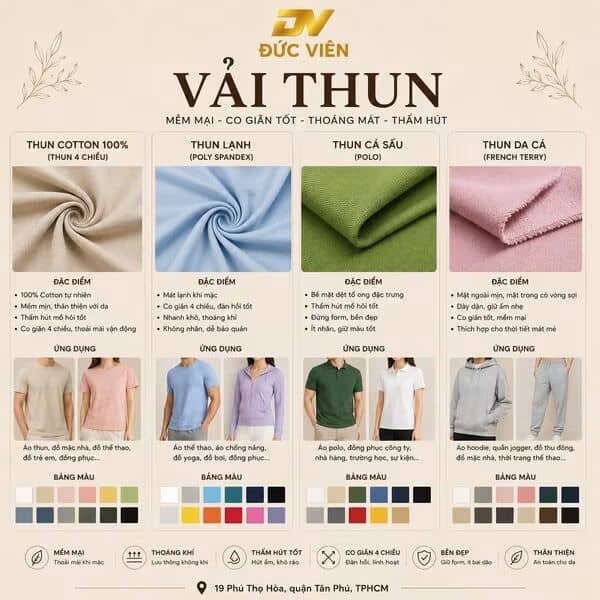
For surplus knit fabric, also note the weight and stretch if you know them, because heavy cotton jersey, cool-touch knit and four-way stretch are priced differently even though they look quite similar in photos.
4. Khaki twill
Khaki is a twill-weave fabric, thick and structured, widely used for trousers and protective workwear. On the surface you can clearly see parallel diagonal lines. There is 100% cotton khaki, which feels soft and absorbent, and polyester-blend khaki, which is stiffer and creases less; a burn test will show the difference.
5. Denim (jeans fabric)
Denim is also a twill weave but has its own signature: the warp yarns are dyed (usually indigo blue) while the weft yarns are left white or pale, so the back of denim is always much lighter than the face. Traditional denim is cotton, thick and stiff; stretch denim contains spandex. Surplus khaki twill and denim have their own page at khaki and denim fabric buying.
Linen: cool, rustic and full of slubs
6. Linen
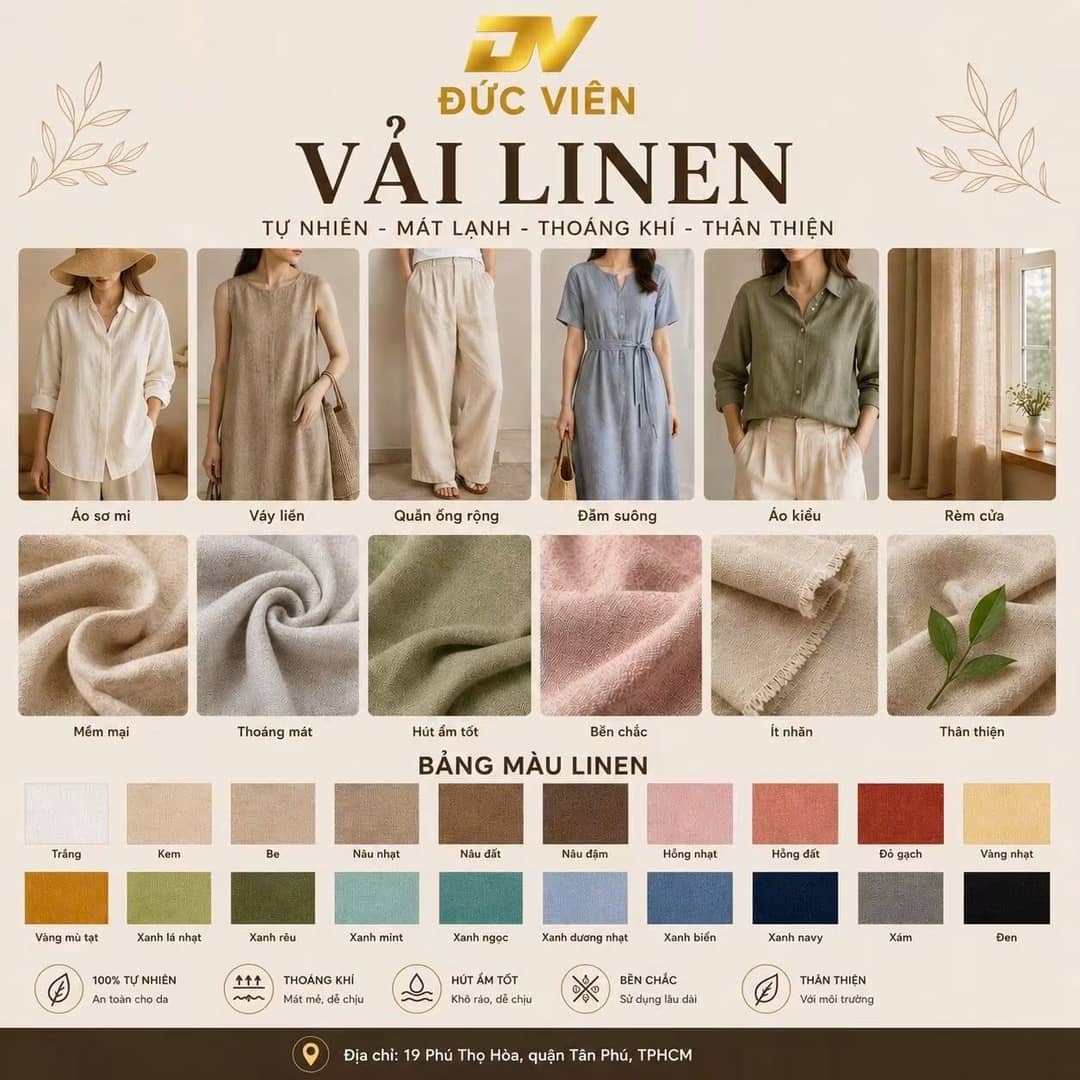
Linen is woven from flax fiber. Its most recognizable feature is the uneven thick and thin sections in the yarn, called slubs, which give it a natural, rustic look. It feels cool to the touch, a little stiffer and coarser than cotton, and when crumpled it creases a lot and the creases stay. Since it is also a cellulose fiber, linen burns like cotton: yellow flame, burning paper smell, fine grey ash. Telling it apart from cotton relies mainly on the slubs and the cool, stiff feel. The market also has many "linens" that are really blends or polyester with a linen-look texture; a burn test will show them melting.
Synthetic fabrics: nylon taffeta and polyester
7. Nylon taffeta ("parachute fabric") and polyester
In Vietnam, "parachute fabric" is the everyday name for fabrics woven from synthetic fibers such as polyester or nylon; they usually have a smooth surface, are thin and light, and many have a waterproof coating on the back. Polyester in general creases little, absorbs little water and does not feel as cool as cotton. The surest test is burning: the fabric shrinks away from the flame, melts into drops of plastic, gives off black smoke and a chemical plastic smell, and the cooled residue is a hard black or brown bead that will not crush. Nylon also melts when burned and leaves hard beads, with a different smell from polyester, though that is hard to tell apart unless you are used to it. See our nylon, polyester and taffeta fabric buying page.
Soft, drapey fabrics: rayon and silk
8. Rayon and silk
Rayon (viscose) is a regenerated fiber made from wood cellulose, so even though it is "man-made", it burns like cotton: quickly, with a paper smell, and leaves almost no hard ash. Rayon feels cool, drapes beautifully, is soft and smooth, and becomes noticeably weaker when wet. Local trade names such as "mango" fabric or "silk linen" vary in composition from lot to lot, so you need to check the label.
Mulberry silk is a protein fiber from silkworm cocoons. It is soft and lustrous with a natural shimmer, and feels warm and smooth. When burned, silk burns slowly and usually goes out on its own when removed from the flame, smells like burning hair, and leaves brittle black ash that crushes to powder. Many "silks" on the market are actually polyester satin; a burn test will show them melting with a chemical smell. Rayon and genuine silk usually fetch good prices; see our rayon and silk fabric buying page.
Burn test summary
- Cotton, linen, rayon: burn quickly, smell like burning paper, fine grey ash or very little ash.
- Mulberry silk: burns slowly, self-extinguishes, smells like burning hair, brittle black ash that crumbles.
- Polyester, nylon (parachute fabric): shrinks back, melts, black smoke, hard bead residue.
- Blends such as kate: a mix of both, paper and plastic smell, fine ash with hard beads.
Not sure what fabric you have? Just send photos to Gia Bao
You do not need to identify every roll precisely before selling. Just separate the groups that look different, keep the roll labels on, then take close-ups of the fabric surface and labels and send them via Zalo to 0904 623 046, or call our hotline 0904 623 046. You can message us on Zalo in English and we will reply. Our staff will identify the fabrics when they visit your warehouse, quote for each group, weigh on site and pay immediately.