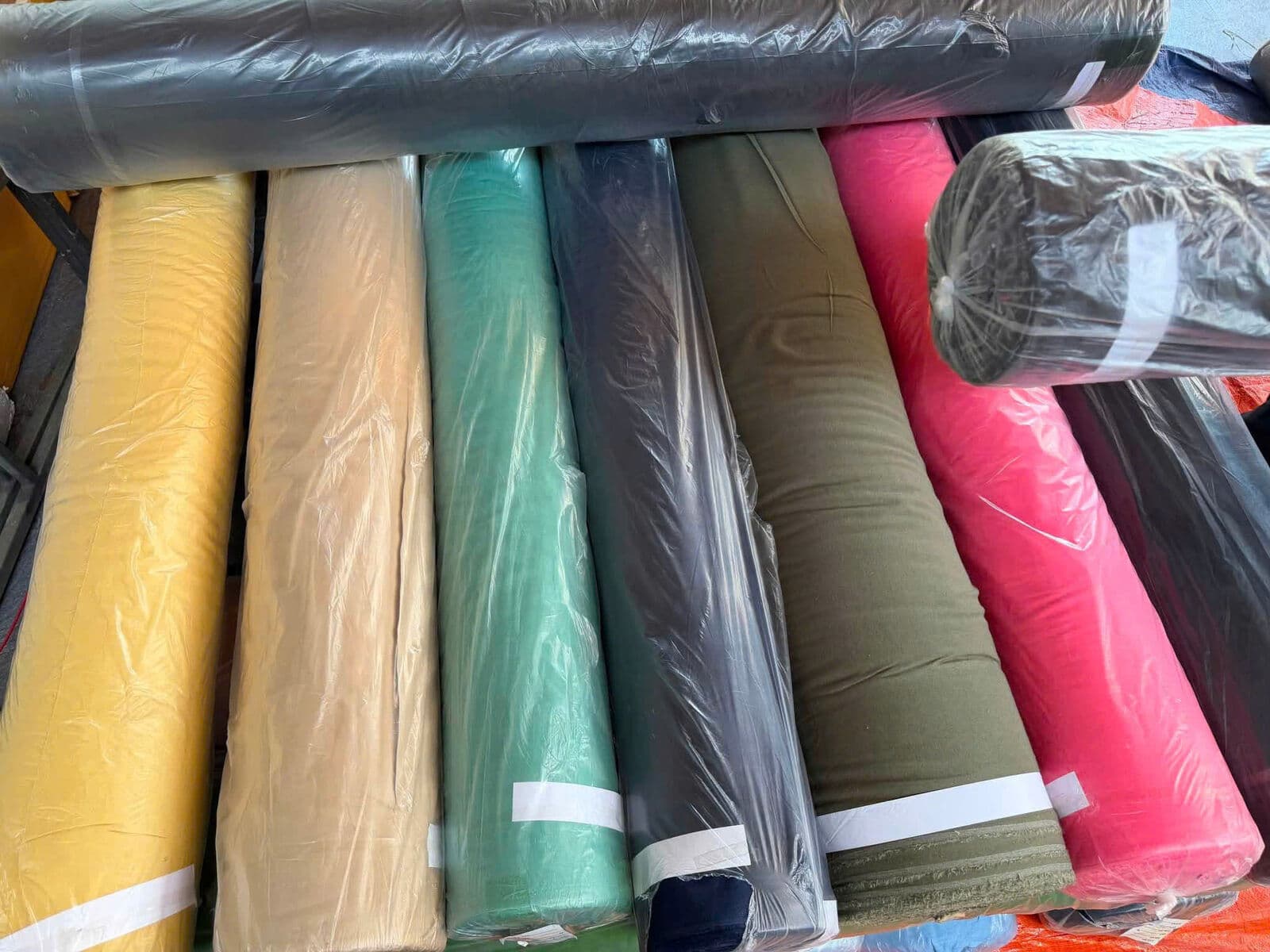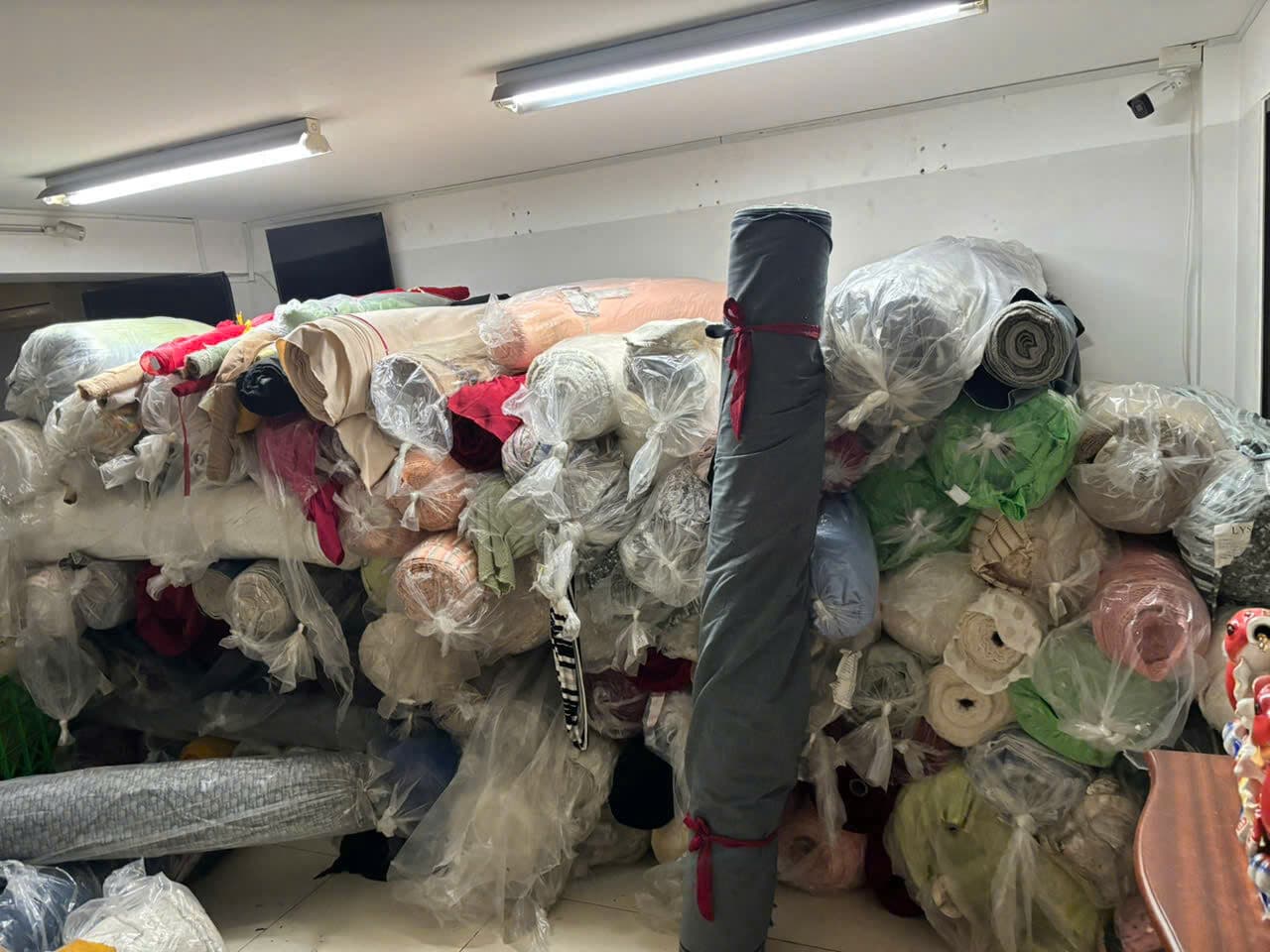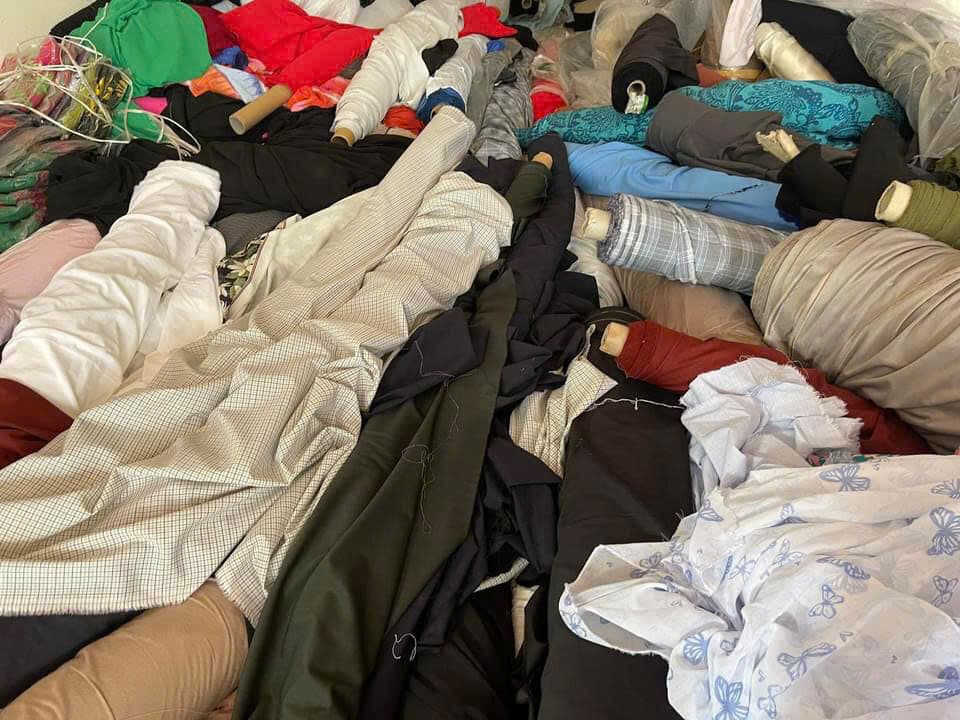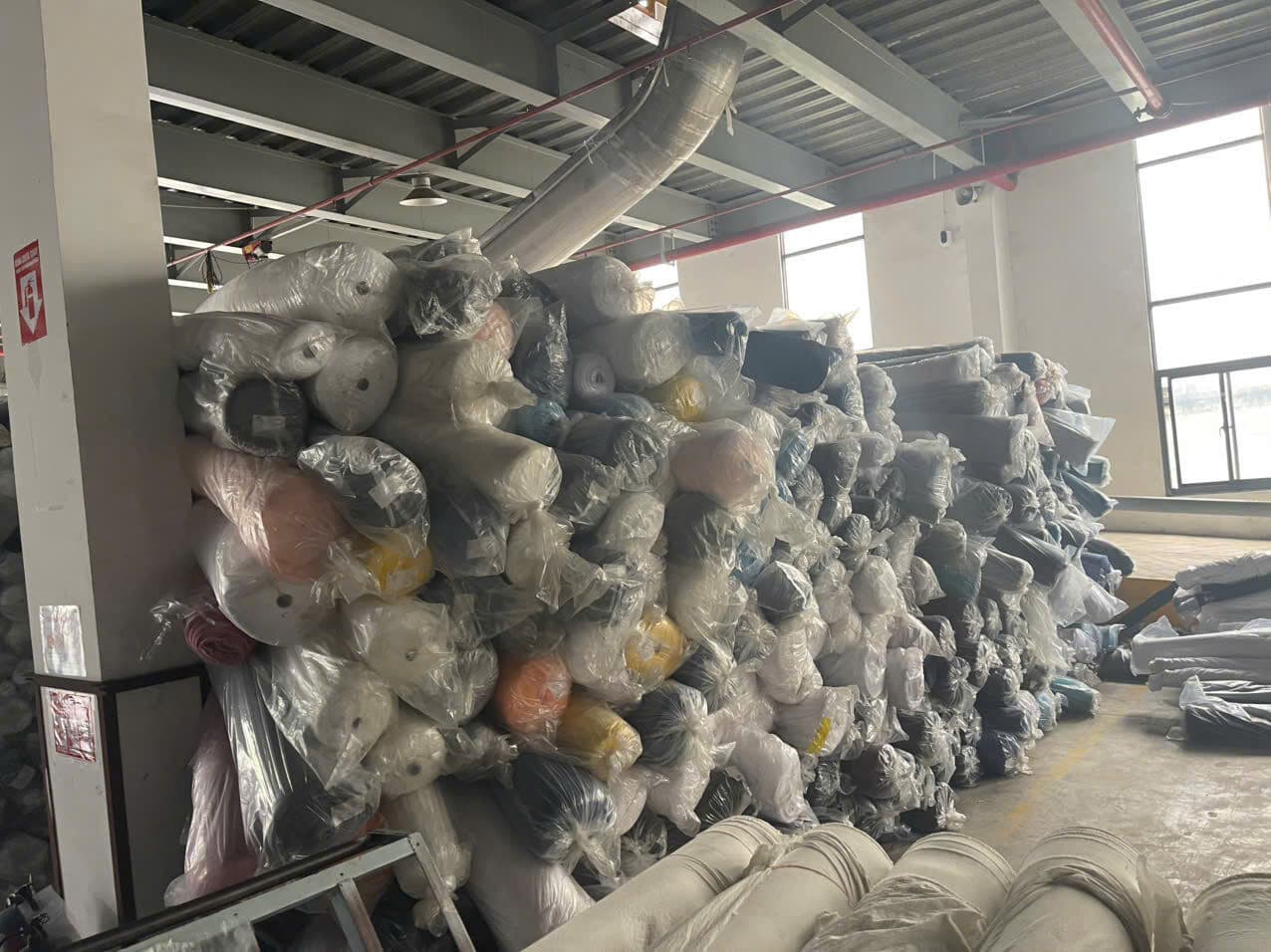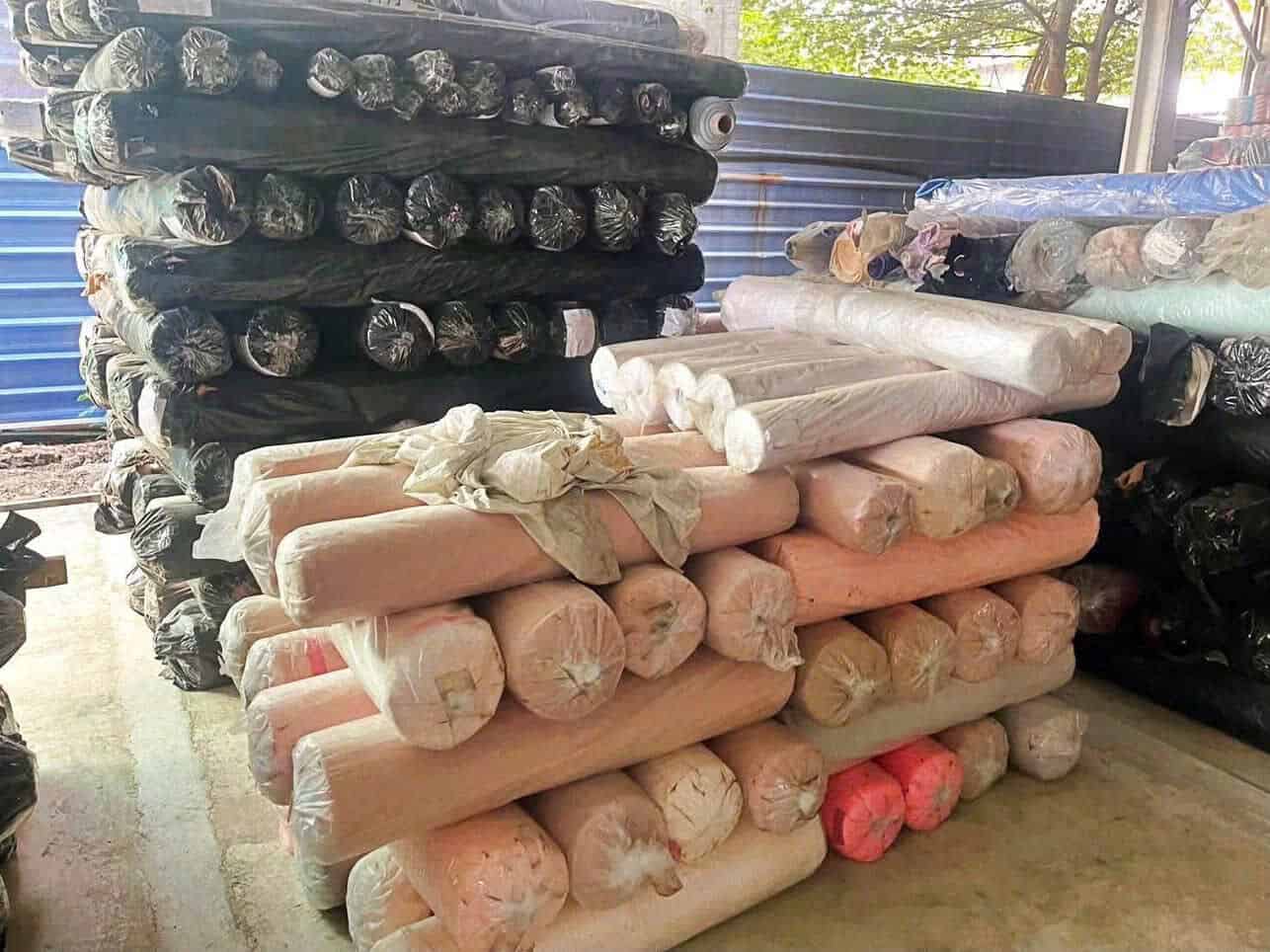
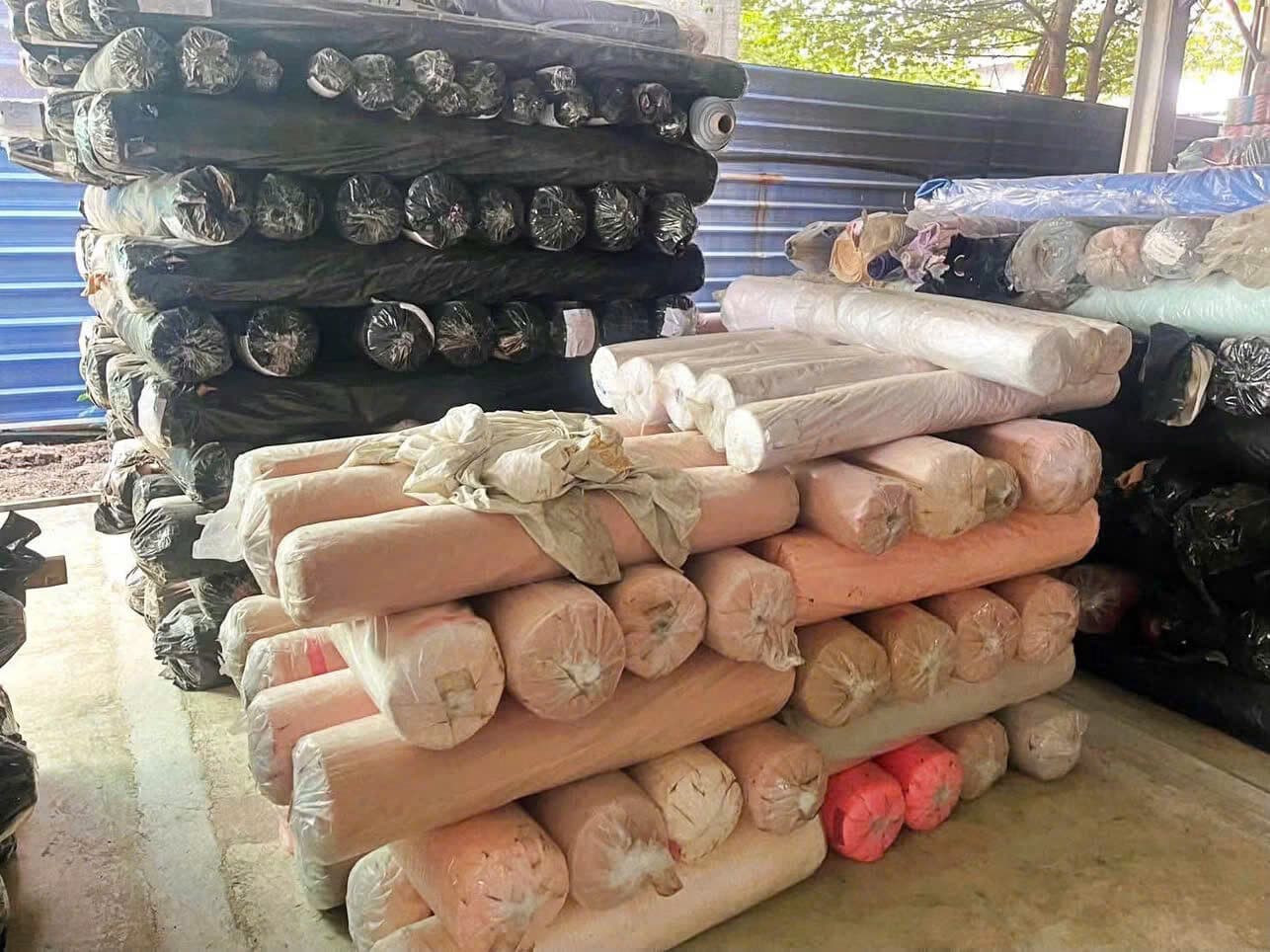
As a surplus fabric buyer in Hanoi – Bac Ninh, Gia Bao works from 186 Tay Tra Street, Hoang Mai Ward, Hanoi. Our head office is in Ho Chi Minh City, but for northern customers everything — inspection, quoting and sending the truck — starts from Hoang Mai, so you never wait for someone to fly up from the South. This page explains what we buy, which areas we cover and how to get a fair price for your surplus.
Where deadstock fabric in Hanoi usually sits
Hanoi is the main fabric trading hub of the North, so deadstock fabric in Hanoi is not only in garment workshops but spread across many kinds of businesses. From what we see when inspecting goods, there are a few main groups:
- Fabric shops and distributors: stock bought in by season leaves cut rolls, slow colours and outdated designs at the end of the season. This group often has odd rolls across many codes.
- Uniform makers and family workshops in outer districts such as Hoang Mai, Thanh Tri, Ha Dong and Gia Lam: end-of-order fabric, remnants and cutting-room scraps.
- Fashion brands and online shops that order fabric per collection and then change designs: attractive, barely used fabric, often silk, voile and blends.
- Craft villages: the Van Phuc silk village in Ha Dong and the knitting area around La Phu, Hoai Duc. These often hold half-finished design runs, lightly flawed fabric and goods that did not sell in time.
There are also warehouses of wholesale traders around the Ninh Hiep fabric market (Gia Lam), right on the Bac Ninh border. Goods move fast there, and for exactly that reason the codes that do not sell pile up quickly.
Buying surplus fabric in Bac Ninh and former Bac Giang
Since 1 July 2025, Bac Giang and Bac Ninh have been merged into a new Bac Ninh province. People in the trade still use the old names, so we do too. Former Bac Ninh has many industrial zones, mostly electronics, but there are still contract garment workshops and weaving businesses among them; the Tuong Giang weaving village in Tu Son is a familiar example. Former Bac Giang has many export garment factories, especially around Viet Yen and along National Highway 1.
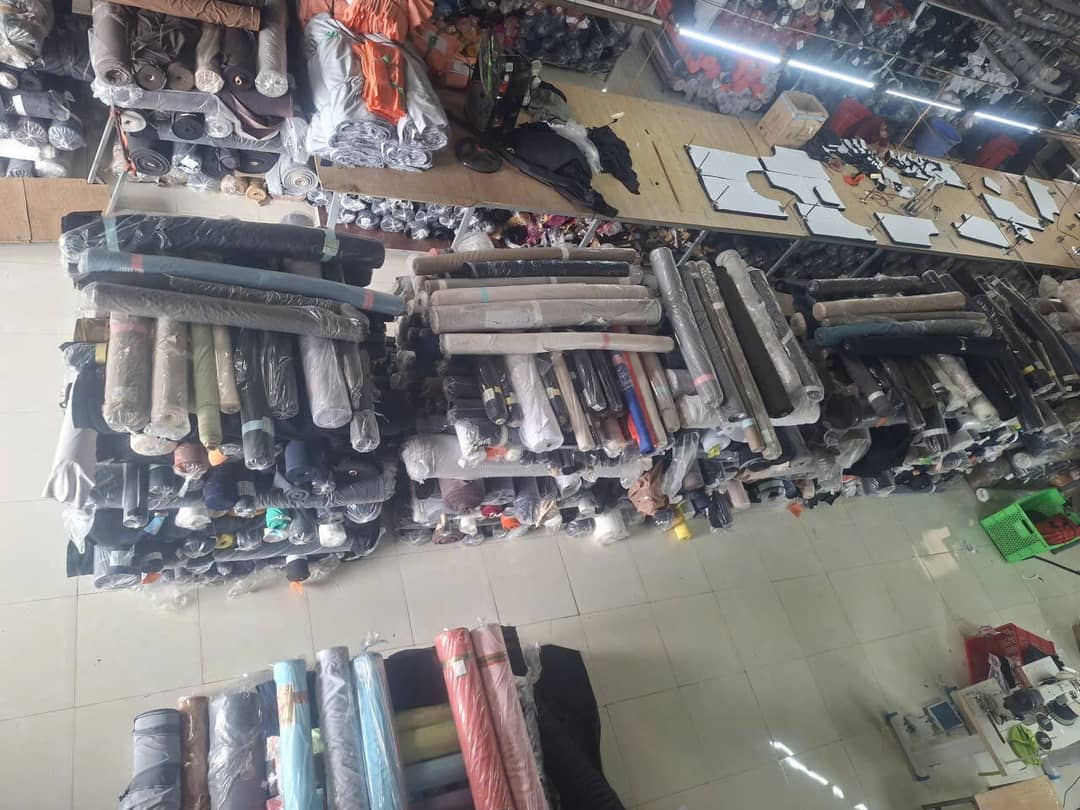
At export garment factories, the surplus we usually see is full rolls still strapped after an order ends, leftover fabric the client never collected, and boxed trims such as thread, buttons and zips. For this kind of stock, please send a list of fabric codes, widths, roll counts or weights first, so Gia Bao can send the right truck and price each group separately rather than lumping the whole warehouse together. Surplus trims have their own page: buying garment trims and accessories.
Routes from Hoang Mai and time to inspect
From 186 Tay Tra we reach Hanoi's inner and outer districts fairly quickly, so lots in Hanoi can usually be booked within one or two days of you sending photos. For Bac Ninh and Tu Son we take National Highway 1; for former Bac Giang, the Hanoi – Bac Giang expressway. These routes suit trucks well, but we still book ahead to plan the trip and do not promise to arrive within the hour.
The process is the same across the region:
- Send a few photos on Zalo: the whole lot, a close-up of the fabric, roll ends or roll labels if any.
- Gia Bao gives a preliminary quote by fabric type and may suggest a video call to look more closely.
- We agree on the price and time before sending the truck. The quote is the price collected at the seller's warehouse.
- On site we check the goods, weigh or count rolls, and pay immediately in cash or by bank transfer.
Each step is described on our buying process page.
Fabric clearance in Hanoi: what Gia Bao buys
When buying clearance fabric in Hanoi, we take almost any fabric that is still usable, as long as it is dry, not rotten and of clear origin:
- Surplus fabric rolls of all kinds: kate, cotton, khaki, denim, knit, voile, silk, linen and polyester blends.
- Remnants and scraps from cut-and-sew workshops, bought by the kilo, with a better price once knit and woven are roughly separated.
- Lightly flawed fabric: off-shade, scattered weaving faults, misprints. See buying defective fabric.
- End-of-order fabric from contract workshops and factories.
On price, Gia Bao has a reference price list by fabric type so you can estimate beforehand. The final price still depends on each lot: fabric quality, width, colour, consistency, quantity and how easy it is to load.
Buying surplus fabric in Hanoi: small city lots are worth a call
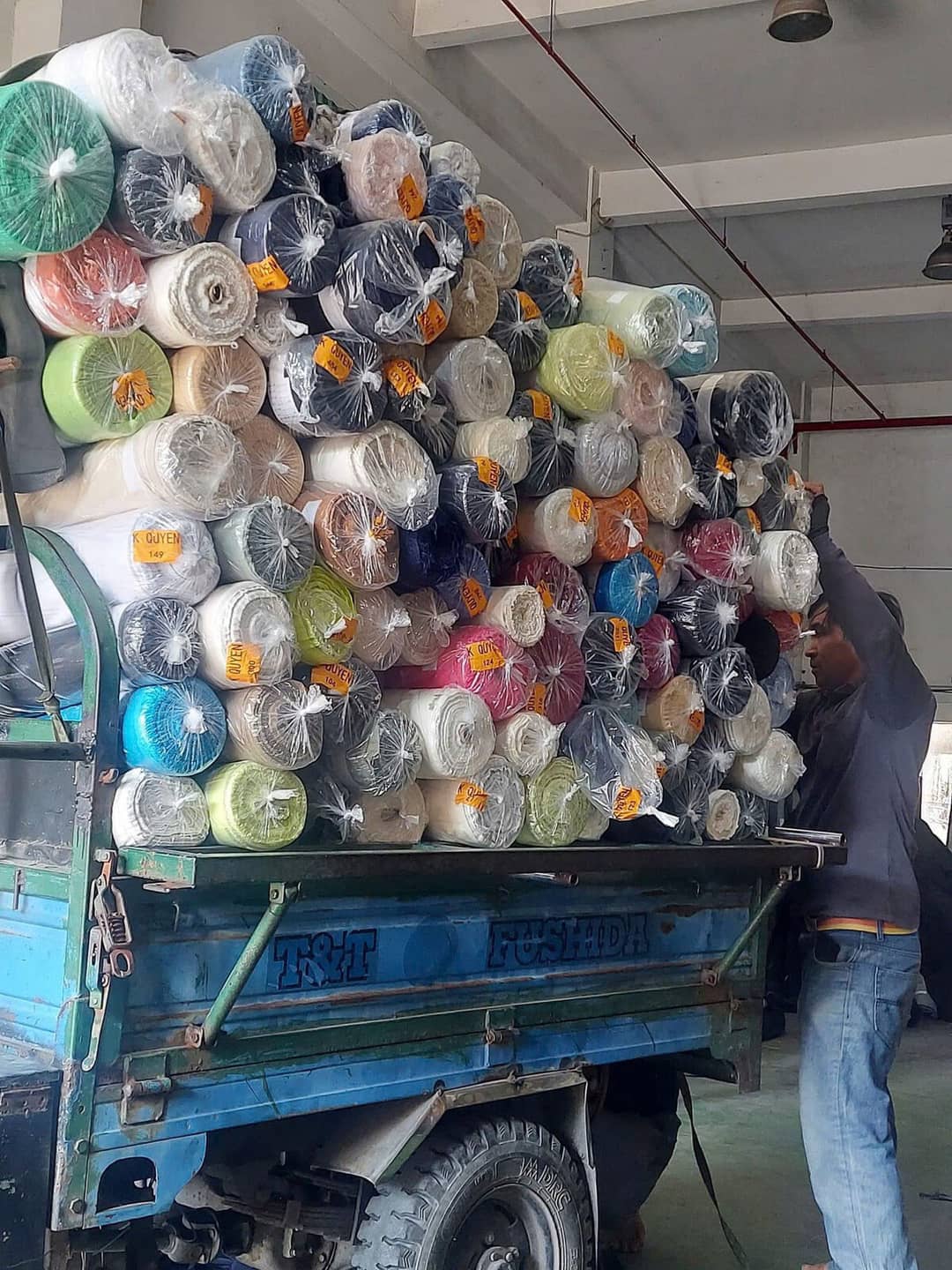
Many fabric shop owners in Hanoi hesitate to call, thinking nobody wants a few dozen rolls. For customers in the inner city and outer districts, we still come to look, or add you to a nearby trip that week. For very small lots, say only a few odd rolls of different types, we will tell you honestly whether the trip makes sense, rather than booking and leaving you waiting.
For large warehouses in Bac Ninh and former Bac Giang, on the other hand, please clear access for the truck and group the goods: rolls in one place, remnants in another, trims in a third. Clearly grouped goods are priced faster, loaded more neatly and usually earn the seller more than selling the whole warehouse as one lot.
Notes when selling surplus at markets and craft villages
In wholesale areas, one warehouse may hold goods belonging to several owners. In craft villages, half-woven fabric is sometimes a customer's order. Before selling, please separate the goods you actually own. Gia Bao only buys goods with a clear origin and is happy to write a receipt for both sides to keep.
If your workshop is further east, see our page for surplus fabric in Hung Yen – Hai Duong; to the west and north there is the Hoa Binh – Lang Son page.
Call or message us on Zalo at 0904 623 046 (Mr Tuan Tai), send a few photos, and Gia Bao will quote for your surplus fabric in Hanoi – Bac Ninh and book a day to inspect. Messages in English or Chinese are fine — we will reply.