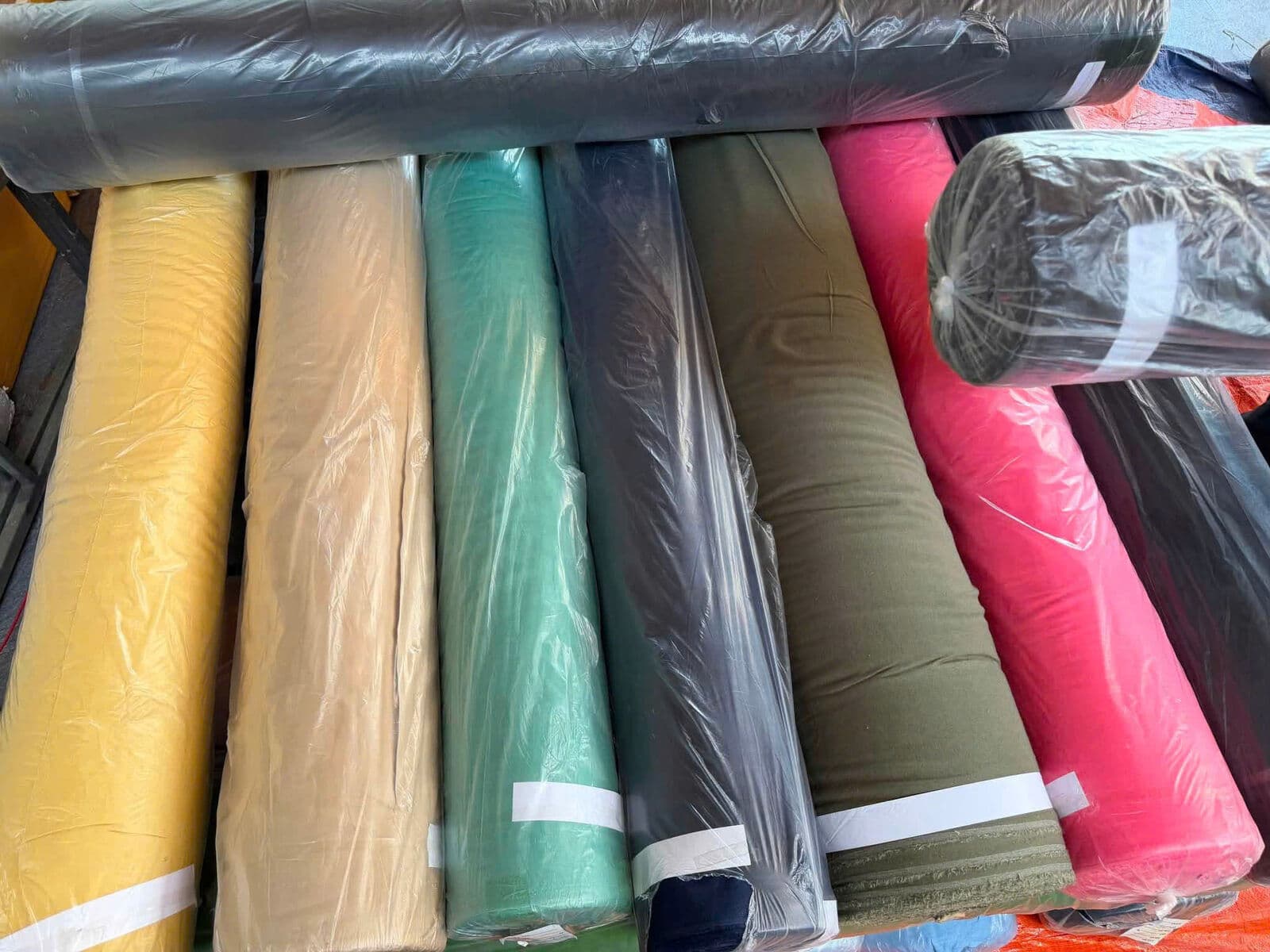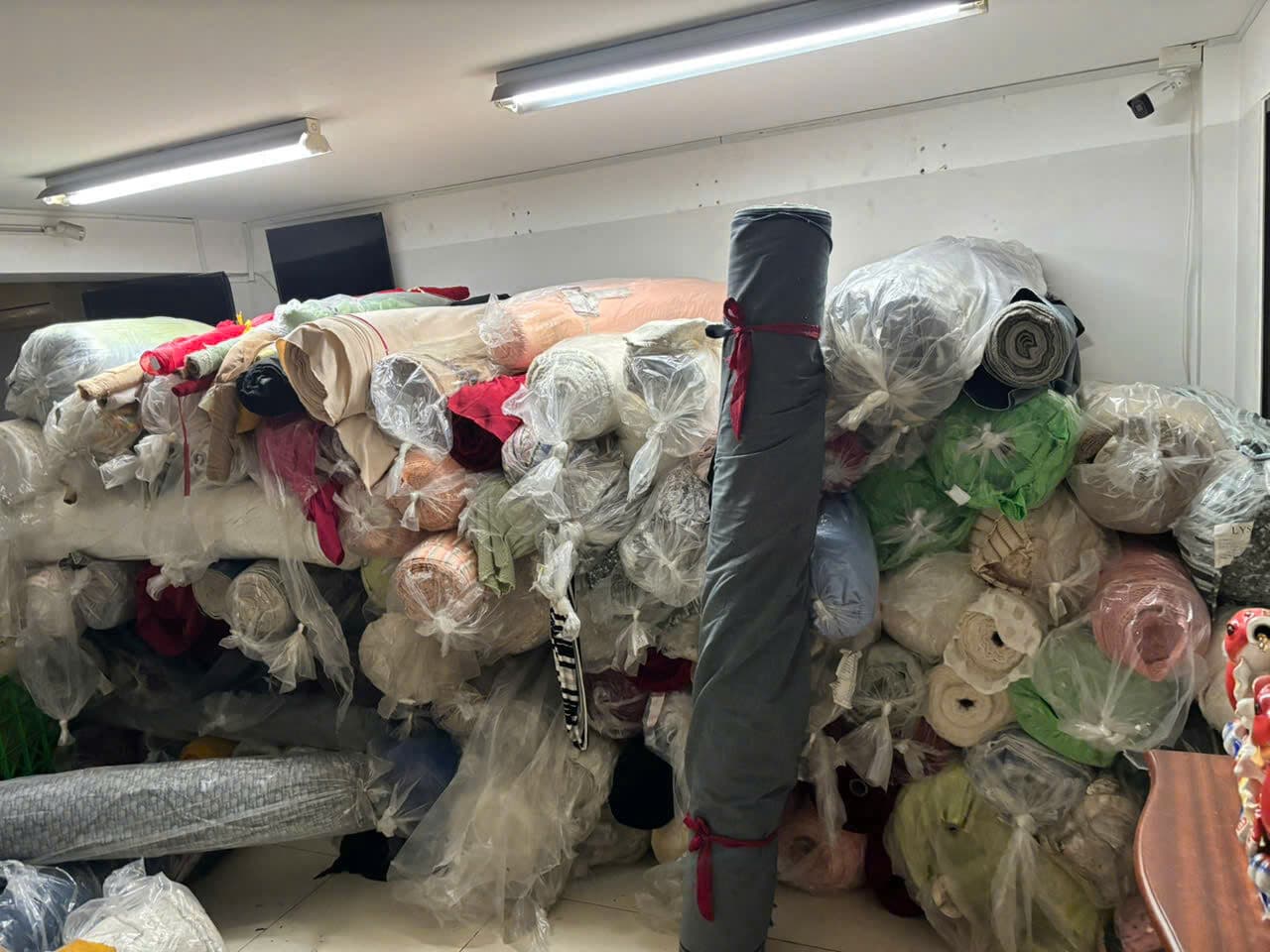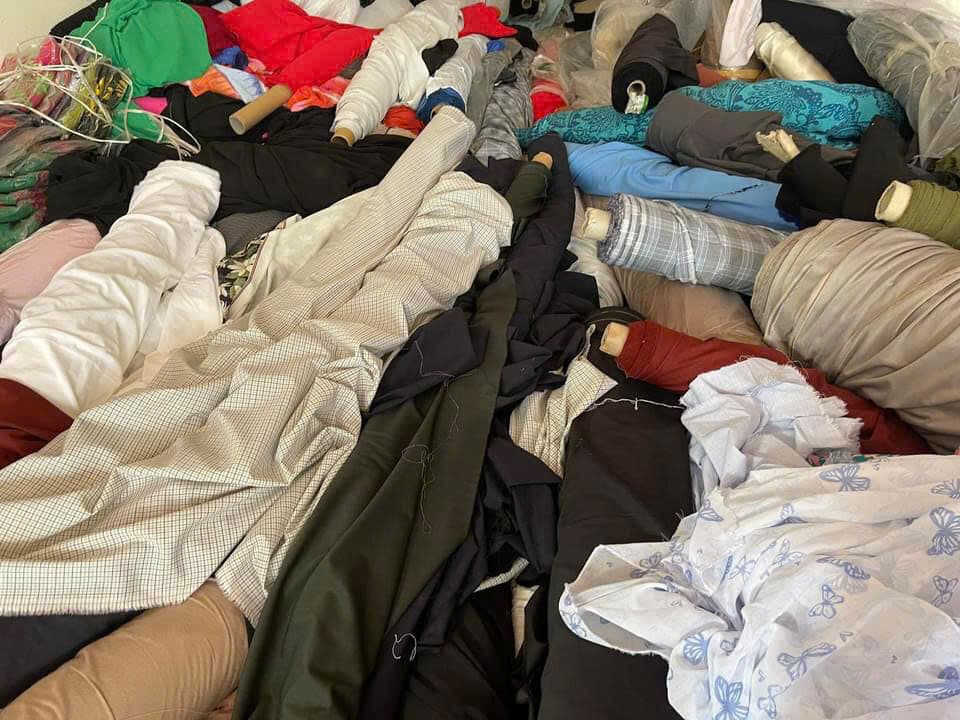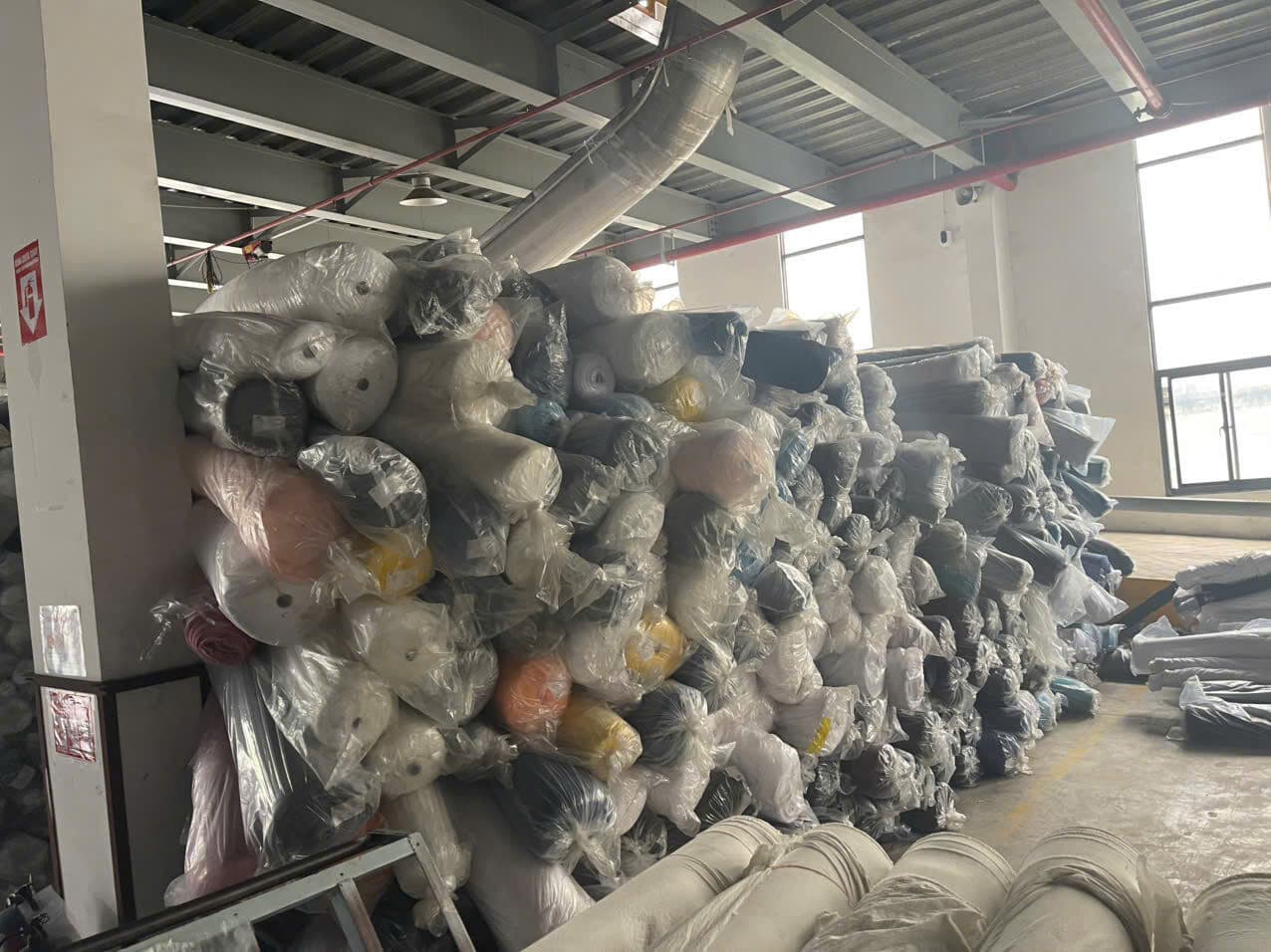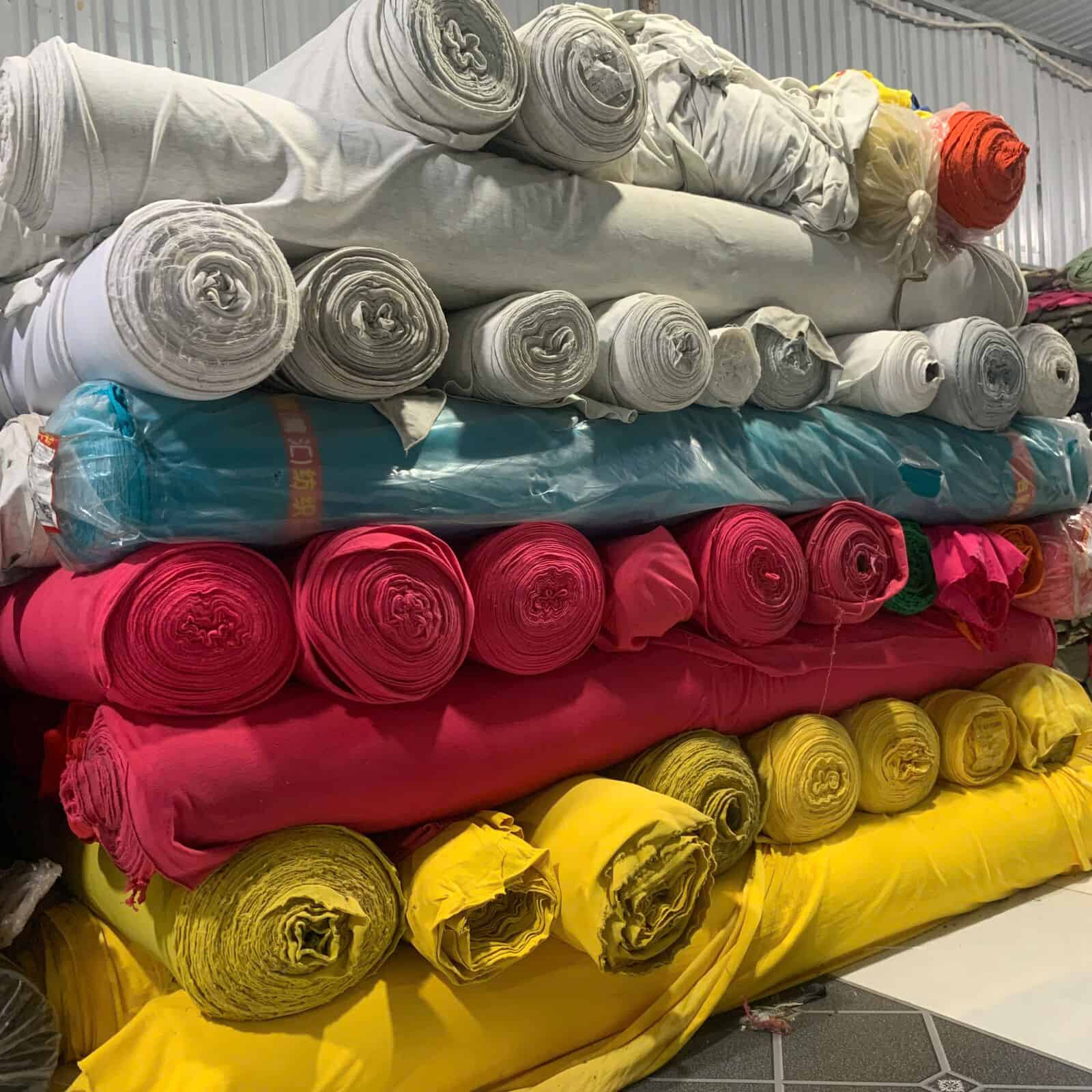
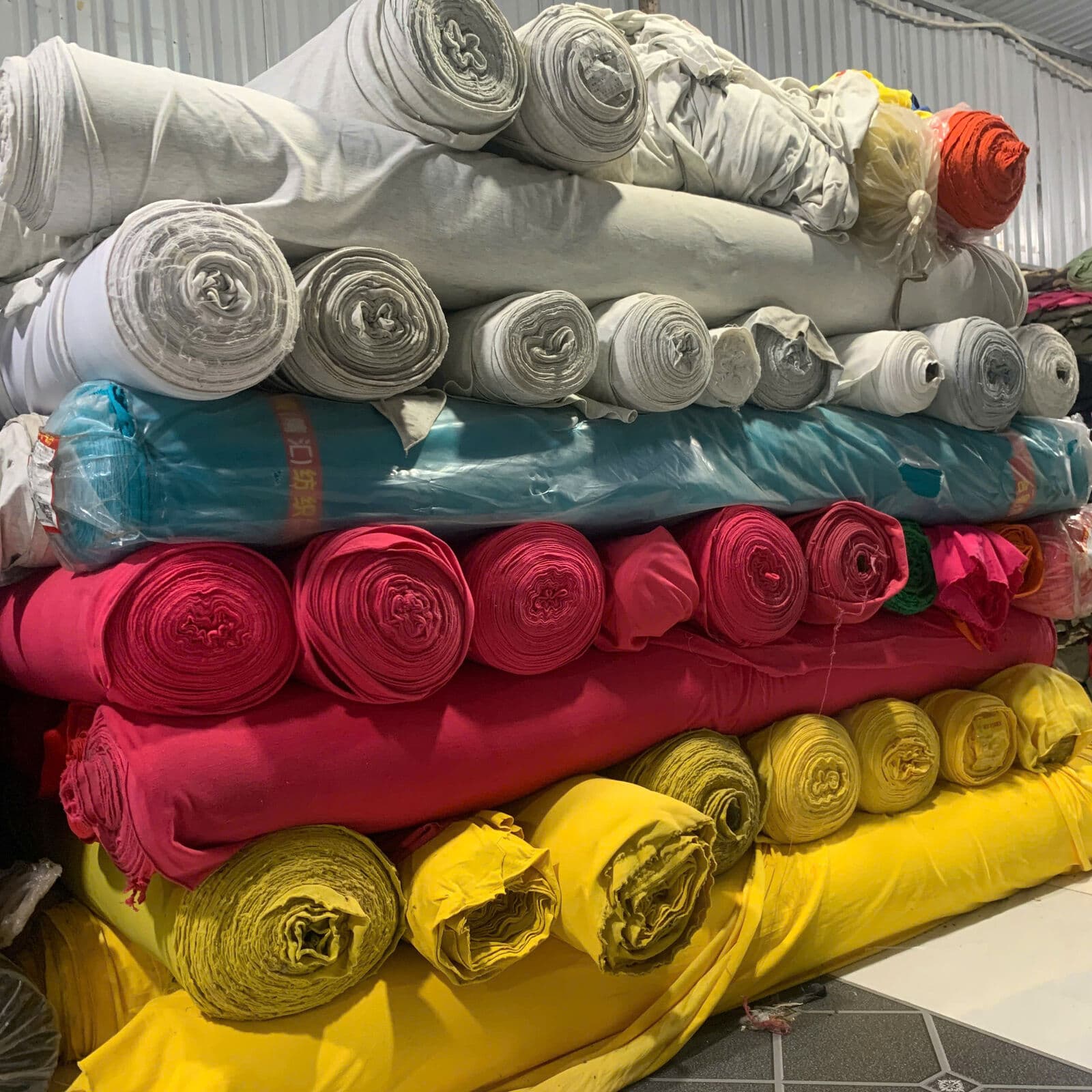
Since 1 July 2025, Ben Tre and Tra Vinh have both been merged into Vinh Long province; in practice sellers still search by the old names, so Gia Bao keeps them. We are buying surplus fabric in Tra Vinh – Ben Tre from contract garment workshops, factories in industrial parks, fabric shops and uniform tailors. The former Vinh Long and Tien Giang area has its own page: buying surplus fabric in Tien Giang – Vinh Long.
Garment workshops moving to the countryside, and the stock they leave
Ben Tre and Tra Vinh are farming provinces, mostly coconut and aquaculture, with no tradition of industrial weaving. The garment trade here has grown mainly through subcontracting: companies in Ho Chi Minh City send orders to workshops in the districts because labour is available, and many women sew close to home instead of moving to the city. That gives surplus fabric in these two provinces a few clear traits:
- Offcuts and scraps make up most of it: workshops receive fabric per order, and what is left after cutting and sewing stays behind, building up into many bags.
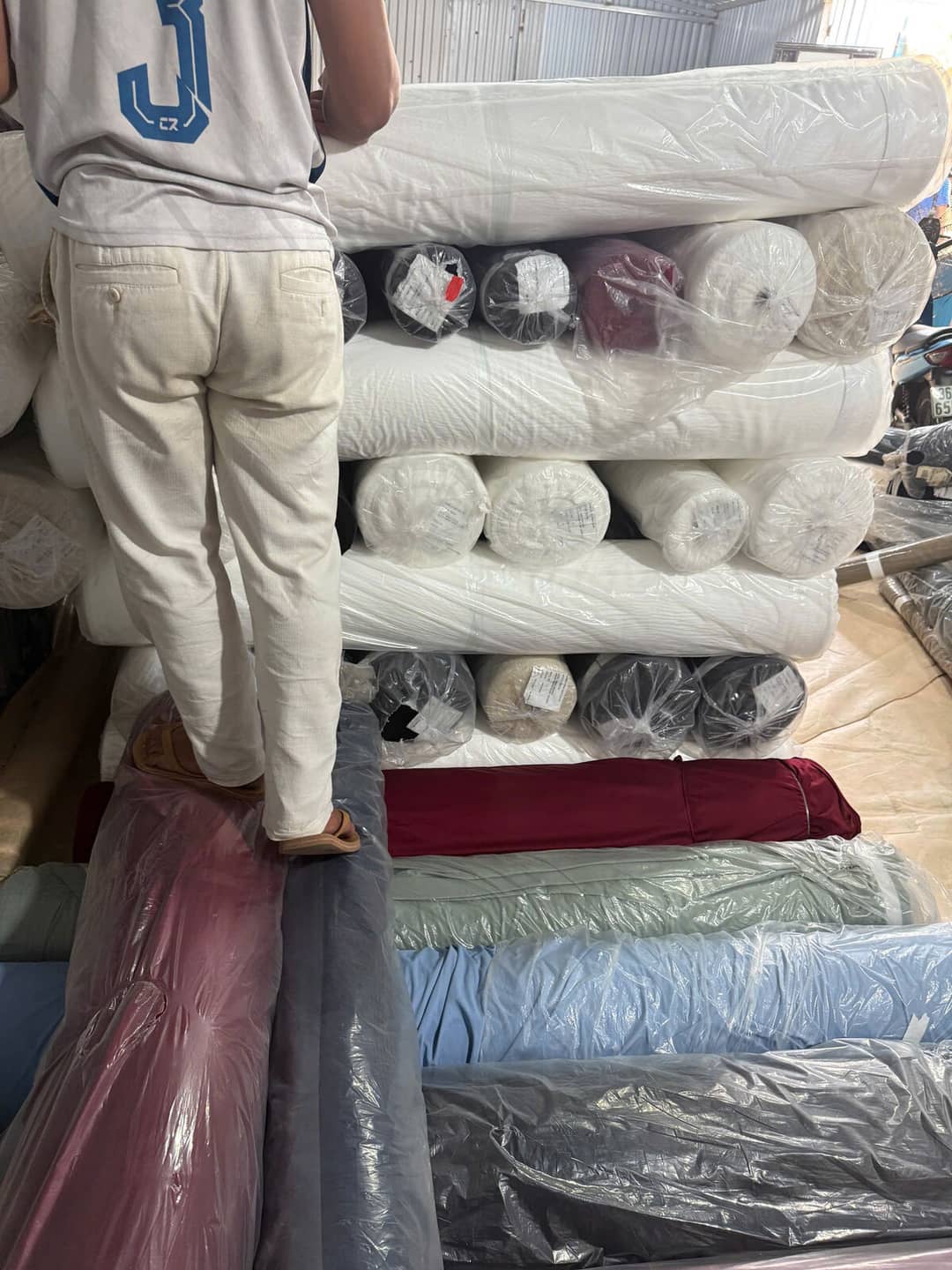
- Odd end-of-order rolls: a few rolls or a few dozen in mixed colours and codes that the client doesn't collect because they aren't worth the freight.
- Knits and wovens mixed together: workshops sew many products, so stores often hold cotton jersey, poly jersey, poplin and khaki side by side.
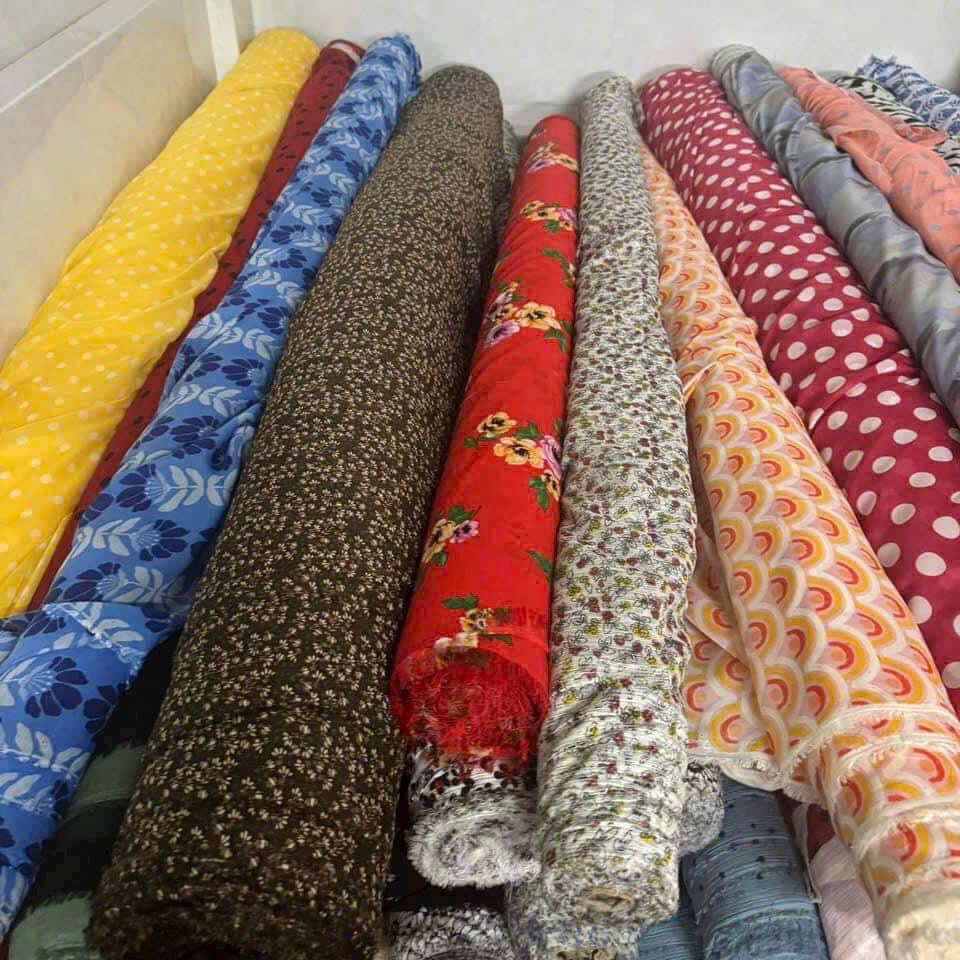
- Stock from shops and tailors: Ben Tre city and Tra Vinh city have fabric shops, ao dai tailors and uniform makers; their leftovers are bolts of floral and plain fabric that have gone out of fashion.
In addition, Giao Long industrial park (Chau Thanh, Ben Tre) and Long Duc industrial park (Tra Vinh) have larger garment factories that occasionally clear fabric rolls and trims by the lot.
The route: across Rach Mieu, on to Co Chien
From 69C Do Duc Duc, the truck takes the Ho Chi Minh City – Trung Luong expressway, turns towards Chau Thanh (former Tien Giang) and crosses Rach Mieu bridge into Ben Tre. From Ben Tre city it follows Highway 60 through Mo Cay, then crosses Co Chien bridge into Tra Vinh. Thanks to this route, one run can stop at workshops in Chau Thanh and Mo Cay in Ben Tre and carry on to Cang Long, Chau Thanh and Tra Vinh city. Ba Tri, Binh Dai and Thanh Phu on the coast, or Cau Ngang and Duyen Hai in Tra Vinh, are off the main route; we book them separately when the lot is large enough or when there are goods nearby.
This isn't a very distant region, but it isn't close enough for several round trips a day either. So Gia Bao doesn't promise to come the same day you call; we look at the photos, agree the price, then fit you into the next Mekong Delta run.
Workshops that end up with offcuts and scraps after every order can book regular pick-ups, for example once a month when the truck runs the Ben Tre – Tra Vinh route. Prices for each type are agreed at the start, so each visit is just weighing and payment. That keeps bags out of your walkways and saves you asking for a new quote every time.
Buying clearance fabric from contract workshops: how to prepare
Lots at contract workshops are usually mixed. A rough sort gets you a better price and lets the truck load faster:
- Separate long offcuts (big enough to sew a small item) from small scraps.
- Keep knits apart from poplin, khaki and nylon.
- Gather odd rolls in one corner and note roughly how many and what colours.
- Take rubbish, loose thread, pattern paper and packaging out of the fabric bags.
If you have no time to sort, that's fine; we still buy as is, the price is just based on the lowest grade in the bag. Detailed pricing for each kind is on our fabric offcuts and garment workshop surplus fabric pages.
Clearance fabric from shops and tailors
Market fabric shops tend to hold "a little of each design": floral prints, silk, satin, ao dai fabric that has gone out of style. Many owners think it is too little for anyone to buy. In fact, if you can gather a few dozen rolls and bolts, Gia Bao still buys, especially when it can be combined with another workshop on the way to Tra Vinh. For thin fabrics such as rayon and silk, see rayon and silk fabric for tips on taking photos that make quoting easy.
Reference prices by fabric type are on our fabric buying price list. The final price for each lot depends on material, length, colour, wrapping condition and quantity.
Sea air, salt and the condition of stored fabric
Workshops in Ba Tri, Binh Dai, Thanh Phu or Duyen Hai are near the sea, where the air is humid and slightly salty. Fabric stored there for long tends to fade along the roll edges, and metal trims such as zips and snaps rust easily. If your warehouse shows these signs, sell sooner and photograph the damage clearly, so the first quote matches the actual weighing and nobody has to renegotiate on site.
Selling surplus fabric to Gia Bao, step by step
Send an overview of the warehouse and a few close-ups on Zalo, with a rough quantity and the workshop address. We quote by group of goods; once both sides agree, we book a day for the truck. At the workshop the goods are weighed in front of both sides, a receipt is written and payment is made at once. The agreed price is the price at your warehouse; Gia Bao arranges the truck and loaders. If your workshop is towards Can Tho or Soc Trang, see buying surplus fabric in Can Tho – Soc Trang.
For contract workshops, please check with the client whether they want the leftover fabric back before selling; Gia Bao only takes goods with a clear origin.
To sell surplus fabric in Ben Tre or Tra Vinh, call or message us on Zalo at 0904 623 046 (Mr Tuan Tai) for a quote and a truck booking.