23 October 20262 views
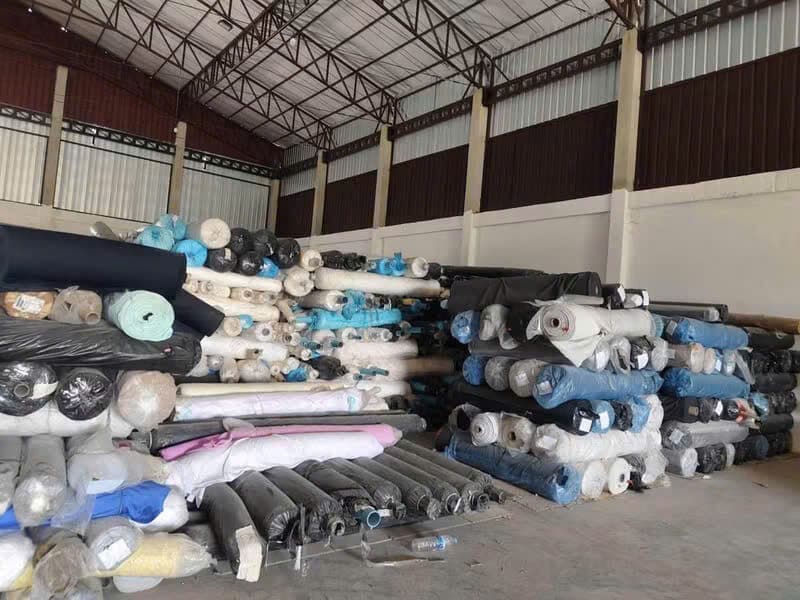
When you have surplus fabric stock to clear, the first question a buyer usually asks is: "Do you want to sell the whole lot, or by the kilo?" Many factory owners answer out of habit, or let the buyer decide. In fact, the pricing method directly affects the total you receive, how long it takes to clear the warehouse, and how much arguing happens on loading day. This article compares the four common ways to sell, whole lot, by the kilo, by the meter and by the roll, and suggests how to choose for each kind of warehouse.
Four ways to price surplus fabric for liquidation
In everyday surplus fabric trading, people commonly use four methods:
- Selling the whole lot: both sides agree on one figure for everything in the warehouse or in one area, with no weighing or measuring of individual rolls.
- Selling by the kilo: weigh everything, or each group, and multiply by the per-kilo price for each fabric type.
- Selling by the meter: priced by length, usually based on the roll labels or by re-measuring.
- Selling by the roll: one price per roll, used when the rolls are uniform in type and length.
No method is always the most profitable. Each suits a different kind of stock and a different goal: some owners need to sell quickly to hand back their premises, others want every good roll valued at what it is really worth.
Selling the whole lot: fast, but you need to know your stock
Advantages
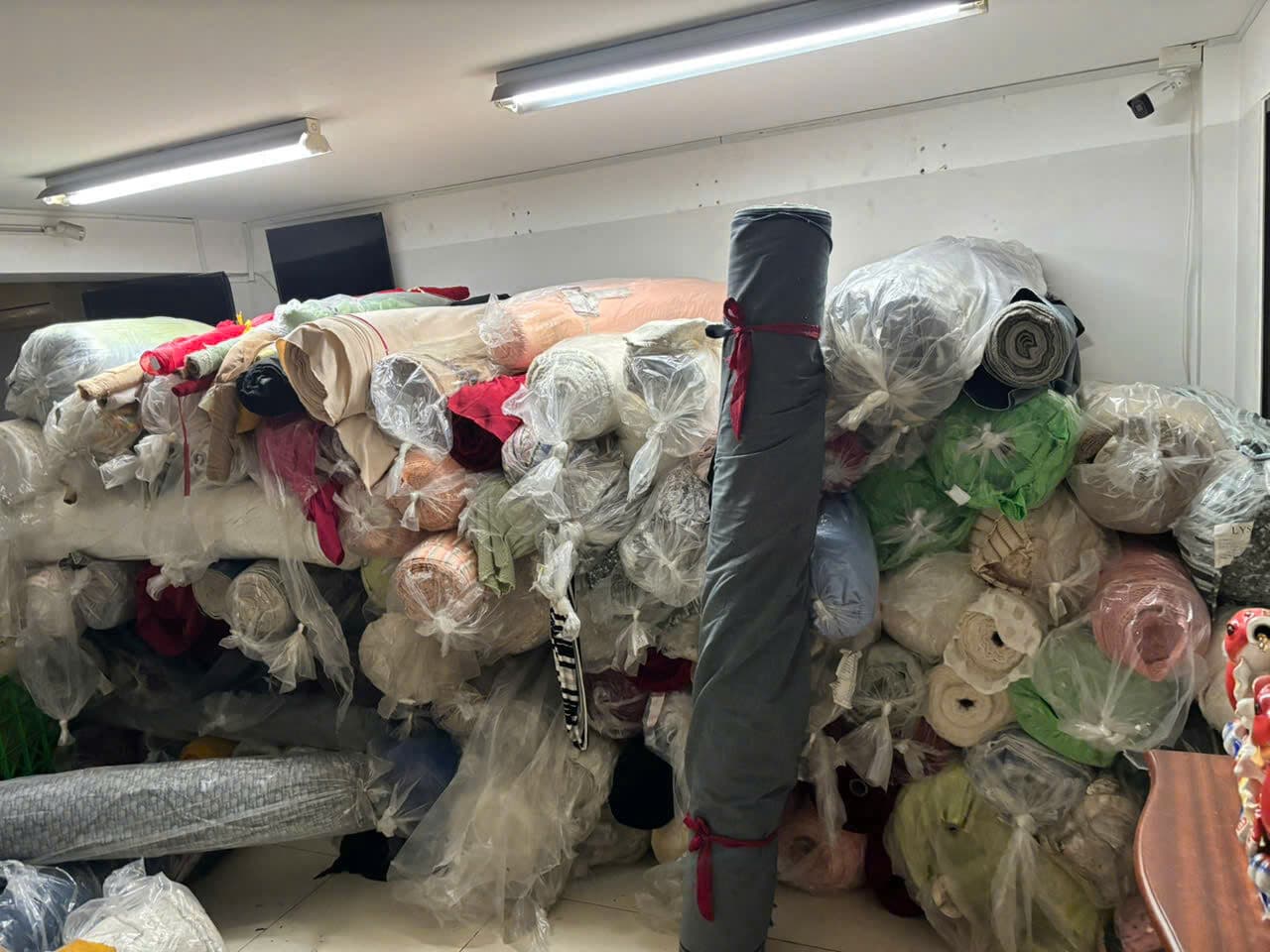
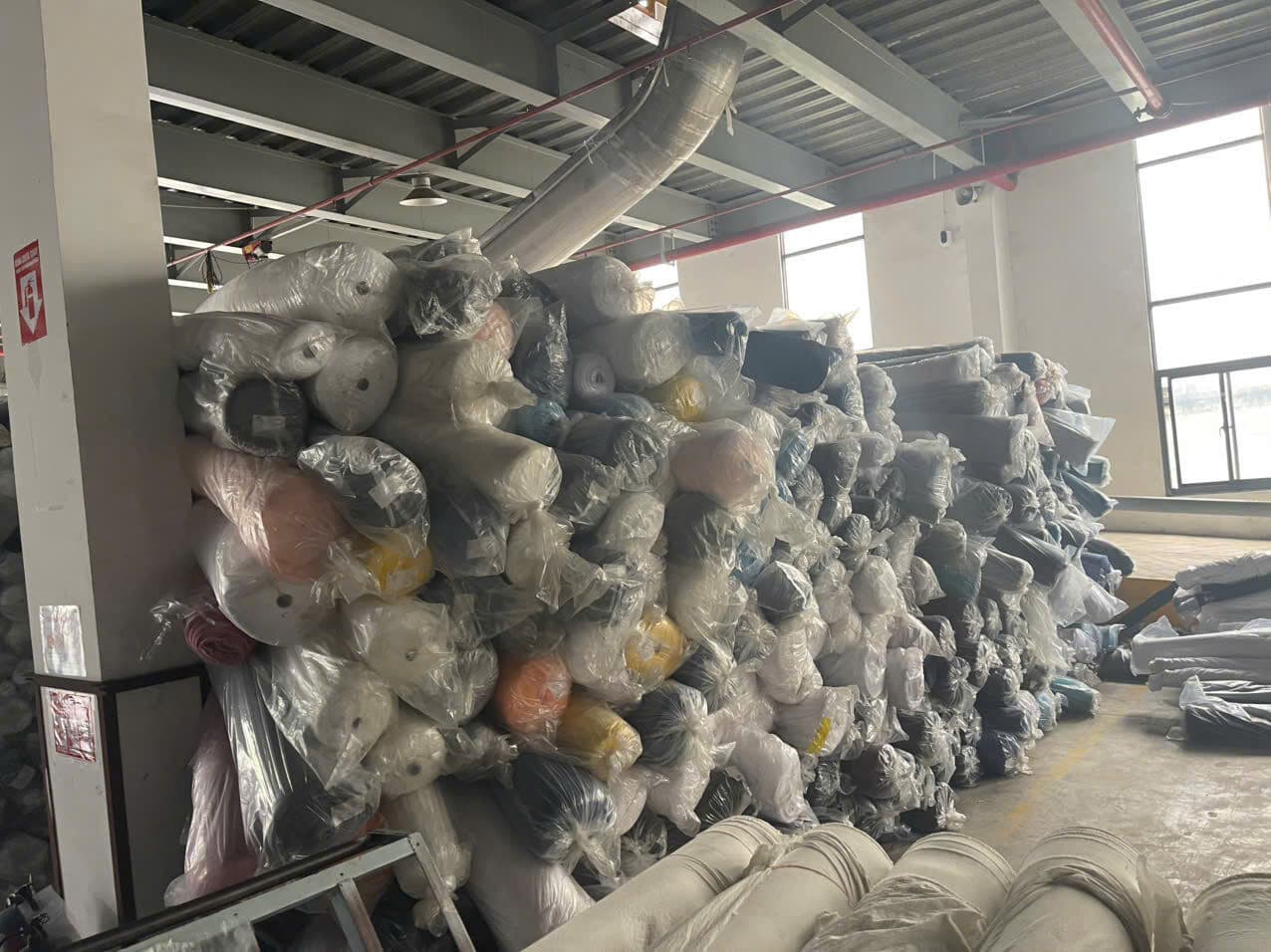
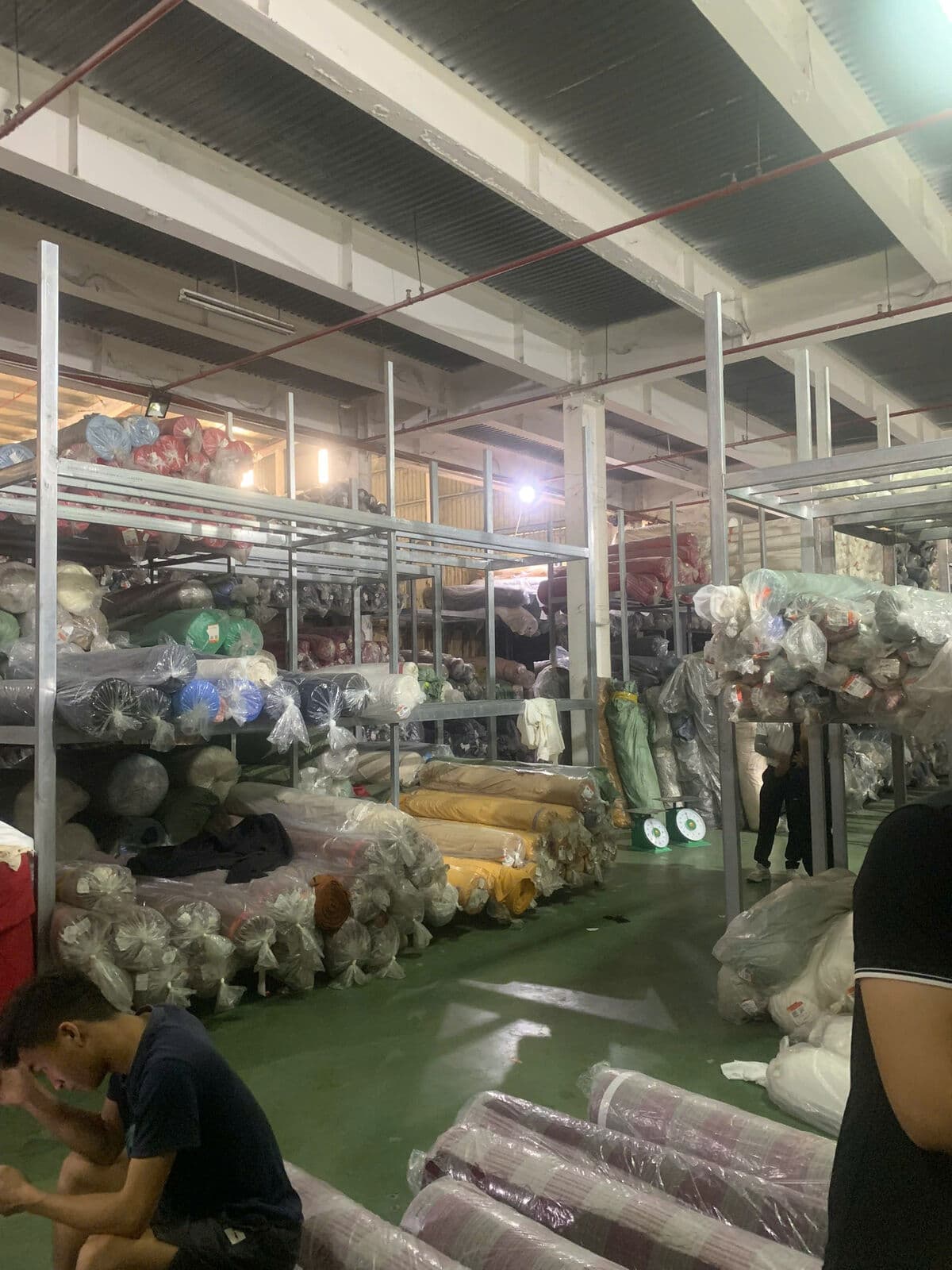
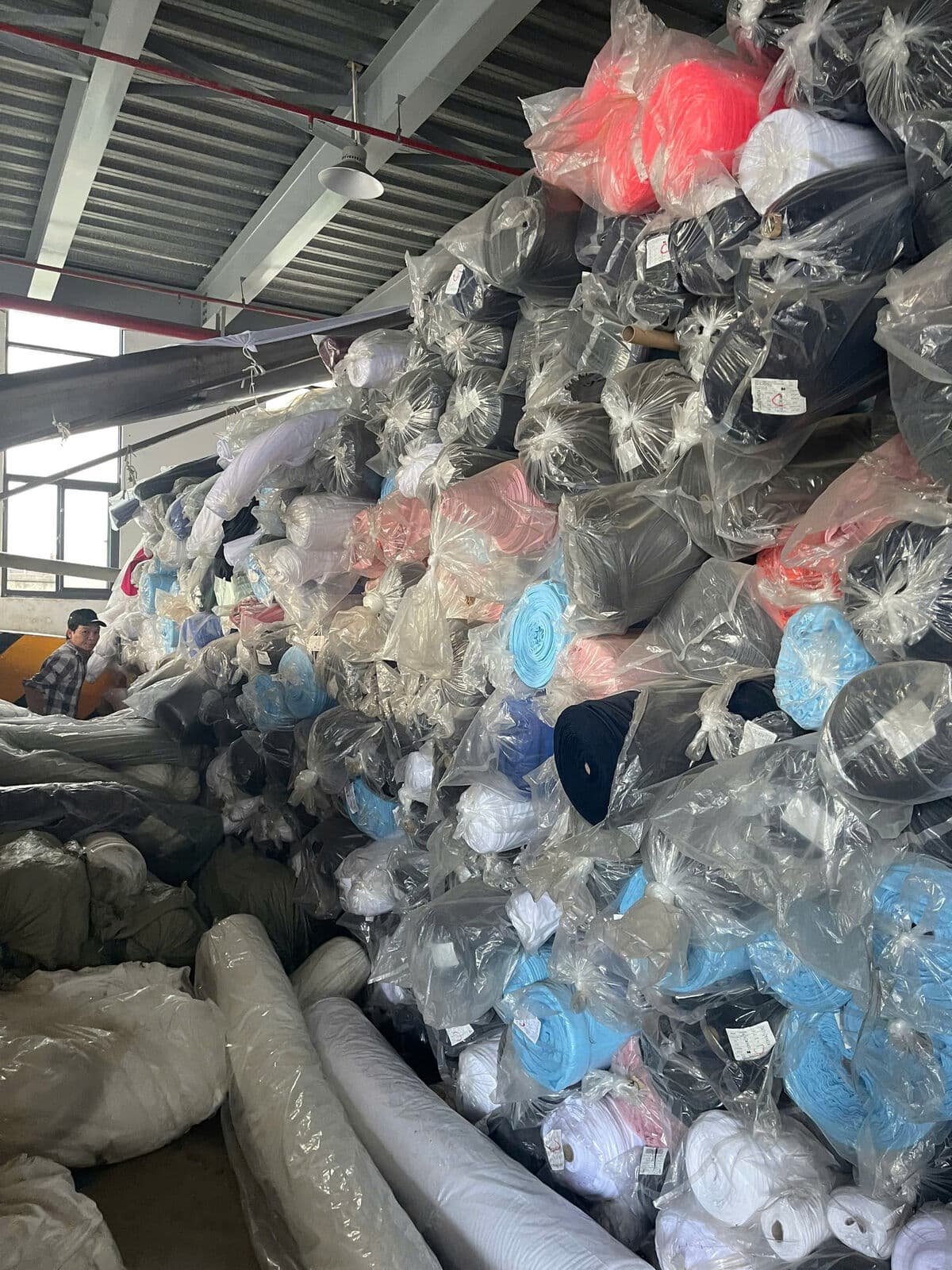
Selling the whole lot is the fastest way. No weighing, no detailed sorting: the buyer looks at the warehouse, names a price, both sides agree and loading begins. For a warehouse with a bit of everything (rolls, remnants, scraps, trims, even defective goods), selling the whole lot saves the owner several days of sorting. The buyer also takes the hard-to-sell part, so you are not left with things nobody wants.
Disadvantages
The biggest risk is that you do not know exactly what is in your warehouse. Buyers look at stock with a trained eye and estimate fairly closely, but to be safe they usually discount what they cannot see: rolls stacked deep inside, unopened bags. If the warehouse holds many good, labeled rolls that you have not listed, that value is easily lumped in with the weaker goods.
When to choose it
Selling the whole lot makes sense when: the warehouse holds many types, none of them high-value; you need to hand back the premises urgently; or it is the stock of a closed factory and nobody knows the goods well any more. Even when selling the whole lot, spend a session on a rough inventory and photograph each area, so you have a basis for comparing prices between buyers. The detailed steps are in our article on the garment factory stock clearance process.
Selling by the kilo: transparent and the most common
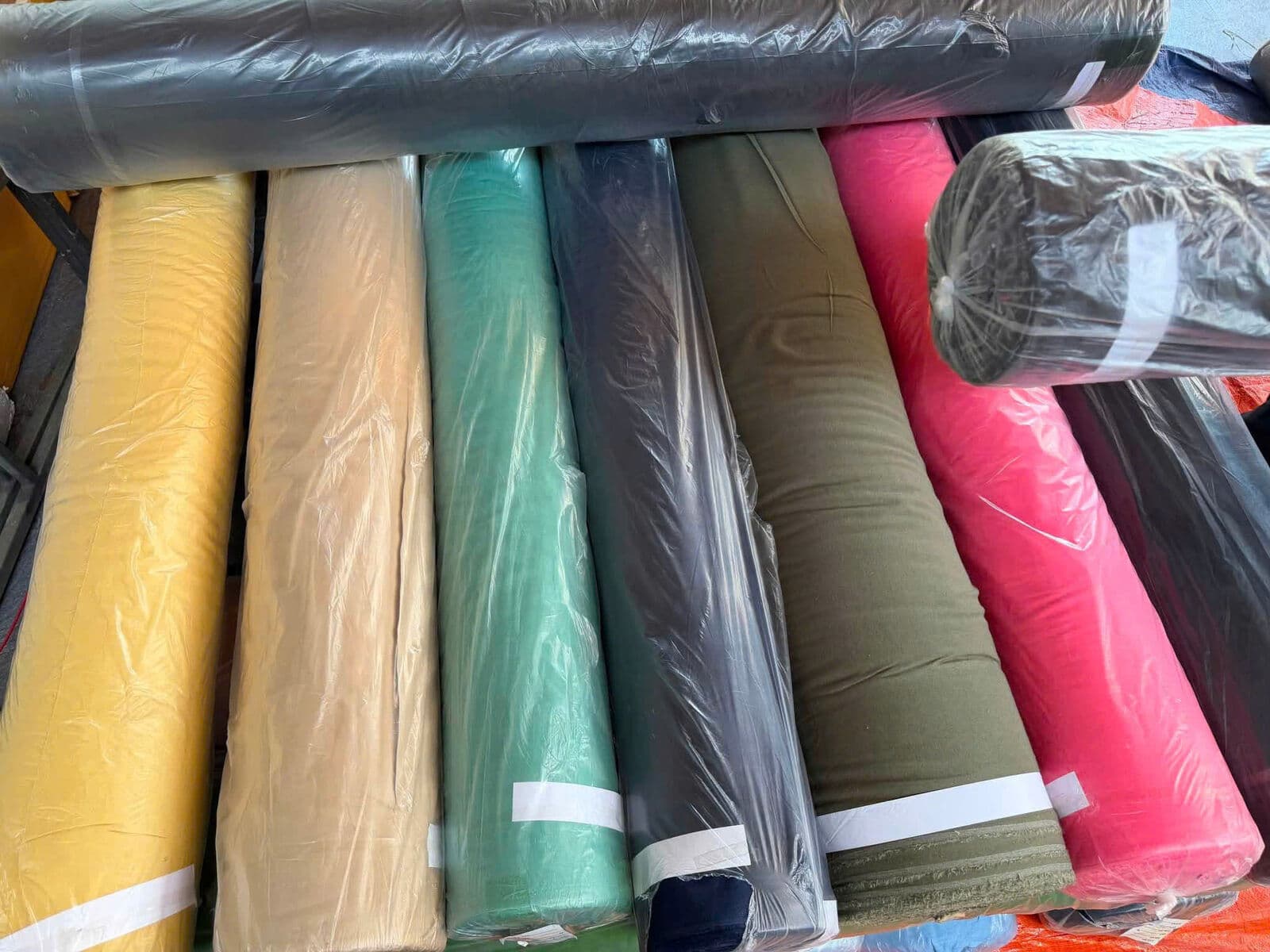
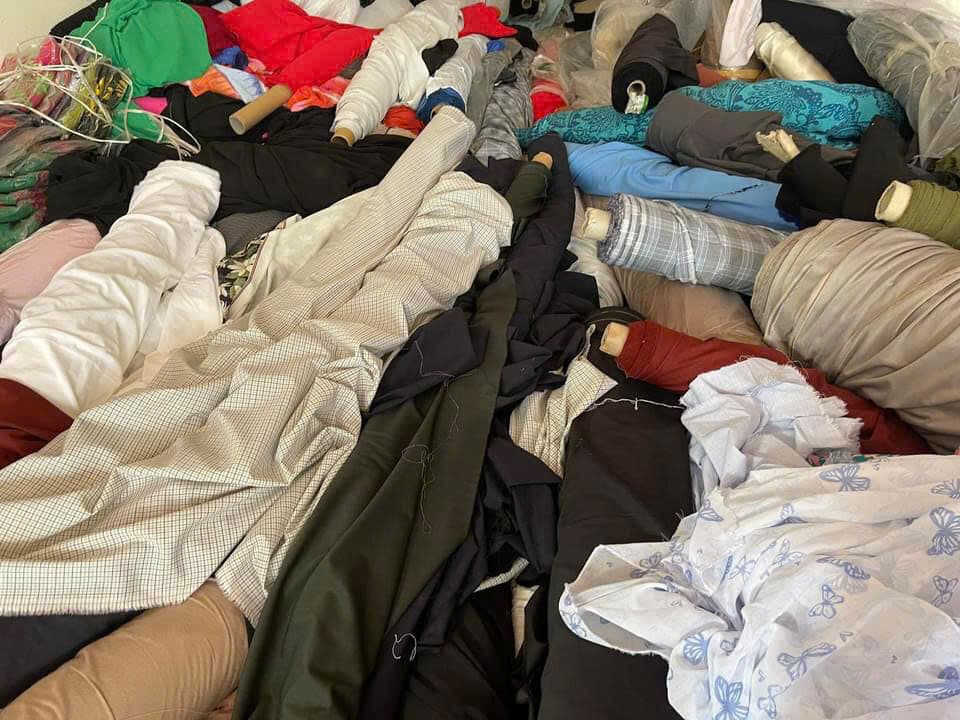
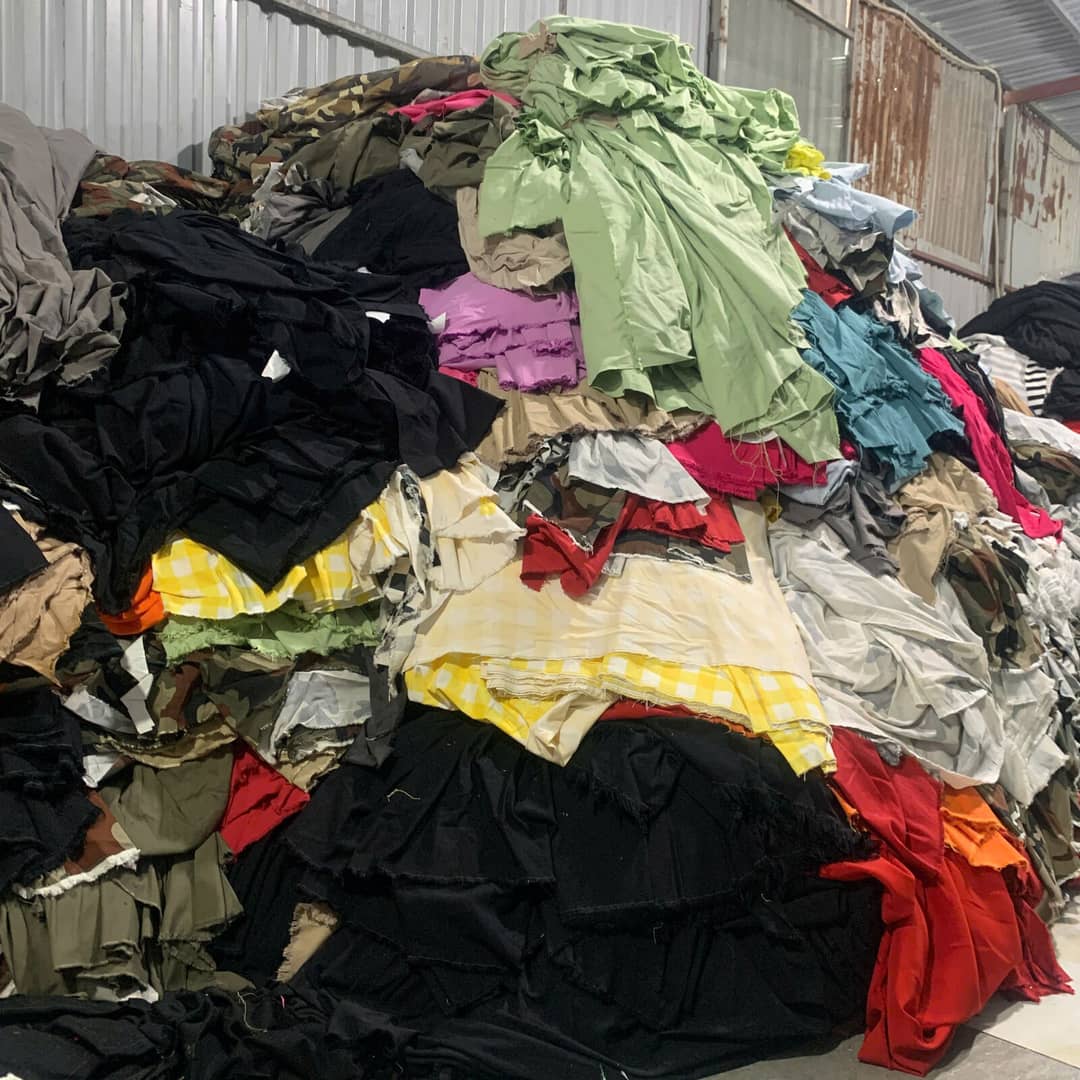
Pricing by the kilo is the method used most often when buying surplus fabric, because it is easy to check: you pay for what is weighed, and both sides see the reading. Remnants, scraps and defective fabric are almost always priced by the kilo, because nobody can measure each piece.
The advantage is transparency, and it suits a warehouse with many types that have already been grouped. Each group has its own unit price: cotton knit one price, khaki another, nylon another. Gia Bao publishes reference per-kilo price ranges for each fabric type on our fabric buying price list; use it to understand the general level, while the final price still depends on the actual condition of each lot.
Drawbacks to be aware of:
- Fine lightweight fabrics lose out. Silk, chiffon and thin linen weigh little, so if the unit price does not reflect the material properly, the total is low compared with the real value.
- Tare is easy to argue about. Tubes, plastic wrap and sacks all have weight. Agree how much to deduct before weighing.
- Damp fabric weighs more. Buyers may deduct extra for damp fabric, so keep the warehouse dry before weighing day.
Selling by the meter or by the roll: for uniform rolls
By the meter
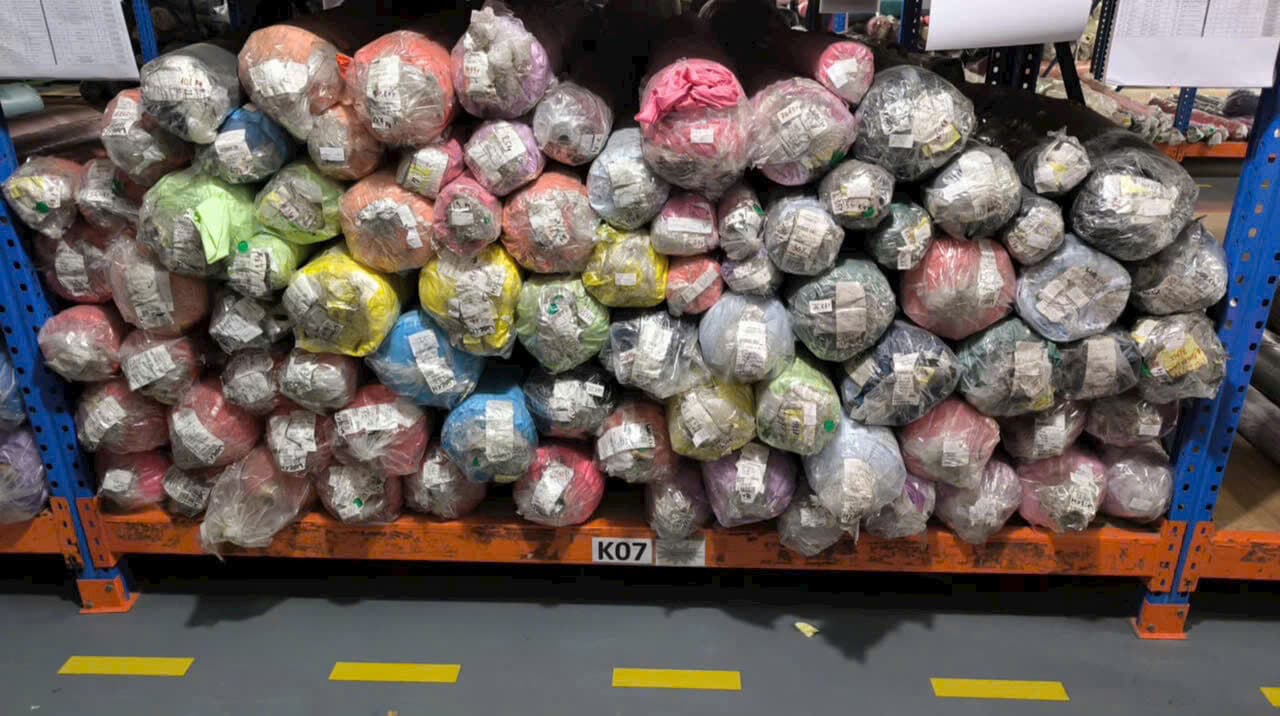
Pricing by the meter suits rolls whose labels clearly show the length, especially thin, high-value fabrics that would lose out if sold by the kilo. It reflects the real usable value, because garment factories cut by the meter, not by the kilo. The downside is the effort: if labels are missing or rolls have been partly cut, every roll must be re-measured, which takes a long time for a large lot and is prone to error.
By the roll
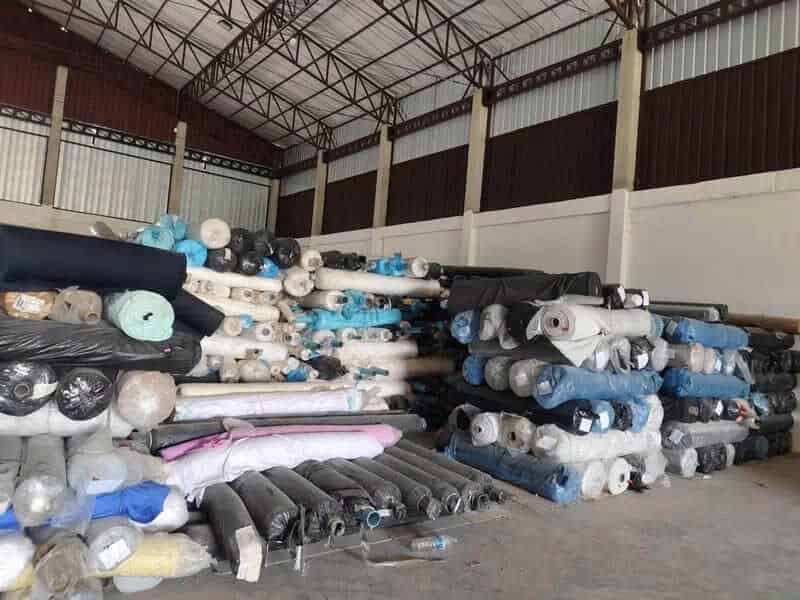
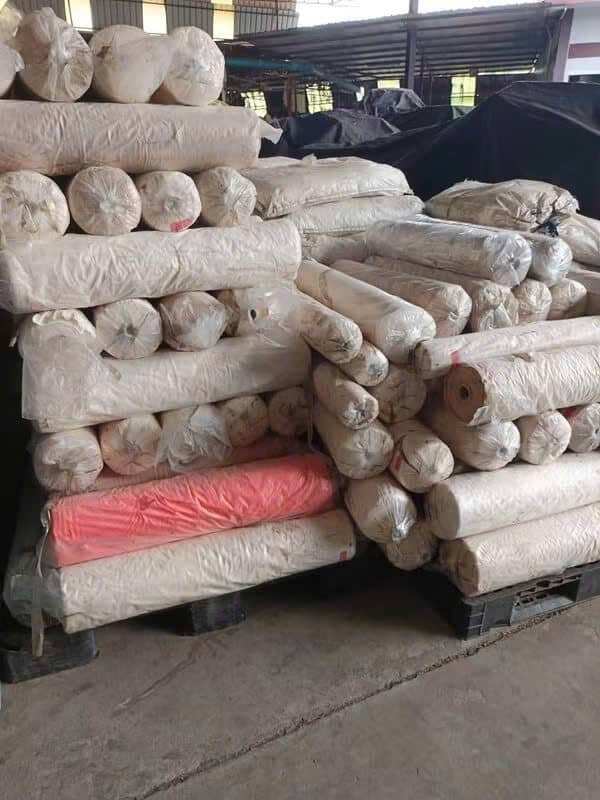
Pricing by the roll is quicker than by the meter and works when the rolls are the same type and width and roughly the same length, for example a few dozen strapped rolls of greige fabric from one delivery. The buyer checks a few rolls at random, agrees a price per roll, then counts. Do not price by the roll when lengths vary widely, because long rolls end up valued the same as short ones. More on this category on our page about buying surplus fabric rolls.
Combining methods: the approach used most often
For most garment factory warehouses, the sensible approach is to split the stock into groups and apply a separate pricing method to each:
- Labeled, high-value rolls: priced by the meter or by the roll.
- Everyday rolls of many types: weighed by the kilo, with a unit price per type.
- Remnants and scraps: weighed by the kilo, separated by fiber type if possible.
- Defective goods, damp goods, miscellaneous trims: grouped together at one package price.
Take a T-shirt factory that has just finished its season: the warehouse holds a few dozen labeled cotton knit rolls, a corner full of roll ends in every color, dozens of bags of remnants and scraps, and a few boxes of buttons and zippers. Sold as one lot, the labeled knit rolls are valued together with the scrap bags. Weighed at a single unit price, the trims and the good rolls are both dragged down. Split into the four groups above, each group is valued at what it is worth, and loading does not take much longer.
This takes an extra session of sorting but prevents the whole warehouse from being priced at the lowest grade. If you are unsure where rolls end and remnants and scraps begin, see our article on telling fabric rolls, remnants and scraps apart.
Buying surplus fabric from far away: which method is most practical?
For warehouses in distant provinces, the price is usually agreed from photos and video before the truck arrives. In that case, per-kilo unit prices with a list of goods groups are the easiest to agree on: both sides settle the unit price for each type first, and on arrival all that is left is weighing and checking the condition. Selling the whole lot from photos also works, but you need to film the inner areas carefully so the buyer does not have to discount heavily. Gia Bao serves the north through our Hanoi address; for nearby provinces such as Hung Yen and Hai Duong (now part of Hai Phong City), see our page on buying surplus fabric in Hung Yen – Hai Duong.
Send your stock list and Gia Bao will quote the way you prefer
You do not need to decide in advance how to sell. Just photograph the warehouse, jot down the rough groups of goods (how many rolls, roughly how many bags of remnants and scraps) and send them via Zalo to 0904 623 046 (Mr. Tuan Tai); you can message us on Zalo in English. Gia Bao can quote both a whole-lot price and per-kilo prices by group side by side so you can compare, then visit your warehouse to check the goods, weigh on site and pay before loading.